
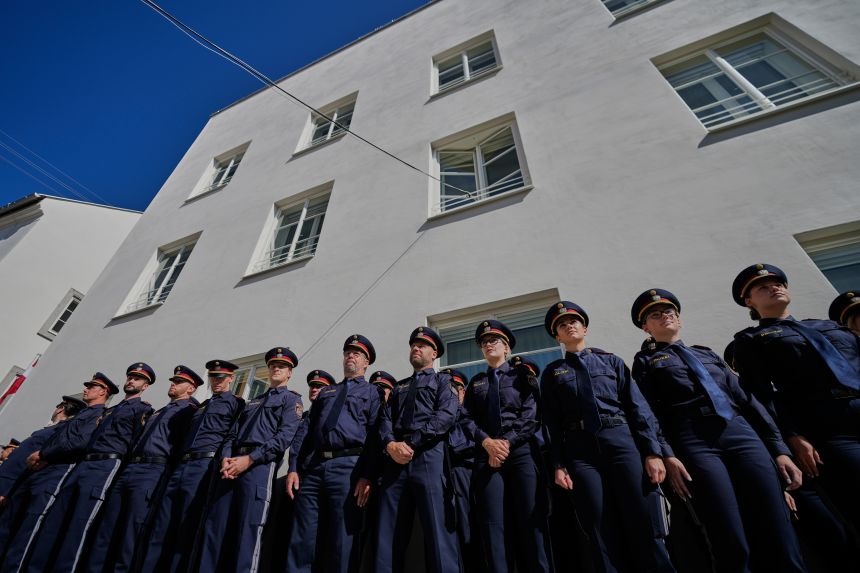
The structure where Adolf Hitler was born, located close to the Austrian border with Germany, officially transitions into a police station on Wednesday. This transformation is part of the Austrian government’s effort to stop it from becoming a neo-Nazi pilgrimage site.
Following extensive discussions regarding the sizable, traditional terraced house in Braunau am Inn, which was privately owned and previously served as a charity for individuals with disabilities, Austria executed a compulsory acquisition in 2017 and declared in 2019 its intention to renovate it into a police station.
Prior to the renovation, the only indicator of its historical significance was a stone from the Mauthausen concentration camp placed on the sidewalk bearing the words “Never again fascism,” which does not reference Hitler. This stone remains untouched, while the only addition to the building’s white exterior is a sign that reads “Police.”
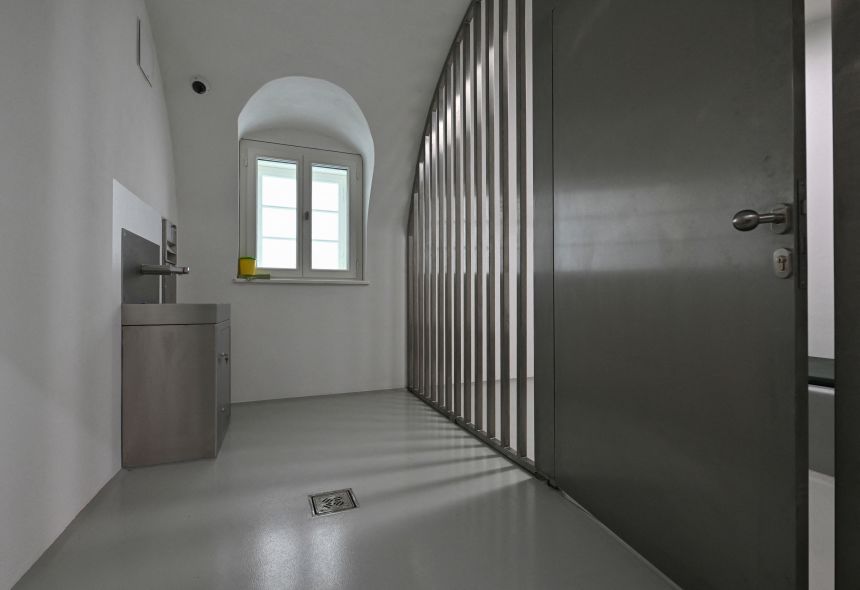
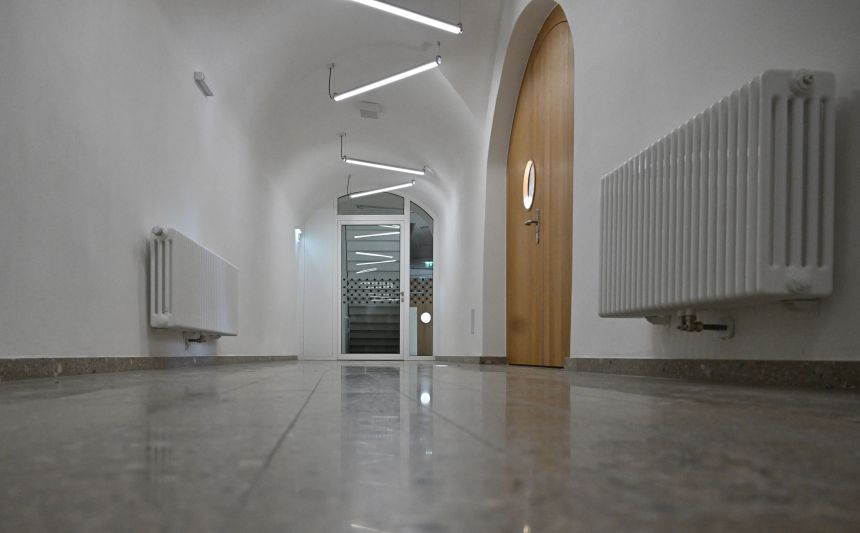
“The objective was to eliminate any connection to Adolf Hitler, thereby removing its aura,” stated Stephan Mlczoch, head of the Austrian Interior Ministry’s history department, during a media tour of the site.
Previous art museum
This aura was fostered by the Nazi regime’s glorification of Hitler, during which the “Führer birth house” functioned as an art museum. Mlczoch noted that Hitler resided there briefly in 1889 before his family relocated.
Many passersby frequently stop for photographs, though their opinions on Hitler typically remain unknown. Local authorities have indicated that only “isolated incidents” of visitor issues are now reported, a decrease from earlier times.
While details were not provided, the display of the Hitler salute and other Nazi symbols is prohibited in Austria.
Regarding the community’s reaction to the initiative, Mayor Johannes Waidbacher remarked to Reuters: “Overall, I believe the residents of Braunau have accepted it and can coexist with it.”
Waidbacher served on a committee suggesting that the building be utilized for either charitable or governmental purposes. Ultimately, he stated, having a charity located there would have made it too accessible to the public.
“I believe it’s a reasonable approach, but whether it will succeed as we all hope remains to be seen,” he commented.
Remember, or forget?
Some opposition exists, including from the Mauthausen Committee, which represents Holocaust survivors in Austria. They contend that establishing a police station is inappropriate and advocate for increased focus on Hitler’s atrocities.
“Each year at the Mauthausen concentration camp memorial, a ceremony is held to declare: never again. In Braunau, they seem to be saying: Let’s forget as quickly as possible,” remarked Robert Eiter from the Mauthausen Committee and the Network Against Racism and Right-Wing Extremism.
For many years, Austria maintained that it was the primary victim of National Socialism after being annexed by Hitler’s Germany in 1938. It now acknowledges that Austrians were also perpetrators, although it rarely elaborates on this.
“The world will not forget where the most notorious mass murderer in history was born. Wikipedia will not alter its entries,” Eiter stated, adding that there will be no decline in the number of neo-Nazis who make “the pilgrimage to Braunau.”
Some residents expressed doubts about the building’s new purpose.
“I would have preferred if they chose a different direction, but it is what it is,” said Irene, 74, expressing her desire for the charity to remain.
However, the majority supported the change.
“It’s a great idea,” commented Thomas Spreitz, an estate agent. “There were neo-Nazi groups present occasionally, and now that’s in the past.”
