
For many years, figures such as “El Chapo” and “El Mencho” have represented the United States’ struggle against drug trafficking from Mexico. Presently, the Trump administration has shifted its focus to affluent politicians allegedly taking illicit funds to assist these criminals.
The US Treasury has recently claimed that cartels are “increasingly utilizing their illicit earnings to fund Mexican political campaigns.” The intention behind this, according to the statement, is to elect individuals “ready to protect the cartels and their agendas.”
It is well-known that Mexican organized crime factions invest heavily in electoral contests, particularly at local levels. However, this issue is seldom discussed candidly by Mexican officials. The warning from the Treasury Department’s Financial Crimes Enforcement Network has sparked significant backlash, with analysts interpreting it as a clear signal that the United States intends to target not only cartel leaders but also their alleged accomplices within the government.
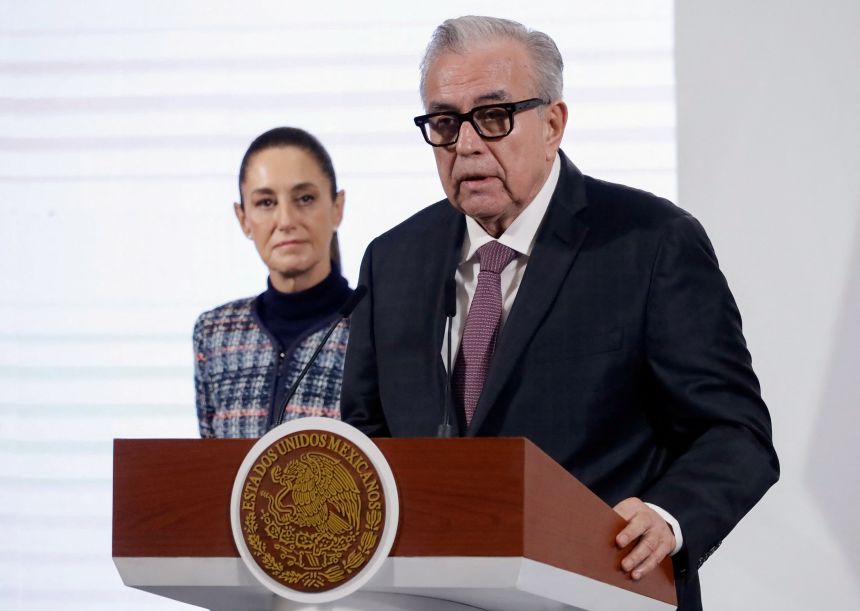
Over the past year, the Trump administration has revoked the US visas of at least one governor, Marina del Pilar Ávila Olmeda from Baja California, along with several mayors. Additionally, US prosecutors have taken the unusual step of charging a sitting governor—Rubén Rocha Moya of Sinaloa—for purportedly permitting drug traffickers to operate in exchange for bribes and electoral backing. Both Rocha and Ávila, members of the ruling Morena party, have denied any wrongdoing.
These actions represent a notable shift from the US’s typical approach of managing bilateral issues primarily behind closed doors, avoiding overt interference in Mexican political affairs.
“This represents a new chapter in US-Mexico relations,” remarked Pamela Starr, a political scientist at the University of Southern California and author of “The Making of Mexico: Revolution, Reform, and Transformation.”
Historically, the United States has granted Mexico considerable domestic political independence, ensuring stability with a neighbor willing to collaborate on various issues, including global power dynamics, illegal immigration, and trade.
So what has changed? The Trump administration has adopted a stringent stance that involves classifying cartels as terrorist organizations and targeting suspected drug vessels in the Caribbean and Pacific. US authorities might now be in a stronger position than ever to pursue legal action against politicians who support organized crime. Due to assertive American anti-drug initiatives and cooperation from Mexico, numerous high-ranking cartel members have been taken into US custody in the last couple of years. Security experts believe many of these individuals may be willing to divulge information about their corrupt dealings with politicians to lessen their sentences.
“This is the most realistic method to uncover the links between organized crime and political campaigns within this country,” stated Luis Carlos Ugalde, a scholar who headed Mexico’s Federal Electoral Institute from 2003-07.
However, the US approach is straining ties with Mexican President Claudia Sheinbaum and her leftist Morena party, which commands a congressional majority and governs nearly three-quarters of the country’s states. If the Trump administration pushes too hard, Starr warned, “they could jeopardize the foundations of bilateral security cooperation.”
Difficulties in Tracing Funds
The precise scale of cartel contributions to political campaigns in Mexico remains unknown, but even previous electoral officials recognize the amounts are substantial.
“This issue has escalated very quickly,” Ugalde stated, noting that it was hardly acknowledged two decades ago during his tenure as an electoral official.
In 2018, he co-authored a report suggesting that candidates for governorships often spend at least 15 times more on their campaigns than they disclose to authorities. This “dark money” includes not only contributions from organized crime but also funds diverted from public budgets and donations from business owners aiming to secure contracts.
Campaigns typically receive and distribute such funds in cash, resulting in a lack of financial tracking. “No one funds a get-out-the-vote campaign using their American Express card,” the report titled “Money Under the Table” pointed out.
Jaime García, a political advisor, indicated that campaign expenses have surged over the years as Mexico evolved from a one-party system to a competitive democracy. This shift has led party officials to disregard campaign finance regulations and accept illegal contributions.
It is rare for those who provide or receive narco funds to face prosecution, let alone conviction.
Several factors contribute to this failure. Mexico’s justice system is weak and overwhelmed. Witnesses often fear cartel reprisal and refrain from testifying in court. Additionally, political parties are generally reluctant to examine the cash entering their campaigns.
“Tracing the money spent during official campaign periods is inconvenient for everyone,” García remarked.
Although tracking the funds may be challenging, there are other indicators of the increasing presence of organized crime in politics. More than three dozen candidates were assassinated leading up to the 2024 national elections, and numerous others withdrew from the contest as criminal organizations sought to position their allies. Gaining political control over municipalities and cities has become more crucial as cartels have expanded into areas like extortion, illegal logging, and domestic drug distribution. Whereas they once concentrated on securing routes for heroin or cocaine to the United States, they now aim to dominate local governments, police forces, and entire communities.
Sheinbaum has stated that little evidence has been presented to support claims of cartel interference in elections, and she pointed out that a state-level electoral tribunal confirmed Rocha’s victory in Sinaloa after reviewing reports of irregularities. Nonetheless, she has suggested that federal electoral authorities create a verification committee to screen candidates for ties to organized crime ahead of next year’s mid-term elections.
She has also expressed doubts regarding the intentions of the Trump administration’s focus on politicians allegedly collaborating with cartels. “Is this a genuine effort to combat organized crime?” Sheinbaum questioned in a recent address. “Or are we witnessing how certain segments of the US far-right are attempting to manipulate our country in the lead-up to the (November) 2026 elections?”
Sheinbaum’s Challenge
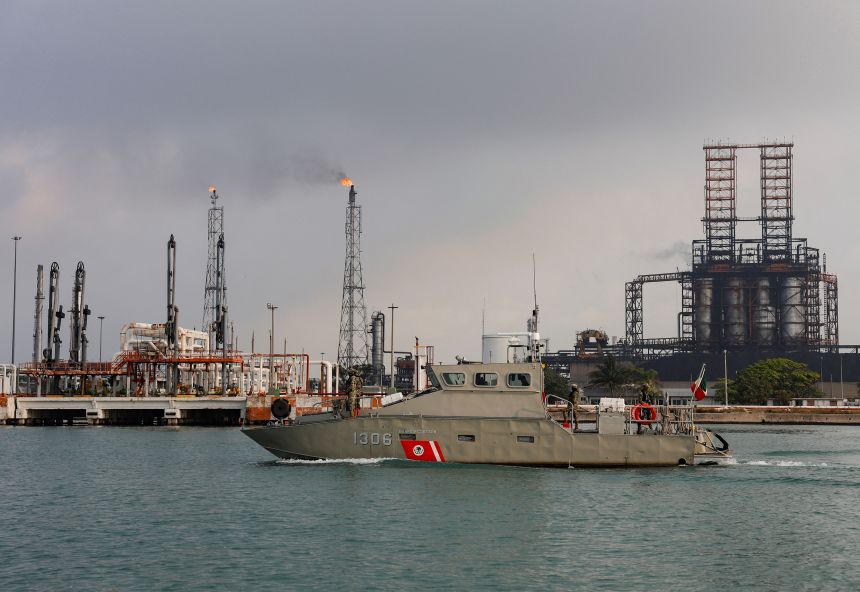
The recent statement from the Treasury focused on one of the cartels’ newer illegal ventures. The illicit trade of oil and gasoline has evolved into a multibillion-dollar industry in Mexico, with the government alleging that criminal organizations collaborate closely with corrupt officials and businesses. In some instances, these groups steal fuel domestically and resell it; in others, they transport it across the US border.
The Treasury’s alert indicated that cartels are leveraging profits from these activities to support the election of corrupt politicians who provide access to “key administrative positions in the government,” facilitating easier fuel smuggling and money laundering.
This was a broad condemnation of Mexican politics, prompting an indignant response from Sheinbaum. “What proof do they have?” she challenged during a press conference.
The accusation was part of a continuous stream of US criticism regarding the political protection provided by cartels.
US Ambassador to Mexico Ronald Johnson indicated in April that the Trump administration was embarking on a new phase in the anti-drug initiative, cautioning that “significant action” against corruption and bribery in Mexico was forthcoming. Shortly afterward, the US Justice Department announced the indictment of Rocha and nine other current and former officials from Sinaloa, alleging their collaboration with the Sinaloa cartel to transport “massive amounts of narcotics into the United States in exchange for political backing and bribes.”
This situation is particularly sensitive given that Rocha is a close associate of former President Andrés Manuel López Obrador, who mentored Sheinbaum. She has declined a US request to detain Rocha for extradition, stating that Washington has not provided evidence of his guilt. Rocha has taken a leave of absence amid the ongoing investigation, asserting that the accusations are designed to undermine Morena. “These claims against me are unfounded,” he told the press. “I will not permit them to use me as a tool to harm the movement I belong to.”
Analysts suggest that the Trump administration’s approach has created a dilemma for Sheinbaum. Morena has positioned itself as an anti-corruption party, and she is hesitant to appear as if she is concealing corruption. However, surrendering prominent Morena politicians to the US could harm the party’s reputation and diminish Sheinbaum’s influence over her administration.
Up until now, the Mexican leader has predominantly sought to appease US President Donald Trump regarding his anti-drug strategy. She deployed thousands of troops to oversee the Mexican border and transferred over 90 leading drug cartel figures to US authorities. Her administration has conducted crackdowns on fuel theft and arrested numerous current and former local officials—some affiliated with Morena—accused of colluding with criminal organizations.
However, recently she has adopted a firmer stance, asserting that the US government is attempting to undermine Mexico’s sovereignty through indictments such as Rocha’s. Both the Mexican government and public are particularly sensitive to interference from a neighbor that annexed a significant portion of their territory in the 1800s.
“Let’s be clear: first they target some, then others, until the Department of Justice becomes the main electoral authority in Mexico,” Sheinbaum declared in late May. “We cannot permit this.”
While there is little doubt that corrupt politicians play a crucial role in supporting organized crime, the effectiveness of the Trump administration’s policies in ultimately weakening these groups remains uncertain. Cartels, smaller gangs, and street factions maintain significant influence in local governments and have entrenched themselves within the economy. Both US and Mexican observers argue that the country lacks a capable justice system and adequately trained police forces, and consistently underinvests in its security infrastructure. The cartels are further bolstered by a robust US demand for drugs and the illegal influx of American firearms across the border.
“Addressing the issue in Mexico is a long-term endeavor,” Starr noted. “It cannot be resolved within a year or two, or even within the remaining four years of the Sheinbaum administration.”
