
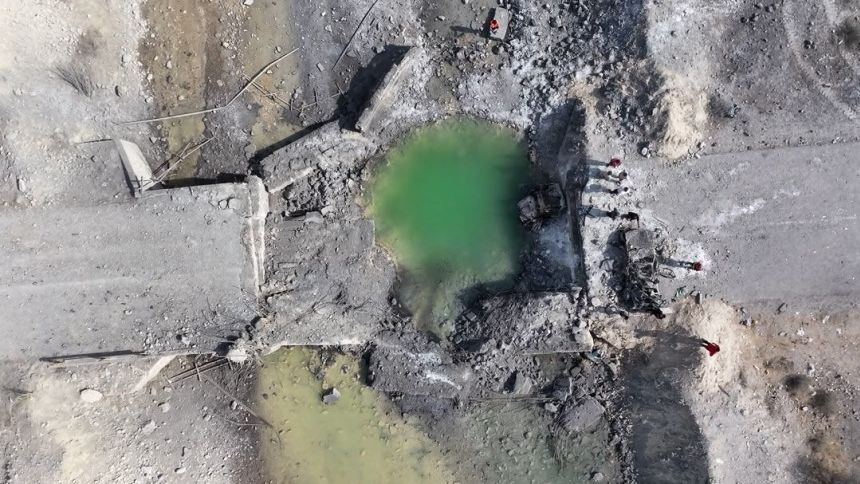
In the last week, tensions between the United States and Iran have escalated from a minor exchange of hostilities to a situation resembling full-scale warfare.
Last week, US President Donald Trump issued a warning, stating that he would widen military operations if Iran does not cease its attacks on vessels passing through the Strait of Hormuz.
Recently, the US has widened its focus from Iranian coastal installations that host radar and drone operations to encompass roads, tunnels, rail networks, port facilities, and, as reported by Iranian media, a desalination facility.
In response, Iran has broadened its list of potential targets to include seven nations in the vicinity, with state media hinting that significant ports in Gulf Arab nations could soon be targeted. Kuwait has suffered the most from Iranian attacks, with damage reported at a desalination facility and an oil refinery. Jordan has also experienced frequent missile strikes.
The situation has reached a critical juncture. While it could potentially lead to renewed diplomatic efforts, most experts consider this unlikely. Both parties appear unwilling to engage in dialogue, having declared that the memorandum of understanding (MoU) established in June following extensive negotiations is no longer valid.
Following the deaths of two US military personnel in Jordan due to a surge of Iranian missile strikes on Friday, Ian Bremmer, founder of the Eurasia Group, remarked that the next few days could be the most perilous in the ongoing conflict.
On Sunday, the US reported another military casualty in northern Iraq, asserting it would “quickly retaliate” against Tehran for the assaults, while Iran again targeted Jordan that same day.
“It is becoming increasingly apparent that the situation is spiraling out of control,” noted Danny Citrinowicz, an analyst with the Institute for National Security Studies in Tel Aviv.
“While both Washington and Tehran initially seemed inclined to keep the conflict contained, it is now alarmingly approaching a threshold where those boundaries may break down,” Citrinowicz stated on X.
“The conflict could extend far beyond its current scope, potentially involving Gulf nations more directly and putting additional strategic targets and vital infrastructure in jeopardy,” he added.
The Iranian missile assault aimed at Aqaba in Jordan on Sunday highlighted this danger, with Israel reporting that debris landed within its borders. Although Israel has refrained from entering the conflict so far, reportedly at the request of the Trump administration, it has made its dissatisfaction with the Iran deal clear. Israeli defense officials warned on Sunday that they would retaliate strongly if Iran were to attack Israel.
Perspectives from Tehran
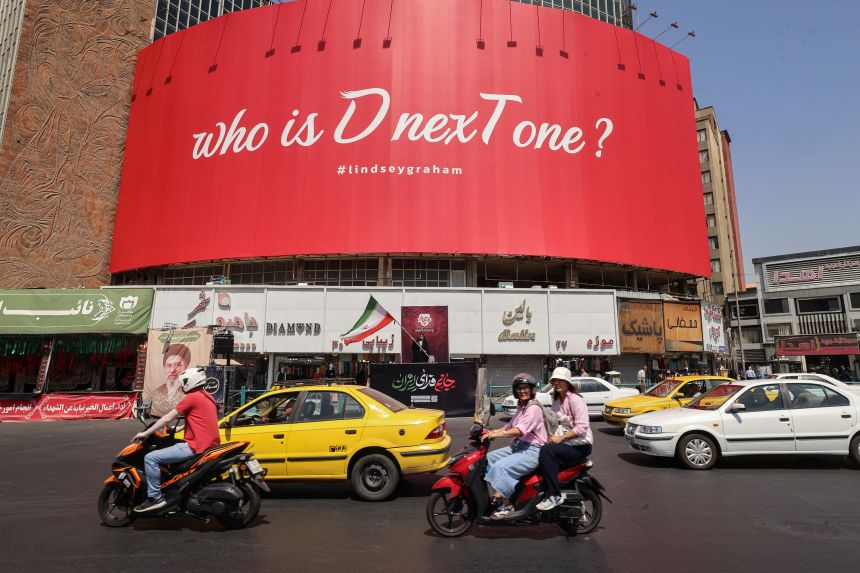
The adversary has a say in the matter, as military historians would put it, and Iran seems increasingly assured in its capability to cause harm.
“Iran is adjusting to US defenses by launching high-speed, maneuverable missiles at American bases in the region,” stated the Institute for the Study of War on Saturday, noting that Iran has increased its use of cluster munitions to enhance damage potential.
The casualties among US forces in Jordan reflect this adaptation.
Evidence suggests that the Iranian regime believes it can outlast Trump, having rallied public support during the funeral observances for Ayatollah Ali Khamenei. The new leadership that has surfaced in the wake of Khamenei’s son Mojtaba, the new supreme leader, appears to think that resistance is the only viable choice at this moment.
“Iran’s current leadership is convinced that any show of restraint will only invite increased pressure from the US,” wrote Iran analyst Vali Nasr in the Financial Times.
Although the Iranian economy is in severe distress, marked by high inflation and significant shortages of essential goods, “Tehran is prepared to endure the inevitable economic challenges that a renewed US naval blockade would bring, believing that its own pressure on the global economy by closing the Strait of Hormuz will compel Trump to concede first,” Nasr elaborated.
The Strait of Hormuz
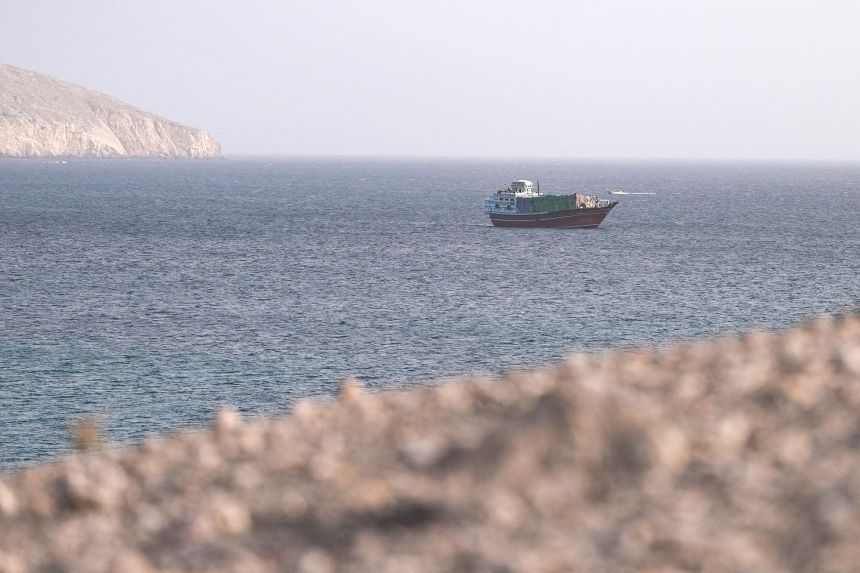
There is no substantiation for Trump’s claim that Iran is eager for an agreement – the initial catalyst for the conflict, Iran’s nuclear ambitions, has taken a backseat as the spotlight shifts to a confrontation over the Strait of Hormuz.
Essentially, a difficult situation has arisen at the entrance of the Persian Gulf.
Ambiguous wording in the MoU attempted to mask fundamental disagreements between the US’s demand – backed by a significant portion of the international community – for unimpeded navigation in and out of the Gulf, and Iran’s insistence on regulating maritime traffic.
Indeed, in his inaugural message as supreme leader in March, Mojtaba Khamenei affirmed that controlling the strait was a strategic instrument, declaring that “the tool of blocking the Strait of Hormuz must remain in play.”
Many experts regard the “Memorandum of Misunderstanding” as ineffective.
Control over the strait provides Iran with a “sword of Damocles hanging over the global economy” that Tehran deems “crucial” to obtaining any concessions from Washington, Nasr noted.
Should the conflict continue to escalate, there is a likelihood that Iran may engage its Houthi allies in Yemen to increase pressures on the global economy and Saudi Arabia by disrupting shipping in the Red Sea near the pivotal chokepoint of Bab al-Mandeb – a sort of Hormuz revisited.
Perspectives from Allies
US allies in the Gulf have previously intervened with Trump regarding the conduct of the war and the management of Hormuz. Recently, a wave of appeals from various governments — including Saudi Arabia, the UAE, Bahrain, and Qatar — dissuaded Trump from implementing a plan to impose fees on ships passing through the strait.
There are broader concerns that an escalating conflict could severely harm their economies, postpone any agreements regarding Hormuz, and leave them to confront a steadfast adversary across the Gulf once Washington decides to withdraw.
The pressing question now is whether they would re-engage – either individually or collectively – if Iran acts on its threat to attack ports and other infrastructure throughout the Gulf. Moreover, whether such an outreach would be effective remains uncertain.
Iran may target “a network of strategic ports” in Gulf nations as retaliation for US strikes on the Iranian port of Chabahar, as warned by the semi-official Fars news agency on Friday.
Prospects of Military Victory?
Achieving a clear-cut military victory for the US over Iran seems a remote possibility. It would likely require deploying ground troops and launching a more extensive and intensive series of strikes than what has been observed in the past week. Anything less is unlikely to persuade Tehran to alter its stance in what it perceives as a fight for survival.
“I don’t want to pursue that,” Trump remarked regarding a ground conflict in an interview with Fox News last week. However, he acknowledged: “At times, a ground campaign is necessary, but we have others who can handle the ground operations for us.” USdaily has reported that Trump is contemplating new strategies, including a potential strike on the strategically significant Kharg Island.
Launching a ground offensive into southern Iran “under harsh summer conditions against a fully mobilized military and a populace that has largely united behind the war effort would be an extraordinary risk, almost certain to result in a historical catastrophe,” cautioned Sina Toosi from the Center for International Policy.
Such an operation would be further complicated if allies like Saudi Arabia are hesitant to permit their territory and airspace to be utilized for assaults on Iran. Crown Prince Mohammed bin Salman informed the Iranian president in January that the kingdom would not allow its airspace or land for any attack against Iran.
Efforts for Mediation
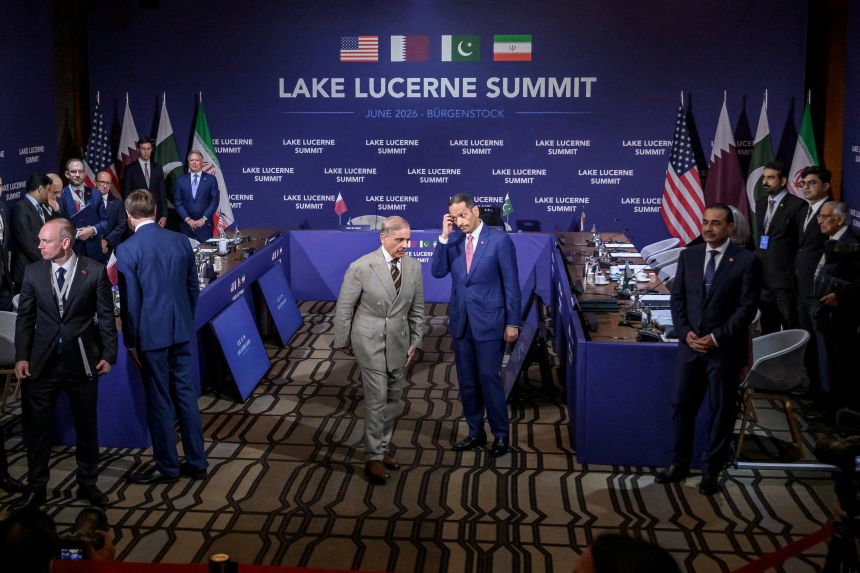
Both Pakistan and Qatar, who facilitated the Lucerne, Switzerland, meeting between the US and Iran in June, have remained notably silent in recent days. The last reported visit by a Qatari delegation to Tehran occurred on July 10, according to Iran’s semi-official Tasnim news agency.
Mediation efforts may once again gain attention if the oil markets react negatively, causing crude prices to surge above $100 due to dwindling reserves globally.
The upcoming US midterm elections also play a role. USdaily has reported that Trump’s advisors have cautioned that imposing new restrictions on Hormuz would likely drive up oil and gas prices, which would add to the political pressure on Republicans.
Many analysts predict that neither a full-scale war nor a diplomatic resolution will dominate the coming weeks. Instead, a chaotic conflict that alternates between military strikes and phases of relative tranquility is anticipated, as mediators seek new paths to revive talks.
Much will hinge on the sentiments of the US president.
However, one Gulf diplomat remarked, “It is likely to deteriorate before it improves.”
