
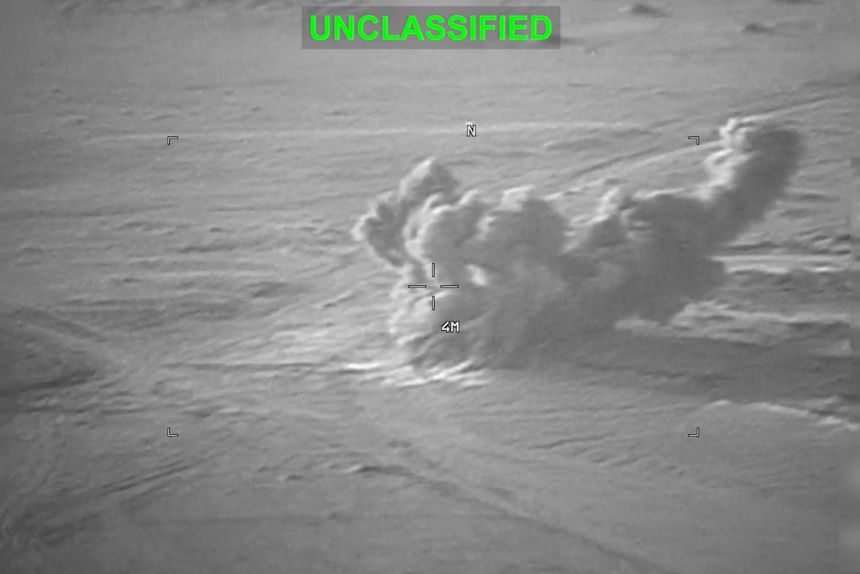
Following two weeks of intensified airstrikes targeting Iran, amid casualties among US troops and concerns from allies about the potential for further escalation, President Donald Trump maintains that Iran is “desperate” to bring an end to the continuous US attacks.
However, recent evaluations from both the CIA and the Defense Intelligence Agency indicate that the current bombing strategy employed by the US is unlikely to alter Iran’s stance in negotiations, as per two US officials who are knowledgeable about these assessments.
Concurrently, Qatar, the main mediator in the negotiations, threatened to withdraw from the discussions after Iran attacked a Qatari tanker earlier this month, an action that could lead to significant setbacks for diplomatic initiatives, according to both a current and a former US official.
The Strait of Hormuz, a crucial economic passage that previously saw a steady flow of ships, is now mostly deserted after Iran asserted its control over maritime traffic, using sporadic drone activity and mine threats to reinforce its authority.
This series of developments has left Trump, whose party is facing the prospect of severe losses in the upcoming midterm elections in November, with limited favorable options.
He might choose to escalate the situation by deploying ground troops, a threat he has frequently referenced while discussing potential actions such as occupying Kharg Island or eliminating Iran’s highly enriched uranium. This would contradict a crucial pledge he made to his MAGA supporters: “I will not send you to fight and die in endless foreign conflicts,” he stated during a 2024 campaign event in Pennsylvania.
Trump has also indicated that the US intends to target a suspected nuclear site located beneath Pickaxe Mountain, near the Natanz nuclear facility in the nation’s rugged terrain.
Alternatively, he could opt for a precarious status quo: a cycle of ongoing strikes and retaliations with Iran that may further endanger American lives and keep the Strait of Hormuz in a constant state of threat, potentially resembling the “forever wars” he has criticized. On Wednesday, Trump appeared to hint at this strategy in a post on Truth Social, declaring that “if the Islamic Republic of Iran fires at a vessel in the Strait of Hormuz… the United States will bomb and destroy ONE BRIDGE OR POWER PLANT.”
The primary challenge for the Trump administration is that, while the US military is significantly more advanced than Iran’s, both nations are engaged in fundamentally different types of warfare. The US is pursuing a vertical escalation strategy, targeting more sensitive and significant objectives within Iran, expanding its operational range to try to influence decision-making in Tehran.
Conversely, Iran, whose air defense systems and missile capabilities have been weakened by US attacks, is escalating horizontally—targeting US allies in the region and damaging civilian infrastructure to provoke international pressure on Trump.
USdaily contacted the DIA and the Qatari embassy in Washington D.C. but did not receive a response prior to the publication of this article. The CIA also declined to comment.
“Currently, the president is concentrating on making Iran accountable for their breaches of the MOU and their ongoing acts of terrorism in the Strait of Hormuz,” a US official informed USdaily. “Additionally, the president intends to make Iran accountable for the recent fatalities of US service members. These significant actions will persist until the president decides otherwise, yet discussions between our nations are ongoing. President Trump possesses all the leverage and options available.”
Potentially increasing economic pressures are new threats from Iran-aligned Houthi factions, which have asserted they will target vessels navigating through Bab al-Mandab, the route to the Red Sea that has previously served as a passage for some oil exports from Saudi Arabia amid the conflict. The group claimed responsibility for attacks on two Saudi tankers in the Red Sea early Thursday.
During a Senate Appropriations Committee meeting on Tuesday, senior defense officials faced intense scrutiny from lawmakers who demanded a clear strategy regarding the ongoing war.
“We require definitive answers and direct communication,” insisted Senator John Kennedy, a Republican from Louisiana, on Wednesday, pressing Defense Secretary Pete Hegseth and Joint Chiefs of Staff Chairman Dan Caine regarding the implications if the US were to withdraw from the conflict.
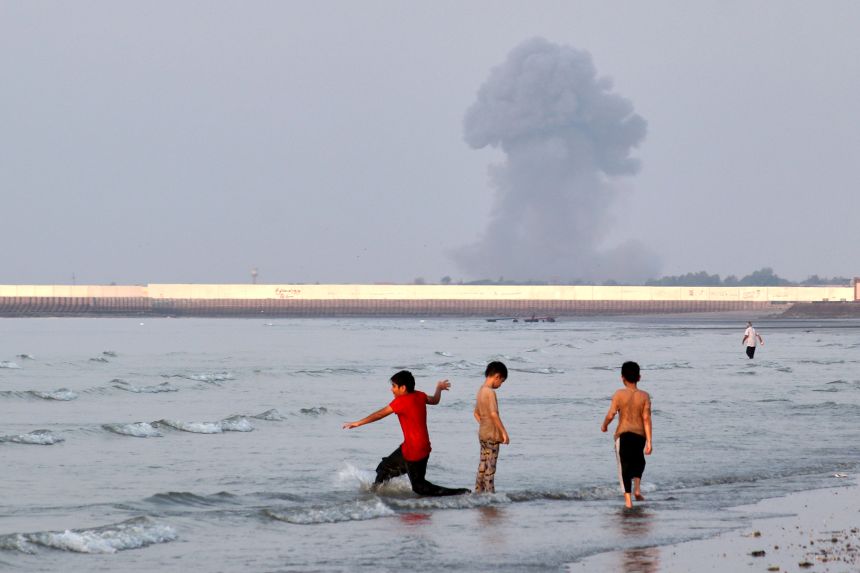
Changing circumstances
Trump and Hegseth had initially proclaimed success during the early phases of the conflict, asserting that Iran had suffered a military defeat.
Facing heightened pressure from the White House to demonstrate that the war is progressing positively, Hegseth and CENTCOM Commander Adm. Brad Cooper have implemented measures to limit information sharing regarding the conflict with other military and intelligence branches, as previously reported by USdaily.
Although Iran’s military capacity has undoubtedly diminished, it has begun targeting energy infrastructure throughout the Gulf region, increasing the economic repercussions of the conflict not only for the United States but also for its allies.
This situation has led to repeated calls from allies urging the US to scale back military operations and pursue a resolution that could reopen the Strait of Hormuz and alleviate threats to neighboring nations.
Iran has demonstrated a willingness to endure both economic and military hardships, believing it can outlast Trump’s resolve for the conflict, according to Alex Vatanka, an analyst at the Middle East Institute in Washington who focuses on Iran. However, this does not imply that Iranian leaders can permit the war to continue indefinitely.
“Those opposed to diplomacy fundamentally believe that the US never follows through. But those are not the individuals currently managing Iran,” Vatanka explained. “They may not have a favorable view of Trump or trust the US, yet they still perceive that as a better alternative than risking an indefinite war.”
The US has also reestablished a blockade that some analysts suggest may be more effective in persuading Tehran to make concessions than the current bombing campaign.
Nevertheless, for the time being, Iran’s ability to threaten the Strait of Hormuz and its surrounding nations remains its most significant leverage.
Iran has also recognized that it can utilize targeted attacks on the energy infrastructure of Gulf nations as an asymmetric strategy, having achieved considerable success with this approach during the conflict. This tactic is expected to persist, according to a second source familiar with US intelligence evaluations.
Officials from the Trump administration assert that the primary goal of the conflict remains to prevent Iran from acquiring nuclear weapons. However, this message has been complicated by the administration’s earlier claims that it had “obliterated” Iran’s nuclear capabilities through a series of strikes last year. Since the initiation of this war by Trump, the closure of the Strait of Hormuz has emerged as the central issue in the conflict.
“This is a bombing campaign lacking a coherent strategy,” commented Joe Kent, a former political appointee in the Trump administration who resigned due to the escalation leading to the conflict, in a post on X. “We are opting for escalation when de-escalation is still an option, embedding ourselves deeper into a larger conflict that we neither have the capability nor the desire to maintain. There is no military resolution here that will result in a victory. Increased bombings will not persuade Iran to reopen the SOH or to concede to our demands; it will only entrench their position further.”
USdaily’s Zachary Cohen and Davis Winkie contributed to this story
Davis Winkie’s work at USdaily is supported by a partnership between Outrider Foundation and Journalism Funding Partners (JFP). USdaily retains full editorial control of the reporting.
