
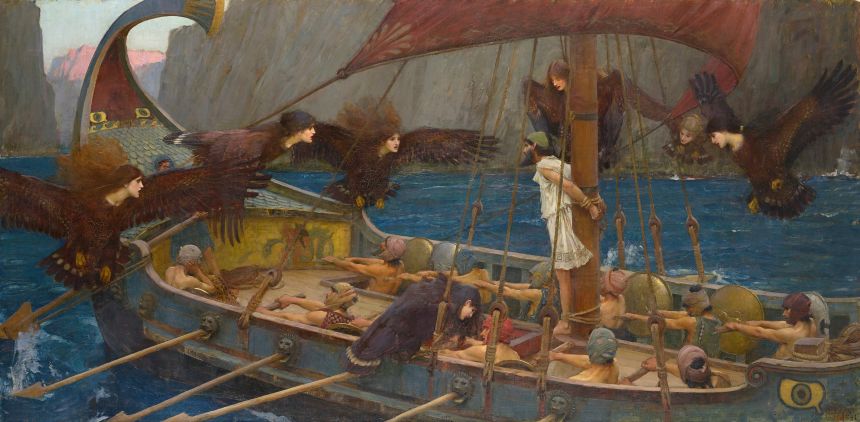
“The Odyssey” is a classic Greek epic poem narrating the adventures of Odysseus, the ruler of Ithaca. After spending a decade in the Trojan War, he endures another ten years attempting to find his way back home.
The reason it takes him a full ten years to cover approximately 560 nautical miles from Troy to Ithaca is not due to the limitations of ancient sailing technology. Historical records suggest that such a journey could have been completed in about a week, even with challenging winds. In Homer’s narrative, Odysseus faces numerous obstacles, including divine anger, natural forces, and human errors.
For those who may need a recap of the story: During his journey back to Ithaca, Odysseus’ crew consumes fruit that causes them to forget their mission. They become trapped in a cave with a Cyclops who devours humans. Just when they are close to reaching home, they are blown off course again. They face additional monsters that eat men, and Odysseus’ crew is transformed into pigs. He ventures to the underworld and performs a blood sacrifice. The journey also includes encounters with the Sirens and the sea monsters Scylla and Charybdis. Ultimately, all of Odysseus’ men perish, and he is held captive by Calypso for many years as her lover.

However, the contemporary use of the term “odyssey” does not fully encompass the arduous and painful journey that Odysseus and his crew faced. Rather, it suggests a voyage filled with thrilling adventures, romantic escapades, and a sense of wonder. Modern cultural references, like NASA’s Mars Odyssey or the creative problem-solving event called Odyssey of the Mind, exemplify this. The Honda Odyssey, introduced in the 1990s, was promoted as “the minivan for those who secretly aren’t minivan enthusiasts.” John Sculley, a former executive, titled his 1987 memoir “Odyssey,” chronicling his journey from PepsiCo to Apple.
Although Odysseus’s famed journey is known for its unpredictable nature, the development of the word “odyssey” in the English language is quite linear, according to John Kelly, a former dictionary editor and the author of the etymological blog Mashed Radish. The term “odyssey,” which comes from the Latin word “Odyssea,” traces back to the Greek title of the poem, “Odusseia,” meaning “the tale of Odysseus.”
Regarding the name “Odysseus,” Kelly mentions that its true origin remains uncertain, but the poem itself provides a folk etymology suggesting it means “hated by gods and men.” In “The Odyssey,” Odysseus shares that his grandfather named him this way due to his destined suffering and the suffering he would cause others.
EDITOR’S NOTE: USdaily’s “Word of the Week” explores the meanings behind terms making headlines.
As “The Odyssey” became a fundamental part of Western literature, the term transitioned into English as a direct reference to Homer’s work. The Oxford English Dictionary states that it was first utilized in the 11th century by the monk Byrhtferth in his spiritual guide “Enchiridion,” appearing in Old English as “Odissia.” The next documented use occurred in the 16th century when poet Edmund Spenser mentioned in a letter to Sir Walter Raleigh that his own epic, “The Faerie Queene,” was inspired by “The Odyssey.”
It was not until the late 1800s that “odyssey” began to signify a long, wandering adventure in a more general context, according to Kelly. Scottish writer Robert Louis Stevenson used the term in his 1886 novel “Kidnapped.” When the protagonist, David, describes his perilous trek across the Scottish Highlands to a lawyer, the lawyer responds, “this is a great epic, a great Odyssey of yours.” Within a short span, “odyssey” transitioned from a proper noun to a lowercase term applicable to both literal and metaphorical journeys.
Whether referring to an exhilarating journey or a sequence of challenging experiences, the diverse applications of “odyssey” convey a lengthy and meandering quality, according to David Elmer, a Harvard University professor of Greek literature. “The essence of the term focuses less on the traveler’s subjective experience and more on the nature of the journey,” he explains. For Alexander Forte, an assistant professor of classics at New York University, a defining aspect of an “odyssey” is that it is a narrative worth sharing: characterized by unexpected events or lengthy detours, the traveler survives to recount their tale.
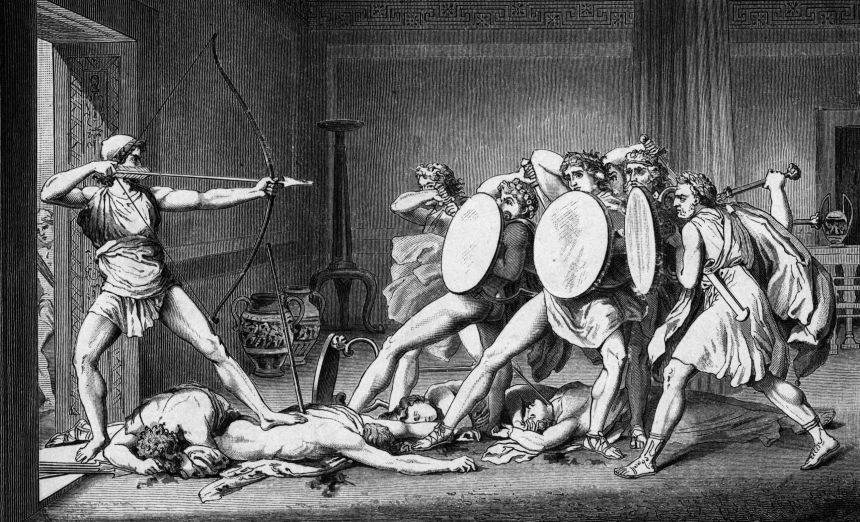
How did ancient poets, including Homer, perceive Odysseus’s journeys? Forte highlights the Greek term “nostos,” which signifies “homecoming” and refers to epic tales of a hero’s return. “It carries complex meanings similar to ‘return’ in English,” he states. “It can signify a joyful return, but it might also denote a challenging or sorrowful one.”
A narrative as extensive as “The Odyssey” is likely to inspire a variety of interpretations. While this author may focus on the challenges faced by Odysseus, his journey is also filled with moments of enjoyment and excitement. The central theme of “The Odyssey” revolves around Odysseus’ longing to return home, yet there are indications that he relishes the adventure, as noted by Sheila Murnaghan, a Greek professor at the University of Pennsylvania. When Odysseus and his crew find a cave on the Cyclopes’ island filled with livestock and cheese, his men want to flee with the supplies, but Odysseus, driven by curiosity, insists on staying to discover more about the cave’s occupant. Furthermore, after spending an entire year on Circe’s island indulging in luxury, it is his crew that pushes him to head home.
“Readers of Homer’s ‘Odyssey’ often feel that Odysseus’ urgent desire to return home doesn’t tell the entire story. There exists within him a profound thirst for adventure and exploration,” she adds, referencing Dante’s “Inferno” and Alfred, Lord Tennyson’s poem “Ulysses,” which portray Odysseus (known as Ulysses in Latin) as a restless soul who seeks adventure.
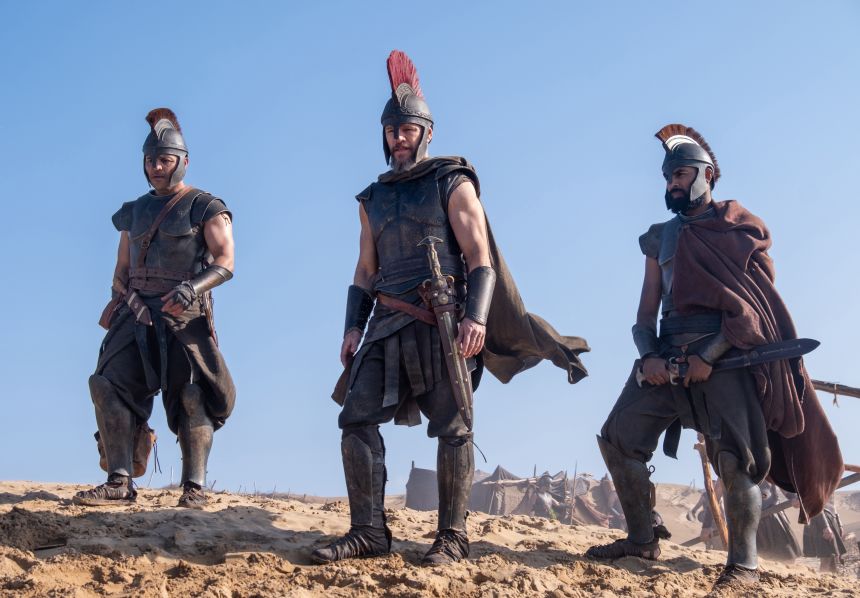
The contemporary understanding of “odyssey” may be influenced by how modern audiences engage with the source material. When students first read “The Odyssey” in school or when viewers watch adaptations like Christopher Nolan’s film, Kelly suggests they are often captivated by the fantastical elements and mythical beings depicted in the story. “I often wonder if our interpretation of ‘The Odyssey’ is notably different from that of ancient audiences,” he remarks. “Perhaps the original Greek listeners or Roman readers were more focused on Odysseus’ character: What lessons can I glean about virtue? What insights can I gain about masculinity, heroism, fatherhood, and being a husband?”
“Indeed, many of us learn lessons about the consequences of excessive cunning or hubris,” Kelly adds. “Yet, I believe many are simply eager to witness the encounter with the Cyclops.”
READ MORE IN THIS SERIES
- How much shooting does it take to end a ‘ceasefire’?
- Why does Trump keep talking about ‘communism’?
- Why does a ‘draw’ sometimes feel like a win?
- Does Trump’s understanding with Iran count as a ‘deal’?
- Who can call themselves a ‘New Yorker’?
