
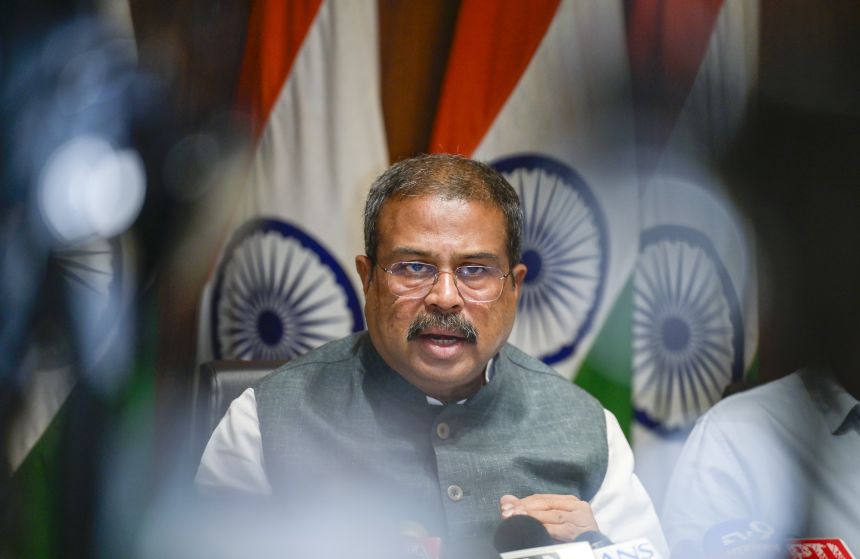
On Saturday, India’s education minister announced his resignation, marking a significant triumph for youth demonstrators whose escalating protests have posed a unique challenge to Prime Minister Narendra Modi’s administration.
The protesters have demanded accountability following claims that entrance examinations for prestigious medical colleges were leaked and sold, with the movement spearheaded by a youth group called the Cockroach Janta Party (CJP).
Dharmendra Pradhan declared his resignation on Saturday, succumbing to intense pressure as tens of thousands of students and supporters rallied for his ousting and comprehensive changes to India’s examination system. Pradhan’s resignation has yet to be publicly acknowledged by Modi.
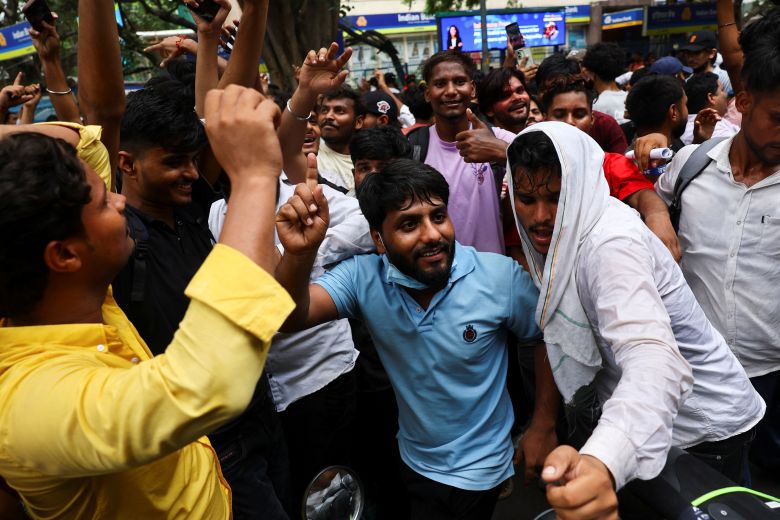
Following his resignation, the CJP stated it would halt its nationwide protests “with immediate effect,” as the government has acquiesced to their demands.
Among these demands was compensation for the families of students who, as reported by Indian media, took their lives upon discovering their exam results would be nullified.
The CJP also indicated that the government has agreed to evaluate their five-point reform plan for examinations, and discussions will be held with movement representatives.
Abhijeet Dipke, the CJP’s founder, expressed his approval of Pradhan’s resignation in a statement made after the announcement, while also noting that further action is necessary.
The national president of the ruling Bharatiya Janata Party (BJP), Nitin Nabin, a close ally of Modi, remarked that Pradhan’s resignation demonstrates “the highest standards of integrity and selfless service in public office.” He further stated that the party “stands firmly” behind him in this decision.
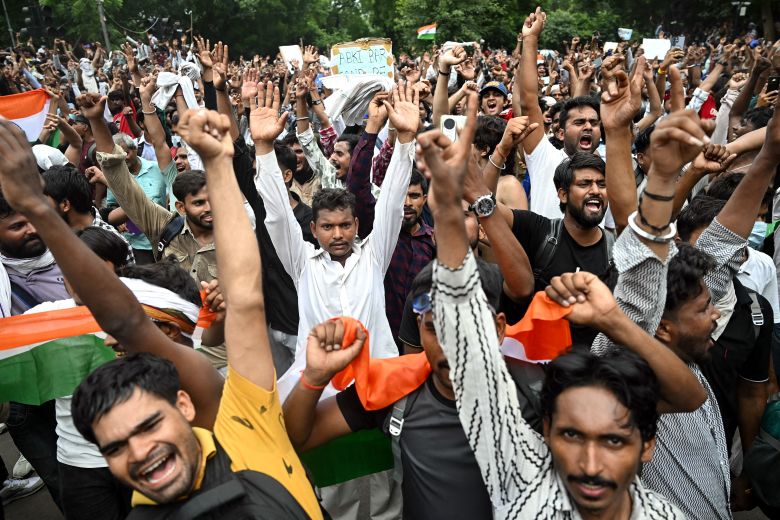
This week, demonstrators have faced off against law enforcement, whose methods have intensified youth frustration and garnered broader backing for the protest.
Pradhan’s resignation marks an unusual setback for the government. Modi, who is in his third term, typically remains unaffected by protest movements. His administration has faced longstanding criticism for suppressing dissent and opposition in the world’s largest democracy.
For several weeks, protesters have occupied central New Delhi, demanding accountability regarding allegations that entrance exams for India’s competitive medical schools were leaked and sold, forcing millions to retake the tests.
The movement has been led by the CJP, a youth-driven campaign that originated from an online joke but has transformed into a political movement reflecting the frustrations of countless young Indians.
A Generational Call to Action
Initiated by Boston University alumnus Dipke, the CJP surfaced in May after comments made by India’s chief justice were widely seen as likening unemployed youth to cockroaches. These remarks resonated deeply in a nation struggling with high youth unemployment and swiftly became a rallying point for a generation that feels overlooked by those in power.
What began as a meme quickly evolved into a nationwide movement, bringing together students and young job seekers demanding accountability, opportunities, and systemic reform.
Protesters are advocating for a complete overhaul of an examination system that has long been fraught with issues, claiming it exerts tremendous pressure on students and imposes financial strains on families investing in their children’s futures.
They are also highlighting the severe problem of youth unemployment in India.
India boasts one of the world’s youngest populations, with over 360 million individuals aged between 15 and 29, as per a recent Azim Premji University report from Bengaluru.
Yet, nearly 40% of graduates aged 25 and younger are unemployed, and approximately 20% of individuals aged 20-29 lack jobs, according to the report, which described the shift from education to unemployment as a “significant challenge.”
Tensions rose after protesters attempting to march towards Parliament faced a police response earlier this week, with officers employing batons and tear gas to disperse the crowds.
Many participants in the protests come from middle-class households that have historically supported Modi’s BJP party but are increasingly frustrated by a perceived shortage of opportunities in contemporary India.
While Modi secured a third term in 2024, the party’s majority diminished, necessitating reliance on allies for the first time in parliament.
After weeks of silence regarding the protests, Modi provided his initial public response on Thursday.
“Numerous effective measures have been implemented over the past two and a half months since the examination leak incident,” he stated. “Those accountable have been apprehended and are currently incarcerated. Our primary responsibility is to ensure that the academic year for students is not compromised.”
Earlier this week, he also issued a vague warning via X. “Those who attempt to jeopardize the future of our youth will face consequences.”
