
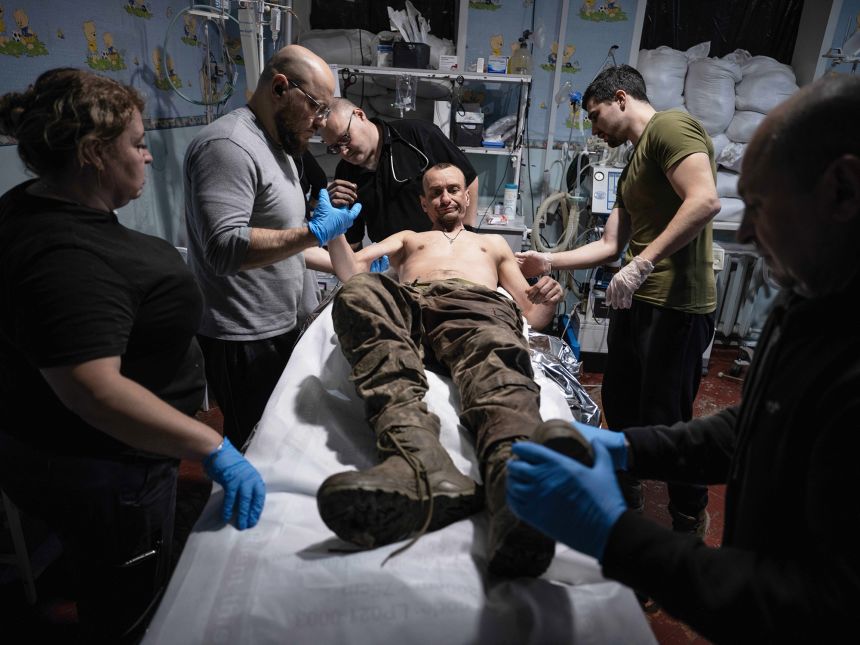
The situation of one specific city over the course of a year offers a unique perspective on Russia’s disastrous war of choice.
The gradual and costly penetration of Kostyantynivka, crucial for Moscow’s progress in Ukraine’s eastern Donbas and proclaimed as occupied by the Russian defense ministry on July 3, reveals the tenacity of Kremlin forces and the heavy losses they are willing to endure for even minuscule achievements.
On July 3, the Ministry of Defense released several videos showing Russian soldiers in various locations within the town’s center, holding Russian flags, to support their claim of having captured the area. This misleading assertion was contradicted by recent footage, testimonies from Ukrainian soldiers, and independent assessments of the frontlines, marking it as one of many statements made by Russian officials in recent months aimed at portraying an exaggerated sense of battlefield success, potentially to convince their domestic audience or officials in the White House that their military efforts were progressing.
President of Ukraine, Volodymyr Zelensky, promptly highlighted the falsehood, inviting Russian President Vladimir Putin to meet him in the town for discussions on peace, should it truly be under Moscow’s control.
USdaily, which has reported from or near Kostyantynivka on two occasions in the past year, has utilized geolocated footage and eyewitness accounts to illustrate the severe toll and sluggish pace of the Russian advances leading to the erroneous claim of the town’s capture. The situation of the town reveals both the relentless nature of Moscow’s offensive and the relatively minor victories it claims, even if inaccurately.
July 29, 2025
Analysis by independent Ukrainian experts, Deep State, indicates that Russian troops are positioned outside the town, attempting to advance. The main road leading into the town features fishing nets as a protective measure against Russian drones. Despite the ongoing threat from aerial attacks, vehicles continue to travel safely into the town, and the central market remains lively.
A USdaily team that visited in July of the previous year observed streets filled with residents, although some were hesitant to be filmed, possibly due to fears of future Russian control and potential penalties for “collaborating” with Western media.
November 2025
As winter approached, the map illustrated the so-called gray zone of contested territory edging closer to the town’s core. Russia’s offensive intensified with increased airstrikes. Footage shared by Ukrainian forces depicted apartment buildings in the town’s southwest engulfed in flames.
Additionally, a Russian drone captured the destruction caused by an airstrike, occurring just a few streets away.
Nevertheless, Ukrainian forces remained confidently stationed in the town center, with the General Staff sharing a video of an officer casually standing in Victory Square in November.
Footage released by Russian sources during that period appeared to show their infantry’s perspective from within an apartment complex courtyard near Gromov Street at the southwestern edges.
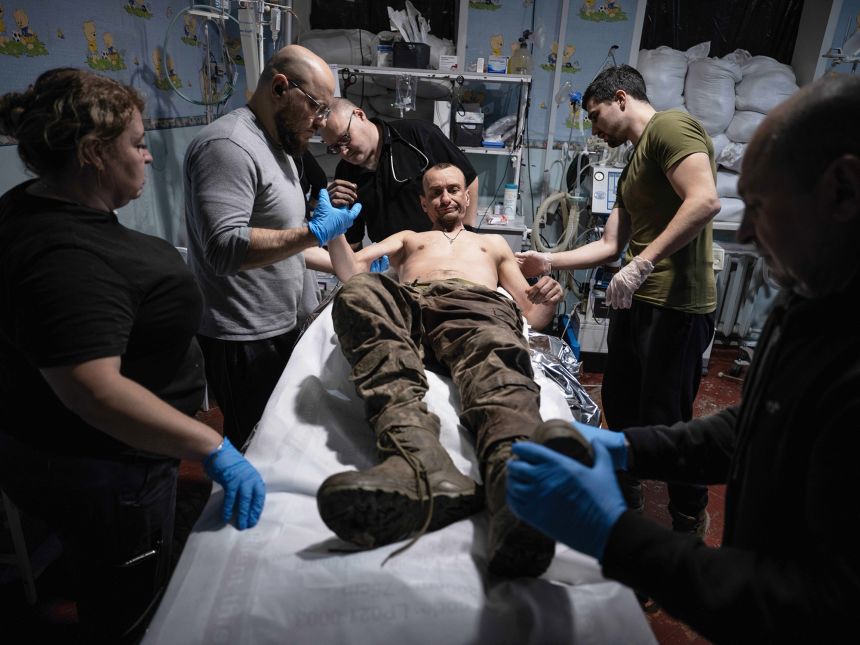
January 2026
In the closing days of the year, Russia seems to make its most significant advances, as recorded by Deep State during the first week of 2026. The gray zone has now enveloped the town, with two separate Russian forces drawing closer to its main access routes.
Two primary factors influence the degree of Moscow’s progress. The types of attack drones—ranging from small First-Person View drones that target individuals or vehicles to larger models capable of striking buildings—are increasing in range each month, gradually pushing the secure area around Kostyantynivka further away and complicating Ukraine’s defense. More importantly, Western officials began to corroborate Ukrainian reports suggesting that Russia was suffering up to 35,000 casualties, either dead or wounded, on the battlefield each month.
This staggering statistic—likely stemming from a Ukrainian directive to maximize enemy casualties with drones and the ongoing implementation of brutal “wave” assault tactics by Moscow—highlights the probable human cost of Russia’s minor territorial gains near Kostyantynivka.
However, footage released in January indicates that Ukrainian forces are still firmly positioned in the central area, close to the embattled railway station, by the month’s end.
By February, white phosphorus—a devastating munition whose deployment over populated areas is deemed illegal under humanitarian law—begins to fall on the apartment buildings in the southwest, indicating that the outskirts are experiencing the heaviest fighting.
Despite this, Ukrainian forces continue to share videos demonstrating that they remain in the central-southern part of the town.
At this point, it is apparent that a significant portion of the civilian population has evacuated, and the town is gradually being reduced to ruins. A video released in April shows that areas where Ukrainian troops stood nonchalantly in November have since become mere skeletal remains of buildings and debris, raising concerns about the economic significance of the regions for which Russia is fighting.
May 2026
USdaily witnessed the shift in the reach of Russian drones firsthand in May during a challenging five-hour trek on foot along the main access route into Kostyantynivka. A year prior, this road was safely traversable under the cover of fishing nets. By May, although the nets remained, the path was strewn with burnt vehicles that had been struck by drones and automated robots used for delivering supplies to the front lines.
The five-kilometer (3.1-mile) journey along what has become known as the “Road of Life,” starting from the nearby town of Druzhkivka to Kostyantynivka’s outskirts, was predominantly on foot, during which Ukrainian soldiers had to frequently seek cover in the foliage, hoping the Russian drones above would not spot them. Vehicles on this road had turned into targets, and the team passed a burned-out car where an officer from the unit had been killed just days before.
The heightened danger on the road, despite the presence of Ukrainian troops still in the town center, reflects the enhanced range of Russian drones developed over recent months along with the ongoing technological advancements on both sides that continuously alter the battlefield dynamics. The map indicates that the gray zone has now encroached deep into the town, with Russian forces firmly established in its southwest.
July 2026
Two months later, the Russian military would assert that the town was under their control and share videos as purported evidence. However, it is evident from the map dated July 3 that they still lack control over significant portions of it.
A week after the claimed takeover, Ukraine’s 19th Army Corps posted a video on Telegram showing their drones targeting Russian troops amid the ruins of the city, resulting in the death of one “occupier.” The message stated: “The enemy projects victories on screens, but in reality, they are being eliminated by our forces. The city still stands. Defense continues.”
This encapsulates the situation in Kostyantynivka: while Russia may be gradually gaining ground, the cost is immense. The area spans a mere 66 square kilometers (25.5 square miles), while the entirety of Russian territory is approximately 17 million square kilometers (6.6 million square miles).
The precise number of lives lost, both Russian and Ukrainian, in this conflict remains unclear. However, images of the town starkly illustrate its devastation.
The town holds strategic significance as its capture would allow Moscow’s forces to approach the last major urban centers in the Donbas region that Putin desires—Kramatorsk and Sloviansk. However, taking both of these towns is likely to require a similarly brutal and protracted conflict, pushing any optimistic timeline for achieving this crucial objective for Moscow back by at least a year.
A year of relentless violence in Kostyantynivka highlights a fundamental weakness in Putin’s war strategy: how long can he maintain Russian public support in a conflict where the smallest accomplishments must be exaggerated and remain elusive in reality?
