

A significant concern for Democrats ahead of this election cycle is the ongoing trend in early national and state polling indicating they are not appealing to as many voters who disapprove of President Donald Trump’s performance as they did during his initial term. Ironically, this situation could also pose a significant risk for Republicans if it remains unchanged leading up to November.
Perspectives on the sitting president’s job performance have emerged as a key determinant in contemporary midterm elections. However, Democrats are finding it challenging to translate widespread disapproval of Trump’s second term into adequate backing for their candidates in the House and Senate.
This phenomenon can be termed the 2026 approval gap. On one hand, Trump’s approval ratings have dropped below the levels that historically prompted midterm waves against other presidents, such as Bill Clinton in 1994, George W. Bush in 2006, Barack Obama in 2010, and Trump himself in 2018. Yet, most polls fail to show Democrats gaining a distinct or steady lead in crucial races that will ultimately determine control of the House and Senate.
According to Evan Roth Smith, a Democratic pollster connected to the party’s centrist faction, in 2018, the percentage of voters who expressed disapproval of Trump’s actions was around 10 points higher than those who approved. Currently, Smith observes that Trump’s net approval rating stands at approximately 20 points negative, which is double the previous figure, yet the Democratic lead in generic ballot surveys for the 2026 House election is significantly less than the party’s approximately 8.5-point advantage in the 2018 national House popular vote indicates.
“Democrats have not managed to convert even a fraction of the American electorate that has turned against Donald Trump in an unprecedented manner,” Smith commented.
The implications of this trend for Democrats are evident. Conversely, the challenge for Republicans is more nuanced. While the party appears to be performing unexpectedly well among voters disillusioned with Trump, it would be historically unusual for them to maintain this level of support until Election Day.
Should these dissatisfied voters act similarly to how they did during Trump’s first term — or opt to show their discontent by abstaining from voting — the currently favorable and competitive polls for the GOP may turn out to be misleading.
Democrats are struggling to attract voters put off by Trump
Sentiments regarding the president have increasingly influenced midterm elections over time, but this trend reached new heights during Trump’s first term.
In the 2018 exit poll, 90% of voters who disapproved of Trump’s presidency expressed support for Democratic candidates in the House; in 2020, 93% of Trump disapprovers voted for Democrats. In both the 2018 and 2020 Senate elections, Republican Susan Collins of Maine was the only GOP candidate to win in a state where exit polls indicated more voters disapproved than approved of Trump’s performance. Conversely, Republicans captured around 90% of Trump approvers in the House elections of 2018 and 2020, maintaining a similar level in most Senate contests during his first term.
This year, Republicans are still performing well in preliminary polls among Trump supporters. Recent national surveys conducted by USdaily, Quinnipiac University, Marquette Law School, NBC, and NPR/PBS News/Marist all indicate that at least 90% of Trump supporters plan to vote Republican in the upcoming House elections. Recent polls from The New York Times/Siena University in six battleground Senate races show GOP candidates capturing at least 90% of Trump approvers in Iowa, Maine, Ohio, and Texas, with around 85% in Alaska and North Carolina.
However, Democrats have yet to replicate their previous successes among voters who disapprove of Trump. In the latest USdaily poll from earlier this spring, House Democrats were securing 69% of this demographic, while more recent national NYT/Siena and Marquette surveys showed them winning just over 75%, and 83-85% in the NBC, Marist, and Quinnipiac polls.
A recent Quinnipiac poll in Pennsylvania highlighted the challenges facing Democrats. Since February, Trump’s net approval rating in the state has worsened from minus 15 points to minus 19. Nevertheless, the Democratic lead in the House vote remains stagnant at just 6 points, with 93% of Trump approvers indicating they will vote Republican, compared to 84% of disapprovers planning to support Democrats.
Similarly, the NYT/Siena Senate polls show that many GOP candidates are outpacing Trump’s approval ratings in a way only Collins achieved during his first term.
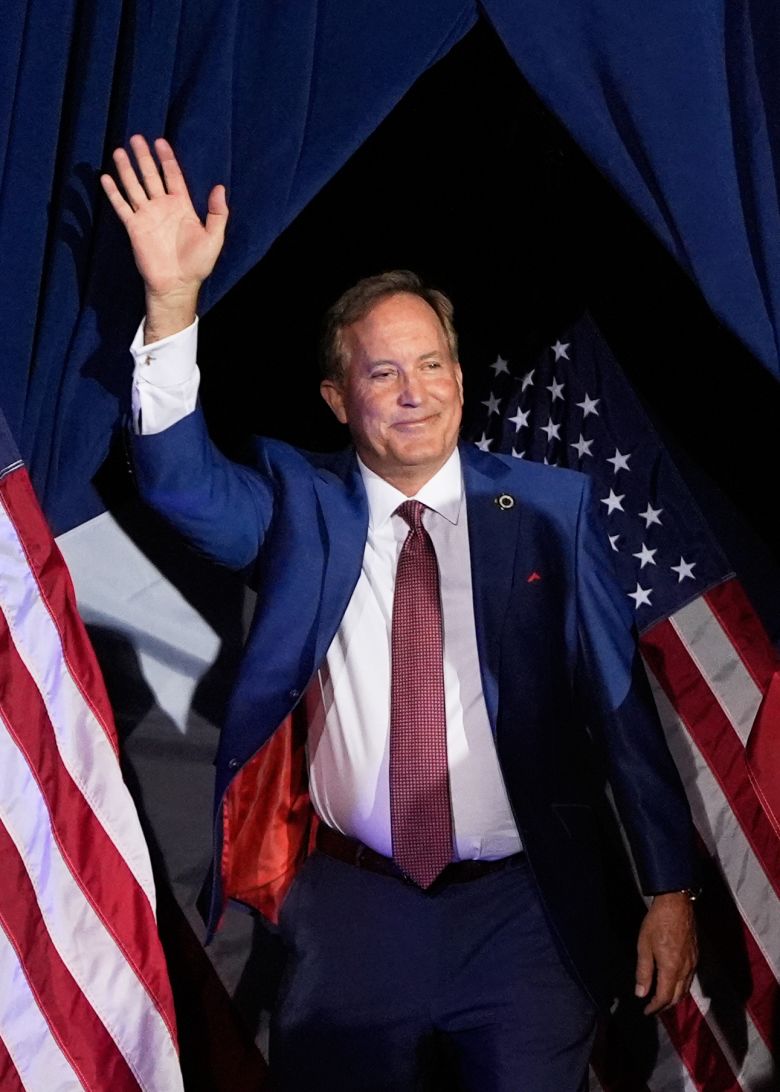
In these polls, Republican Senator Jon Husted in Ohio and GOP nominee Ashley Hinson in Iowa each held narrow leads over their Democratic rivals, while nominee Ken Paxton was tied in Texas — despite only 44% of voters approving of Trump’s job performance in all three states. In Alaska, surveys revealed that Sen. Dan Sullivan narrowly led Democrat Mary Peltola, even though voter approval of Trump’s performance was evenly split.
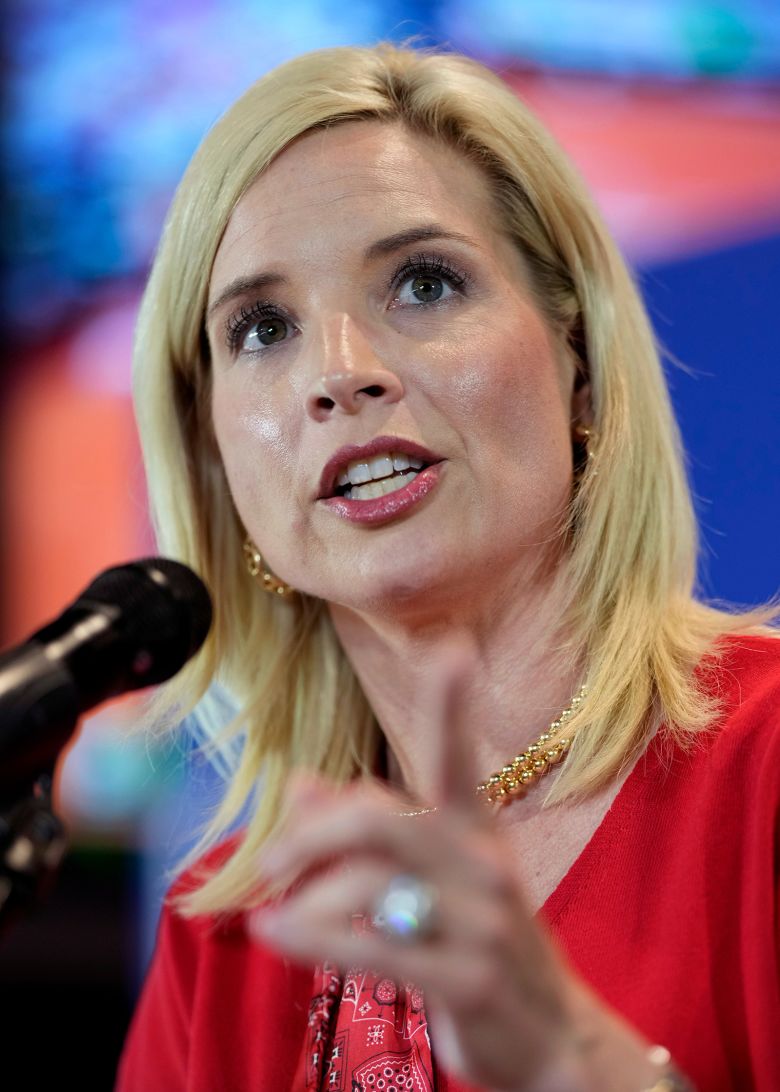
Only in North Carolina and Maine, the two states with the highest disapproval of Trump, did polls show Democratic nominees Roy Cooper and Graham Platner leading. (The Senate leads in all six states fell within the surveys’ margin of error.) Even among voters who expressed “strong” disapproval of Trump, no Democratic candidates were garnering as much support as most of the party’s candidates received from voters who were significantly alienated by the president during his first term.
The strong performances of GOP Senate candidates in predominantly Republican states, where Trump’s approval ratings have dropped significantly, indicate that “the Republican voter base has established a solid foundation in those areas,” comments Kyle Kondik, managing editor of Sabato’s Crystal Ball at the University of Virginia’s Center for Politics. Should Democrats fail to win Senate seats in states like Ohio, Iowa, and Texas while a Republican president is so unpopular, he adds, it will raise legitimate questions about when they might achieve such victories.
Republicans are facing a parallel challenge
According to USdaily’s most recent poll of polls, Trump’s national approval rating among the general adult population is merely 36%, with 61% expressing disapproval as of Friday. This figure is significantly lower than the approximately 45% approval rating that previous presidents experienced in exit polls during challenging midterm elections: Clinton in 1994, Obama in 2010 and 2014, Joe Biden in 2022, and Trump in 2018 (when 45 percent approved and 54 percent disapproved in the exit poll).
It would not be a shock to either party if Trump’s approval ratings improve a bit by Election Day. However, the ongoing economic dissatisfaction, Trump’s difficulty in navigating the Iran war, and the fundamental rigidity of public opinion regarding him make a significant recovery unlikely, preventing him from reaching even the approval levels he had in 2018. As a result, Republicans may need to outperform among voters dissatisfied with Trump’s performance to avoid the worst-case scenarios in November.
One advantage for Republicans is the electoral landscape. As previously discussed, control of the House and Senate will largely be determined in House districts and states that supported Trump in 2024.
Trump is likely to retain more support in those areas compared to purple or Democratic-leaning regions. Yet, as highlighted by the NYT/Siena polls in Iowa, Ohio, and Texas, Republicans face no assurance that a majority of voters still approve of his performance in numerous competitive races this year. To maintain their Senate majority, several candidates may need to replicate what only Collins achieved during Trump’s first term: winning in states where the majority of voters disapprove of his performance.
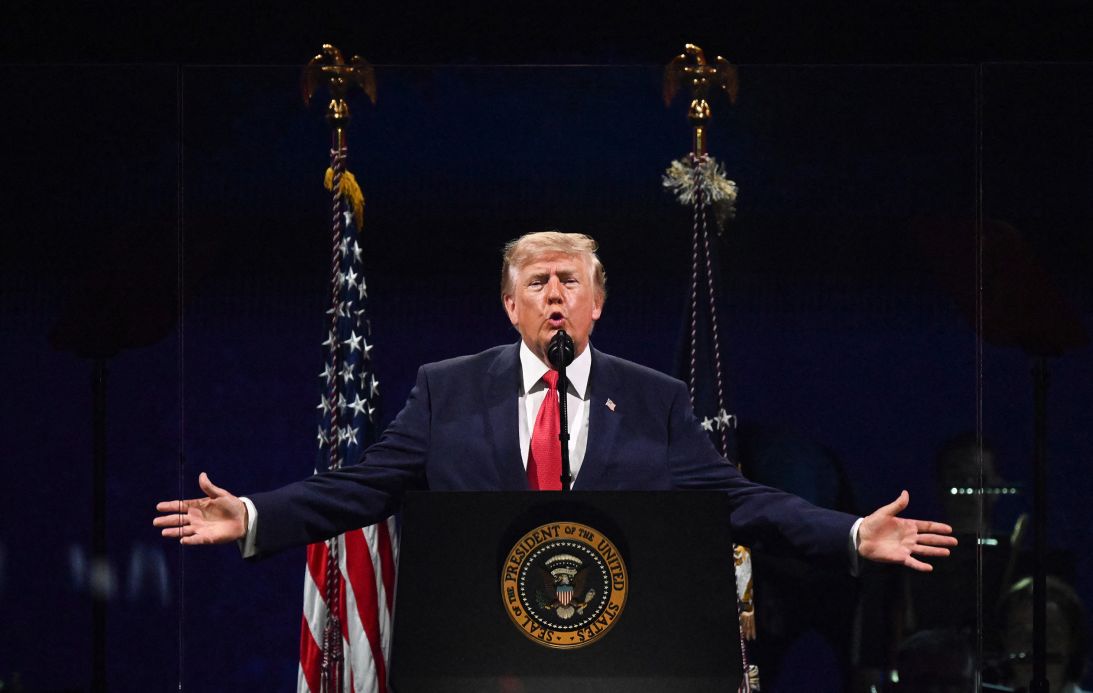
Republicans, confident they can withstand the precedents set during Trump’s first term, emphasize one key factor: the Democrats’ declining reputation following Biden’s troubled presidency. In the 2018 exit poll, voters were evenly divided in their perceptions of the Democratic Party; however, today, the party’s image has significantly weakened.
“They are facing a brand issue,” states GOP consultant Jesse Hunt, who served as the communications director for the party’s Senate committee in 2020. “They have not effectively communicated an alternative.”
GOP strategist Brad Todd, a USdaily political commentator, indicates that the Trump disapprovers who are still hesitant to support Democrats are primarily found in two demographics: college-educated white men (described as “middle managers in corporate America or small business owners… essentially individuals who manage golf clubs”) and non-college-educated white women. Both demographics have numerous grievances regarding Trump’s performance but also retain significant unresolved doubts about the Democrats.
“The president’s narrative needs to shift from, ‘This is the best economy ever’ to ‘I inherited a difficult situation, and if you allow them back in charge, it will worsen,’” Todd explains.
Both Todd and Hunt believe that Republicans in competitive races will benefit from associating all Democrats with the far-left candidates, including several who identify as democratic socialists, who have gained traction in primaries this year.
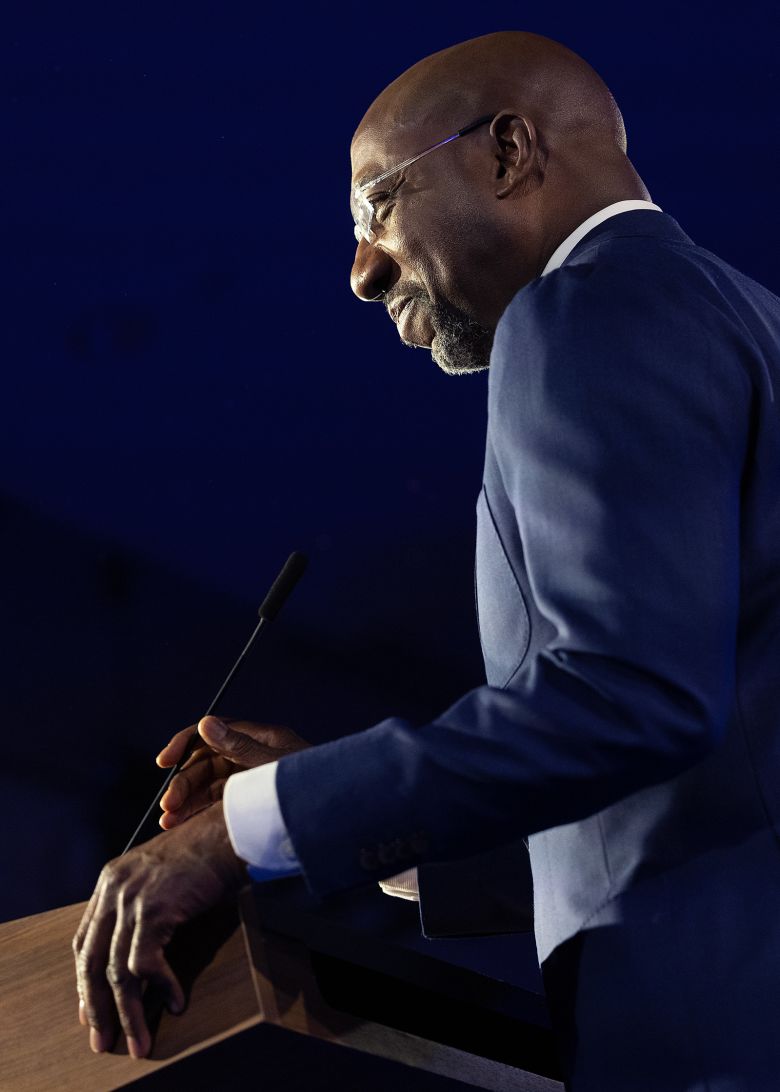
A recent instance of the president’s party effectively shifting focus to their opponents occurred in 2022. During that year, several Democratic Senate candidates secured victories in states where a majority of voters disapproved of Biden’s performance. For senators like Mark Kelly, Raphael Warnock, and Maggie Hassan, the key to their success lay in effectively portraying their Trump-aligned opponents as extreme.

This election cycle, Republicans are attempting a strategy that introduces an additional layer of separation. Given that Democrats have nominated relatively more centrist candidates in nearly all competitive races, Republicans must undermine their credibility by linking them to far-left candidates who are often situated hundreds or thousands of miles away.
Republicans attempted a similar tactic in 2018 during the initial victories of Rep. Alexandria Ocasio-Cortez and other members of the left-wing “Squad” — but this did not prevent Democrats from gaining over 40 House seats. Hunt believes that this year will yield different results.
“The (far-left) individuals in 2018 were sufficient to fill a starting lineup in a basketball game,” he notes. “Now, there is a lineup that could fill an entire baseball roster. This reflects a growing momentum that voters can recognize.”
Nevertheless, the experiences from 2018 illustrate how opinions regarding the president’s performance have typically overshadowed perceptions of the opposing party during midterm elections. In 2010, the public perception of the GOP was not more favorable than that of the Democrats, and yet, with widespread voter dissatisfaction regarding Obama’s initial two years, Republicans secured the highest number of House seats for either party in a midterm since 1938.
“If voters are sufficiently dissatisfied with economic conditions and the president’s performance… I believe that their dislike for the Democrats will not be as significant a factor,” states Alan Abramowitz, an emeritus political science professor at Emory University who specializes in presidential approval and elections.
How Democrats can restore their first-term advantage
The most optimistic Democrats hold the view that the party’s challenges among Trump disapprovers are more seasonal than structural. CJ Warnke, the communications director for the House Majority PAC, believes that this gap will naturally close as candidates establish distinct identities in the lead-up to the fall election.
“I think we will recover ground and win over more Trump disapprovers as our candidates campaign over the final months,” Warnke asserts. “During this period, they will demonstrate to voters that they are deeply connected to the districts and will advocate for the issues that matter most to those voters.”
Democratic strategist Dan Sena, who previously served as the executive director of the Democratic Congressional Campaign Committee during the party’s 2018 success, noted that this dynamic played out in that election. “This is precisely why campaigning is essential,” Sena emphasized. “Candidates establishing themselves as independent voices” distinct from the national Democratic Party was crucial in converting some of the dissatisfied voters away from Trump.
By the time Election Day arrives, Sena remarked, very few Republican candidates in 2018 managed to surpass Trump’s approval ratings in their districts — and he anticipates that most GOP candidates this year will encounter a similar ceiling.
Similar to Abramowitz, Sena believes the primary concern for the GOP isn’t that numerous Republican-leaning voters who disapprove of Trump will switch to support Democrats, but rather that some may choose to abstain from voting, thereby creating a more Democratic-leaning electorate than current polls suggest. The latest Marquette survey indicates this possibility: it found Democrats winning only 76% of Trump disapprovers among all registered voters, but 86% among those considered likely voters.
Smith, the Democratic pollster, anticipates that his party will also benefit from these dynamics. Nevertheless, he is more apprehensive that Democrats could continue to underperform among Trump disapprovers right up to Election Day.
Convincing these voters that Democrats will lead to better outcomes in their lives than Trump, Smith asserts, “is the ballgame” for 2026. “The size of the House Democratic majority and the question of Senate control hinge primarily on whether Democrats can effectively articulate a clear and compelling alternative to Trump for these 10 percent of voters who have never disapproved of him in such a manner before,” Smith adds.
Trump’s decline in popularity is essential for significant Democratic gains in November. The lingering question is whether this decline will be enough.
