
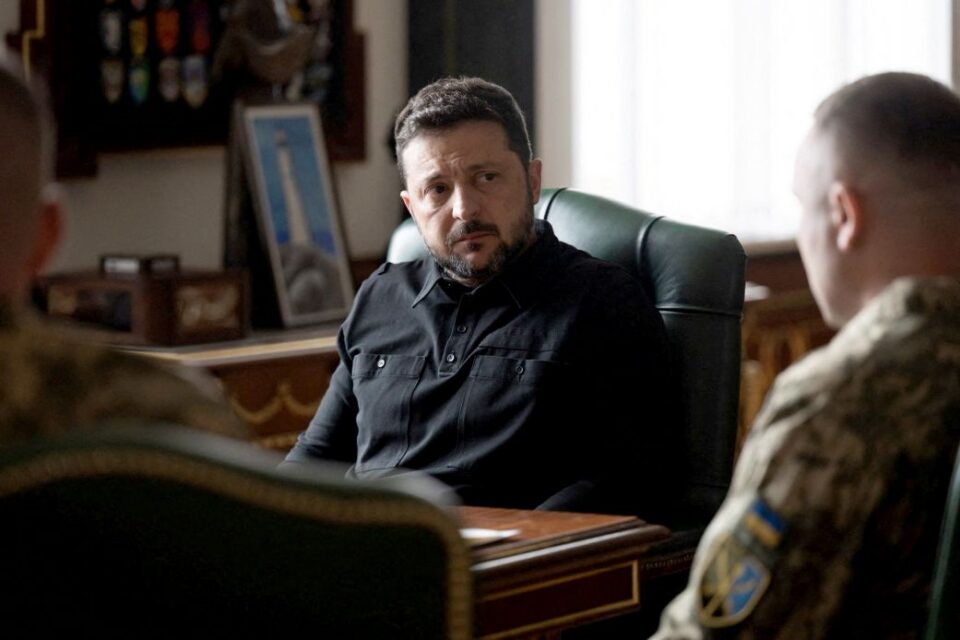
The continued appointment of 60-year-old Oleksandr Syrskyi as Ukraine’s leading commander has become an outlier in a conflict that demands significant transformation on the front lines. This is not an age-related commentary, but rather a reflection of the mindset of the recently dismissed military chief.
In this context, President Volodymyr Zelensky’s choice to appoint 43-year-old Mykhailo Drapatyi—an officer from a younger generation of military leaders—appears to be a timely decision.
Syrskyi was entrenched in Soviet-era strategies, demonstrating a relentless and harsh approach, combined with moments of strategic insight. His leadership was well-suited to Ukraine’s early war efforts to counter and occasionally outmaneuver a more formidable adversary. His accomplishments include the defense of Kyiv in 2022, the swift reclaiming of the Kharkiv region later that year, and the unexpected incursion into Kursk, Russia itself, in 2024.
However, his tenure was also characterized by significant losses among Ukrainian forces. In the end, the same ambition and political struggles that facilitated his ascent ultimately contributed to his exit.
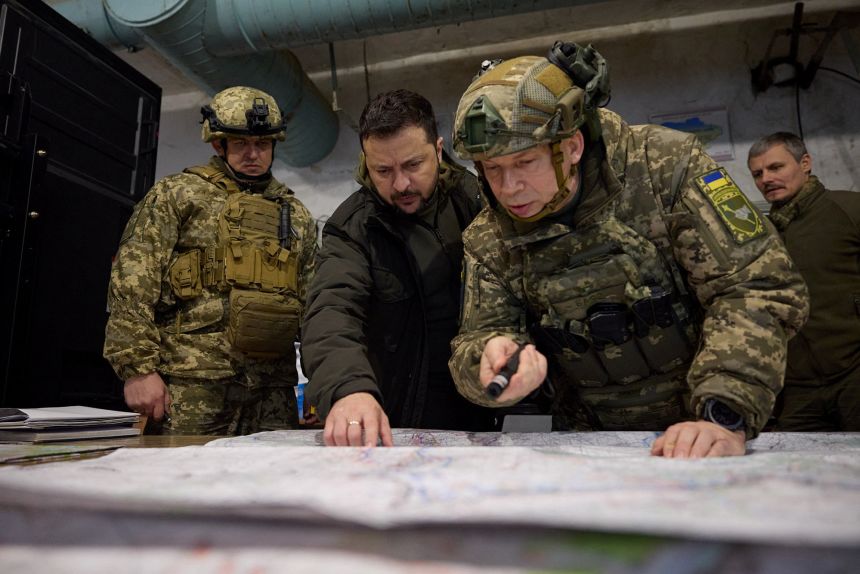
Syrskyi was appointed after the unsuccessful 2023 counteroffensive, which led to the previous military leader, Valerii Zaluzhnyi, being reassigned to London as Ukraine’s ambassador. Analysts believe the failure was due to Syrskyi persuading Zelensky that a simultaneous attack on the eastern city of Bakhmut and the southern front in Zaporizhzhia would divide Russia’s defenses. Instead, this strategy weakened the strength of Kyiv’s much-touted summer offensive, resulting in failure.
Syrskyi’s rise to command was also influenced by Zaluzhnyi’s burgeoning popularity, as he frequently appeared in military cafes, and polling showed him to be significantly more favored than others. Consequently, the shortcomings on the battlefield assured Syrskyi’s exit.
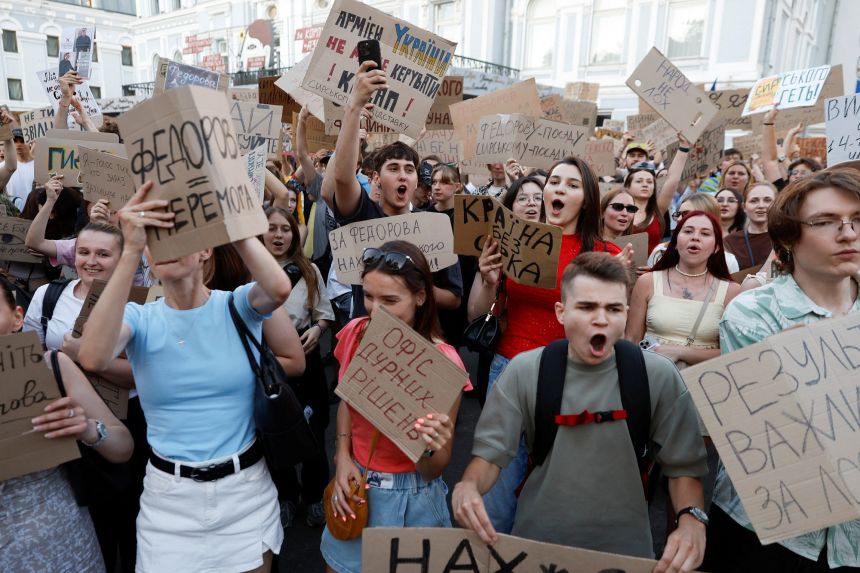
Fast forward two years, and a similar scenario emerges: a strategic disagreement arises, prompting Zelensky to initially dismiss the rising and favored Defense Minister Mykhailo Fedorov, 35. Fedorov, known for his disruptive approach, had openly clashed with Syrskyi over reforms, leading Zelensky to acknowledge that he had become the mediator between them. “You can’t manage a war like that,” he stated rightly. The ousting of Fedorov, an innovator in technology and recruitment, triggered rare public demonstrations in Ukraine.
The recent week of drama followed a pattern familiar to Zelensky, reminiscent of a previous situation involving Ukraine’s anti-corruption bureau. He initially restricted its powers before reversing his stance and dismissing his chief of staff amid corruption allegations, triggered by a protest movement that chipped away at his perceived invulnerability. Zelensky appears to have gleaned little from this prior incident, as the recurring cycle of action, protest, and response highlights the current state of Ukraine’s war efforts.
First, the Ukrainian military experienced a generational transition. Syrskyi’s traditional approach—characterized by large-scale frontal assaults that were costly—appeared outdated. Fedorov’s focus on modernizing warfare, utilizing robotics, drones, and data to analyze troop injuries, became increasingly relevant in a nation facing a shortage of personnel. This positioned Ukraine as a leader in battlefield innovation.
This newly formed military was not solely Fedorov’s initiative, but he emerged as its key advocate and gradually became associated with the successes it achieved: the stories of robotic rescues and offensives, as well as Ukraine’s persistent long-range strikes into Russia. While these victories belonged to Ukraine as a whole, Fedorov notably claimed credit for his earlier decision to finance drone acquisitions.
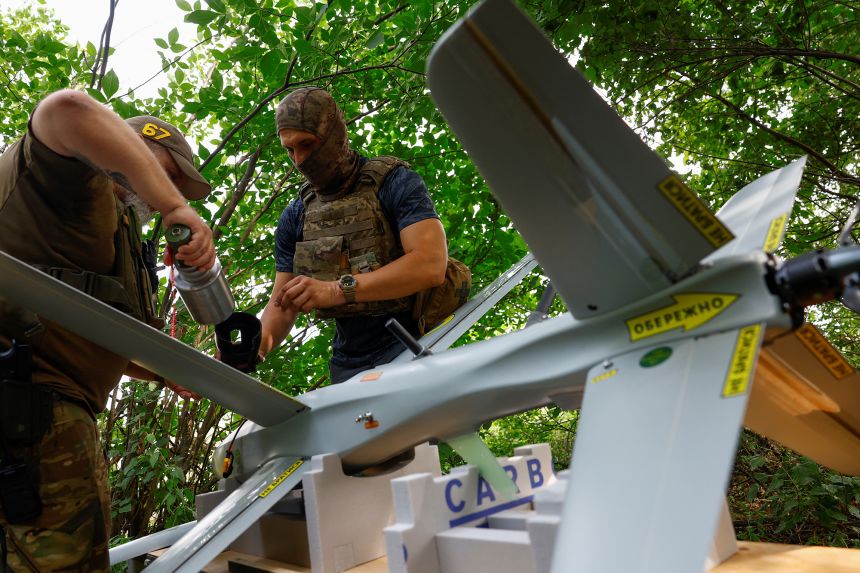
It remains uncertain whether drones and robots can genuinely substitute for troops on the battlefield. Nonetheless, Ukraine must explore this, and the time taken to learn this lesson has afforded Kyiv an opportunity to regroup and implement significant technological advancements that Moscow has yet to match. Warfare is evolving—until someone discovers how to deactivate these machines. Even now, some strategists assert that artillery still plays a role in countering large-scale Russian offensives. Not all traditional methods become obsolete overnight.
However, Fedorov’s emergence—despite the egos and competition—signals a straightforward change: the younger generation of Ukrainians engaged in the conflict will be led by leaders closer in age to them.
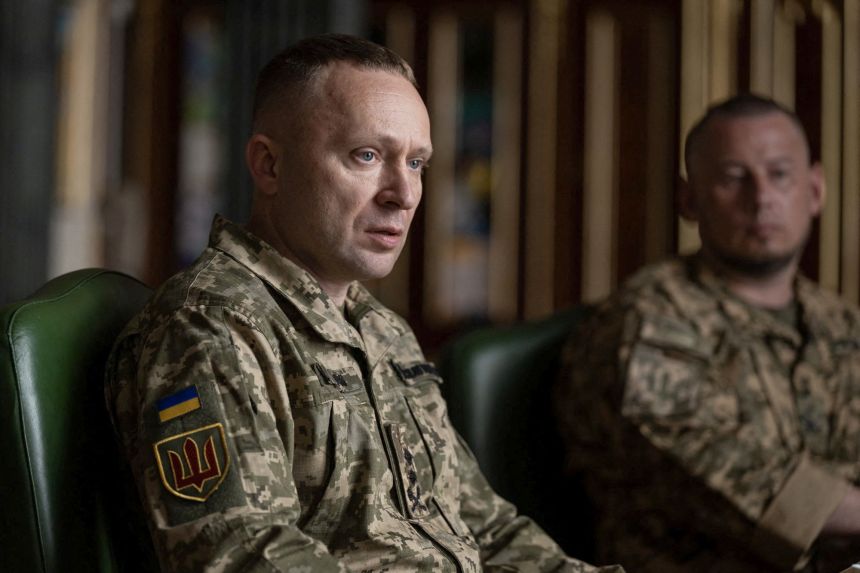
The newly appointed commander, Drapatyi, has fought on some of the war’s most challenging frontlines, and footage from his appointment featured him maneuvering an armored personnel carrier through a pro-Russian separatist blockade in 2014. He is experienced yet does not belong to Syrskyi’s era. There is an eight-year gap between him and Fedorov, characterized by a tech-savvy mindset; 17 years separate him from Syrskyi, who earned the moniker “the Butcher” for his preference for brutal assault tactics.
Drapatyi has acquired similar wartime experience as Syrskyi while building a reputation for victories and reforms. He played a crucial role in halting Russia’s initial offensive around Kryvyi Rih, led the expulsion from Kherson, and countered Russian advances in the Kharkiv region. He was among the first to advocate for employing drones to establish a “kill zone” along the front lines, effectively stalling the Russian advance. His leadership of the land forces also prompted a comprehensive reevaluation of structure and leadership.
Ukraine’s difficulties do not disappear with the introduction of this relatively youthful leadership. The nation continues to face shortages of personnel, funding, and essential infrastructure to survive the upcoming winter. Nevertheless, the infusion of new talent and a focus on innovative ideas and technology have shifted the narrative of the war and its dynamics in their favor. In this regard, the past few days represent a modest triumph. However, this situation offers another, less favorable lesson for Ukrainians.
The key takeaway is that Zelensky is uncomfortable with narratives slipping from his grasp, as much as he is with emerging personalities gaining popularity. In retrospect, the entire situation could have been avoided; he could have dismissed Syrskyi a week earlier, a move that had seemed inevitable for months amid discussions of his shortcomings echoing through Kyiv. Instead, the public disagreement between the younger Fedorov and the older general led Zelensky to retain the established, loyal figure.
Over the years, Syrskyi had established himself as a skilled political maneuverer, and Zelensky may have been concerned about the disruption that Syrskyi’s departure could cause within the established command structure. Alternatively, he might have feared that the younger disruptor would appear to impose a significant personnel change upon him.
Zelensky’s instinct was to dismiss the rising and popular figure. Following this, the streets erupted with significant, but not overwhelming, protests. Consequently, Zelensky began the gradual process of reversing his decision, engaging in a series of public meetings with senior military officials—essentially testing the waters for a position that Syrskyi had evidently already lost.
It seems unlikely that Zelensky intended to take such a lengthy path to an outcome he could have expedited last week. Nevertheless, the image of an enlightened president, attentive to both the populace—especially the younger generation—and his military leaders, remains.

The specific “prominent” role offered to Fedorov within the government remains unclear, as does his willingness to accept it. This has become less significant; Zelensky has demonstrated to his Western allies and constituents that he is receptive and capable of implementing substantial changes. Only by transforming the dynamics of the conflict can Kyiv effectively challenge Moscow.
Yet one question lingers: Zelensky once remarked that he would relax on the beach with a beer once the war concludes. Indeed, one might wonder why he still seeks the presidency after achieving the “just” peace he desires. In wartime Ukraine, there exists no genuine mechanism for his replacement, as conducting valid elections is nearly impossible. To this extent, he appears untouchable. Still, he remains highly concerned about his popularity, leading him to remove potential rivals, Zaluzhnyi and Fedorov, despite their capabilities—especially after they both opposed Syrskyi.
Zelensky has been an adept showman and advocate for Ukraine’s war efforts on the global stage. However, these glimpses of vulnerability at home reveal a presidential office where hasty decisions—regarding corruption and Fedorov—are made swiftly, only to be reversed under public pressure.
While this exemplifies democracy in action, it raises the question: How many other poor decisions have gone unchallenged over the past four years?
