
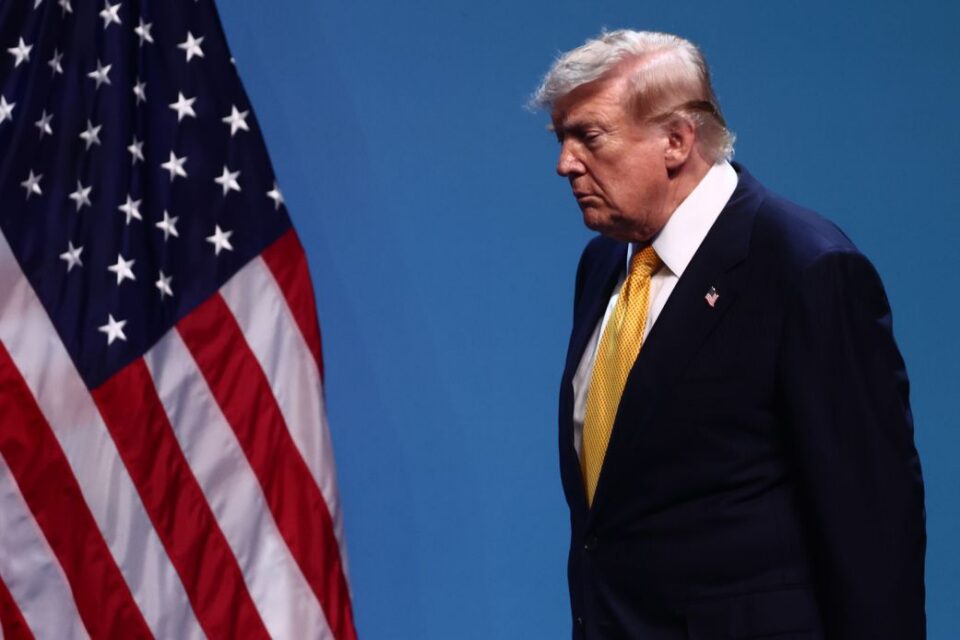
President Donald Trump has missed several opportunities to clarify how his latest military actions will lead to victory in Iran or how he plans to address the consistently high prices of groceries, housing, and fuel that affect Americans.
He is now set to deliver a national address on Thursday evening focused on his obsession with the past — specifically, his unfounded assertion that he won the 2020 election.
Critics are concerned that this is part of a growing effort to undermine faith in electoral systems and to set the stage for using federal authority to influence the midterm elections in November. This would not be the first instance where a president, who should be enhancing American democracy, has instead worked against it.
“There’s nothing more significant than ensuring free and fair elections; without them, there is no nation,” the president stated on Wednesday while previewing his upcoming speech. “We will also cover other topics, but this announcement is going to be very significant.”
Trump’s increasing barrage of warnings is intensifying concerns that he is not merely repeating discredited allegations about the 2020 election, which have been dismissed by numerous courts, state Republicans, and even members of his administration. As he has done previously, Trump appears to be crafting an alternative narrative in case the Republican Party performs poorly in November, suggesting that any election he does not win is inherently unjust.
The content of the president’s speech on Thursday remains unknown to anyone outside the White House. However, there is currently no credible indication that he possesses new, convincing evidence of voter fraud that would challenge the extensive evidence demonstrating that the 2020 election was conducted fairly, nor the multitude of academic studies highlighting the rarity of significant irregularities in U.S. elections.
However, Trump’s upcoming speech may follow a well-established trend. In 2016, 2020, and 2024, he escalated efforts to cast doubt on the integrity of elections as they approached. In 2020, this escalated into active interference after he refused to concede to Joe Biden and tried to overturn the results without evidence. His campaign culminated in a violent riot by his supporters aimed at obstructing the certification of the president-elect’s victory, which resulted in assaults on law enforcement and the desecration of the U.S. Capitol.
In one of his first actions during his second term, Trump granted pardons or commuted sentences for hundreds convicted in connection with the January 6, 2021, events, signaling that election-related violence or attempts to undermine democracy in his favor were acceptable and not subject to legal consequences.
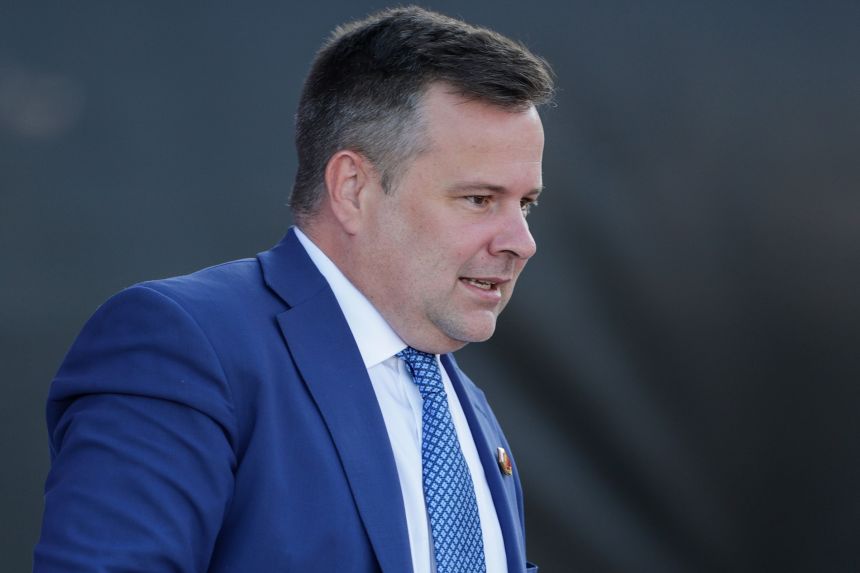
Concerns are heightened, particularly due to the involvement of Trump’s acting director of national intelligence, Bill Pulte, whom Trump suggested was appointed to the intelligence agency to uncover evidence of “rigged elections.” Meanwhile, the FBI is investigating the 2020 elections in Georgia, a state Trump did not win, after obtaining boxes of election materials. This election has been repeatedly confirmed as fair and legitimate by GOP state officials through forensic audits.
Across the nation, the administration has been requesting voter rolls, raising alarms that it may attempt to violate the constitutional principle that elections are overseen by states, not the federal government. Trump is prioritizing this over domestic concerns, pressuring Republicans to support the “SAVE America Act,” which includes voter ID requirements that many citizens support but could also complicate voting access, limit registration, and disenfranchise minority voters. This could further empower Trump to meddle in national elections.
Historically, U.S. intelligence agencies have determined that foreign entities have attempted to influence U.S. elections. However, pro-democracy advocates worry that Trump’s administration will misuse such evidence to imply there was successful interference aimed at damaging his campaign.
Ben Berwick, who heads the Election Law and Litigation Team at Protect Democracy, a nonpartisan organization, anticipates that Trump will reiterate his previously discredited claims regarding the 2020 election during his address. “There’s no doubt that a significant part of what is happening is aimed at creating skepticism about the 2026 election,” he remarked.
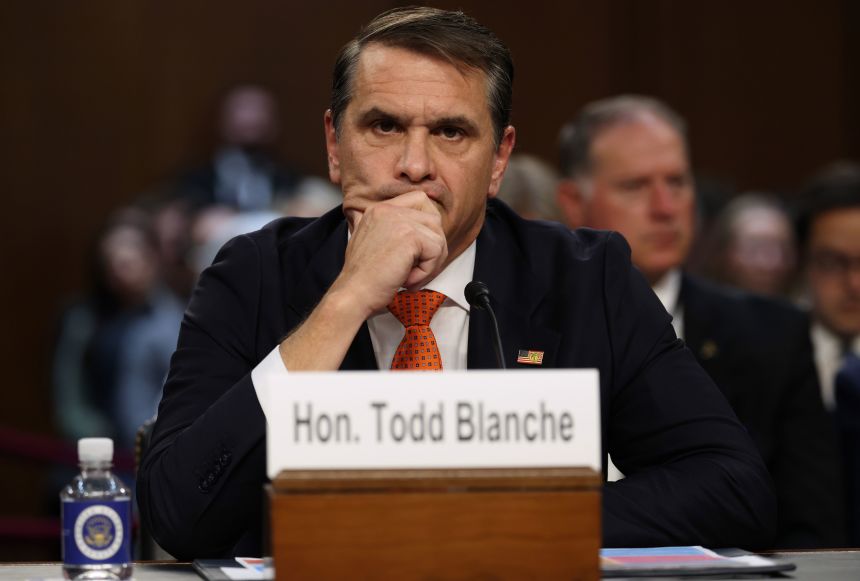
Officials in the administration assert that their sole objective is to ensure electoral integrity. “Our efforts are directed towards guaranteeing fair and honest elections,” said Trump’s attorney general nominee, Todd Blanche, during his confirmation hearing on Wednesday. Blanche emphasized the importance of making certain that only eligible voters participate and that they do so only once. However, the continuous criticism of U.S. democracy by Trump and his supporters has led to growing skepticism among voters about its integrity.
Individuals surrounding Trump are aware of the expectation to conform to the narrative that he was the rightful winner of the 2020 election. The latest individual to avoid clearly stating that Biden was legitimately elected was Jay Clayton during his confirmation hearing on Wednesday to be the director of national intelligence. “I believe he received the most electoral votes,” Clayton remarked regarding Biden.
When officials make such statements, they overlook realities and evidence, raising concerns about how they might react if the president attempts to overturn another democratic election result.
The U.S. government’s own election security agencies, during Trump’s initial administration, determined that the 2020 election was “the most secure in American history” and confirmed that “there is no evidence that any voting system deleted or lost votes, changed votes, or was in any way compromised.”
Republicans are frustrated Trump won’t speak about what matters to voters
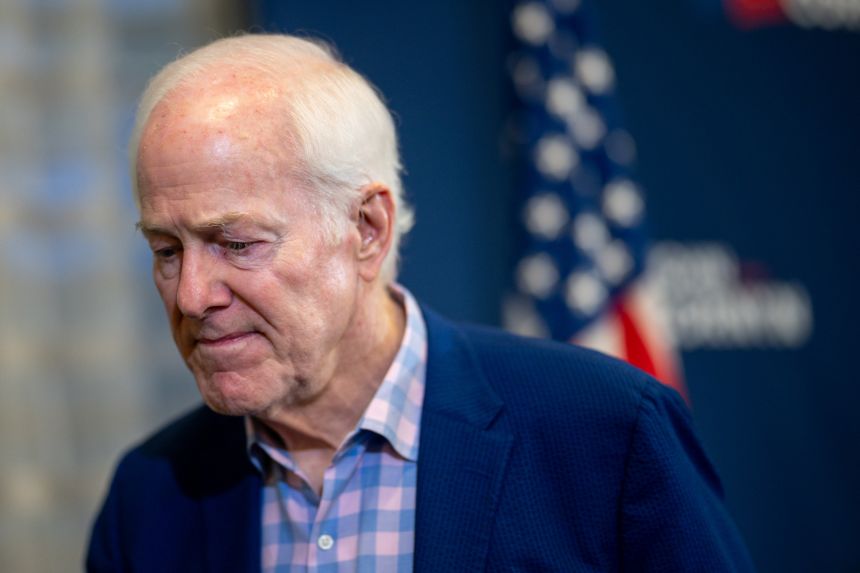
Trump’s unwillingness to move forward frustrates many in the Republican Party, although most are hesitant to publicly criticize a president who still has a strong following among the grassroots MAGA supporters. Republican Senator John Cornyn, however, feels a bit more liberated after losing his primary in Texas to a Trump-backed contender. “I’m more worried about the upcoming midterm elections than I am about… reliving what occurred in 2020. While election integrity is crucial, I personally don’t see the value in rehashing an election that took place six years ago,” said Cornyn.
Yet Trump struggles to maintain a coherent electoral message. He seldom effectively advocates for domestic policy initiatives that have resulted in higher tax refunds for many Americans and temporarily lowered taxes on tips and overtime pay. He also does not dedicate much time to promoting efforts to reduce prescription drug costs through his TrumpRX platform. When the White House arranges a visit to discuss affordability — a key issue for the 2026 elections — Trump often consciously strays from the agenda. He prefers to highlight his development of an architectural legacy within the White House complex and throughout Washington, D.C.
There is also growing concern that he might seek an illegitimate method to aid Republicans in the midterms due to a number of looming political challenges that could undermine their chances. The implications are significant: Should Democrats reclaim even one chamber of Congress, they would have the authority to impose unprecedented scrutiny on the president’s second term and his financial dealings.
The unpopular conflict in Iran has reignited, contradicting Trump’s assertions that he swiftly concluded it following its February initiation and raising the risk of escalating gasoline prices that could frustrate voters. Recent fatalities linked to federal immigration raids are serving as a reminder of the public’s discontent with one of Trump’s key policies. Despite mocking the notion that millions of Americans are struggling to meet basic needs, he has reportedly increased his personal wealth by $2 billion since returning to office.
Recent polling indicates a decline in Trump’s political standing. A Reuters/Ipsos poll concluded on Sunday revealed that 79% of participants believe U.S. military engagement in the conflict will “continue for a long time,” rising from 65% in late March. A PBS/NPR/Marist poll conducted in June found that only 33% of Americans approve of Trump’s economic management. Should immigration issues dominate the news cycle, this may also negatively impact Trump’s standing. A Marquette Law School poll from May indicated that voters viewed the U.S. Immigration and Customs Enforcement agency unfavorably by a margin of 61%-36%.
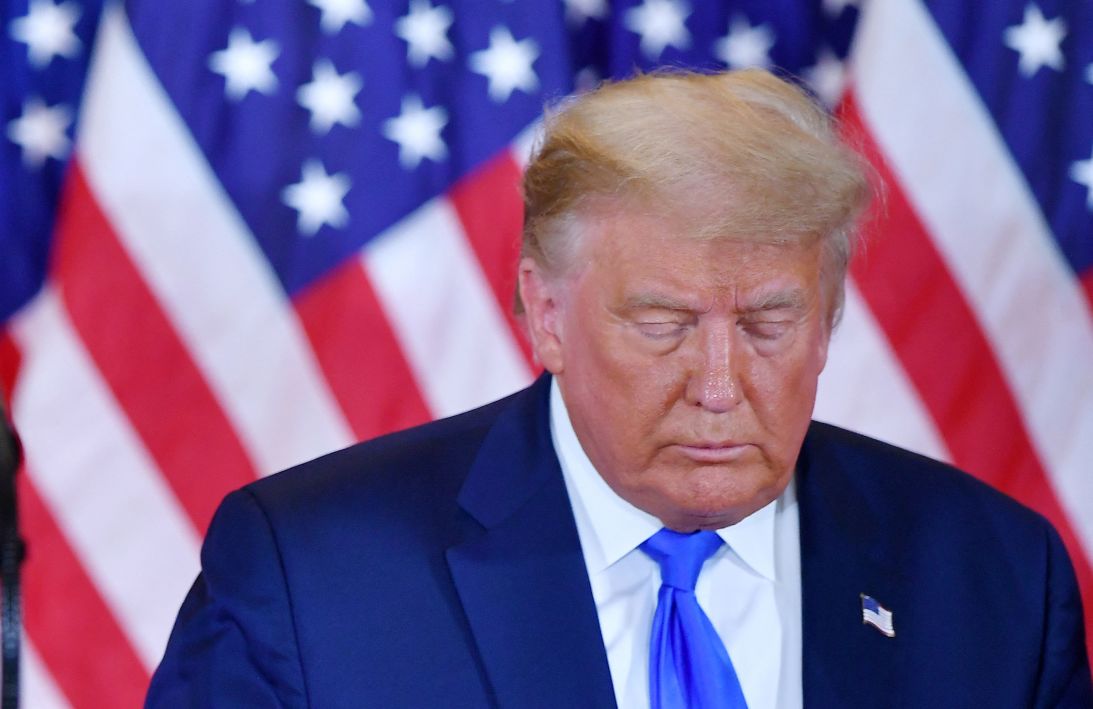
Why the 2020 election fixation may alienate voters
Trump has openly expressed his admiration for authoritarian leaders. His opponents worry that he might adopt tactics from those who weaken democratic institutions when their popularity declines.
Senator Jon Ossoff, a Democrat from Georgia, whose 2020 election has been the subject of speculation on conservative media in relation to Trump’s upcoming speech, highlighted this potential political motivation. “Privately, most elected Republicans in this building believe that the president has lost his grip and is setting them up for significant losses this fall,” Ossoff remarked to reporters on Tuesday.
Ossoff also engaged in a heated discussion with Clayton regarding the administration’s new election investigation during the hearing on Wednesday. His eagerness to address this issue suggests he views it as detrimental for his Trump-supported opponent. “Mike Collins kicked off his general election campaign by doubling down on his denials regarding the 2020 election. Now he not only has to justify increasing health insurance premiums for over a million Georgians but also defend these conspiracy theories about the 2020 election that voters in Georgia have continuously rejected,” Ossoff stated.
On one hand, Trump’s address could be seen as reflective of his tendency to prioritize his own narrow interests in a second term that seems disconnected from the concerns of countless voters.
On the other hand, it is likely to raise new questions about how Trump would react to another electoral defeat after spending years asserting that his last loss was illegitimate.
