
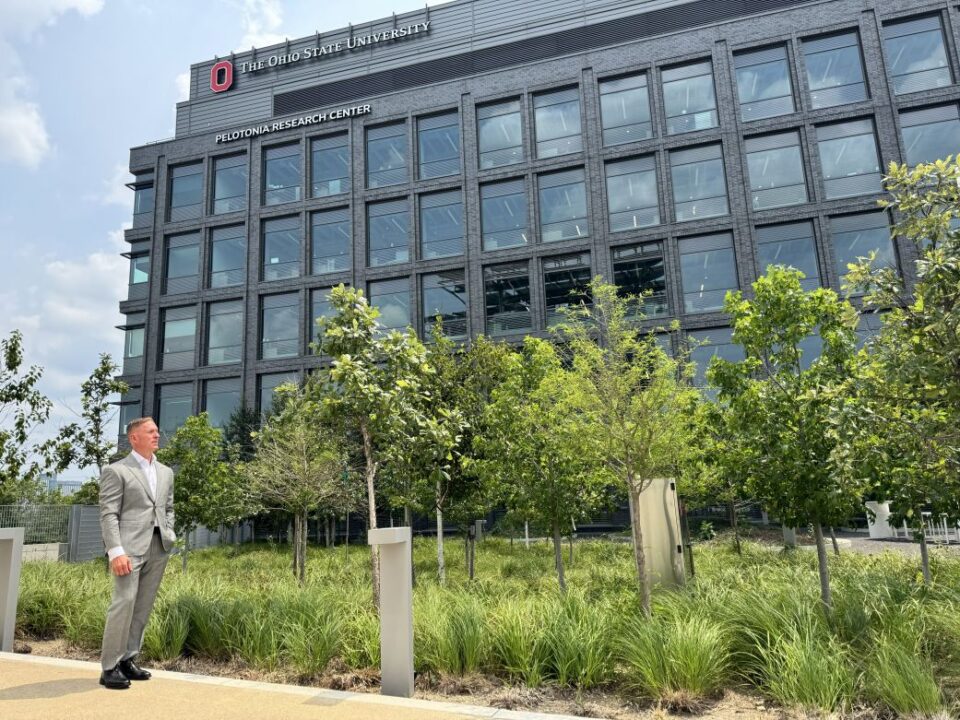
Step aside, Silicon Valley. Biotech entrepreneur Michael Triplett is strategically working to establish Ohio as a new hub for biotech advancement and life sciences.
Triplett, known for his groundbreaking contributions to gene therapy, co-founded Myonexus Therapeutics, one of Ohio’s leading biotech startups, which was sold in a transaction exceeding $225 million in 2019.
He has become a prominent proponent for transforming Columbus, the state capital, into a biotech center, asserting that the forthcoming medical advancements will emerge from the Midwest rather than the coastal elite.
“Innovation is driven by people and purpose, not by geographic locations,” Triplett stated. “My goal is to foster innovation through an economic revival in our state, and I’m collaborating with many individuals who share this vision.”
This drive originated during his formative years.
Influenced by Experience
Growing up in rural Ohio during the 1980s and 1990s, Triplett witnessed the severe impact of factory closings, leaving many blue-collar workers without employment.
His hometown of East Liverpool was once a thriving pottery hub along the Ohio River, at the intersection of Ohio, Pennsylvania, and West Virginia, but has seen its population decline from around 25,000 in the 1970s to fewer than 10,000 today.
The once-bustling downtown, home to stores like Sears, JC Penney, and Montgomery Ward, has dwindled to a mere shadow of its former self.
Around him, Triplett observed the economic decline: friends dropping out of school, family separations, and financial hardships. His father, a union leader in a ceramics factory, was not spared from the drastic layoffs in 1987, and his uncle also lost his job, eventually relocating to South Carolina for work.
This entire experience left a lasting mark on him, fueling his current motivations.
“I witnessed this socio-economic downturn and its consequences,” Triplett shared with USdaily. “I aimed to comprehend the reasons behind this situation affecting my community and, more importantly, how to avert it in the future.”
He further remarked, “I realized early on that embracing innovation is crucial.”
Challenging the Coastal Bias
The biotech sector in the United States is predominantly centered in Boston and California, where venture capitalists invest substantial sums annually and pharmaceutical firms heavily finance the quest for groundbreaking therapies.
While Triplett acknowledges the significance of these efforts, he believes that “such concentration creates an echo chamber, fostering groupthink and a lack of diversity in ideas and technologies.”
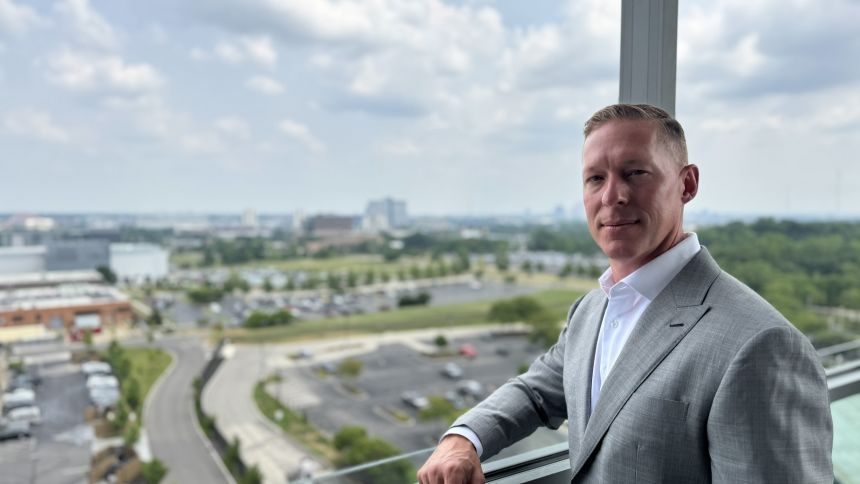
He also highlights research institutions in cities such as Nashville, Tennessee, Raleigh, North Carolina, and Austin, Texas, which are making significant strides in biotech innovation. “Their concepts are just as valid as those from Boston and San Francisco,” he asserted.
Nonetheless, the prestige still leans towards the coasts.
“The coastal bias makes it incredibly challenging to attract the attention of venture capitalists if you’re situated in the interior of the country,” Triplett explained.
“It’s vital for the health and prosperity of our nation that wealth isn’t concentrated solely on the coasts,” he continued. “A variety of innovation centers is essential for the country as a whole.”
A Hub for Talent and Ambition
In response to this challenge, Ohio initiated the Columbus Innovation District in 2021, uniting two local powerhouses, The Ohio State University and Nationwide Children’s Hospital, aiming to create 20,000 new jobs over the next decade, with 10,000 in science and technology.
Triplett acted as an adviser for the initiative, collaborating with the InnovateOhio advisory board and the university’s design committee to establish a central facility to achieve the project’s ambitious objectives.
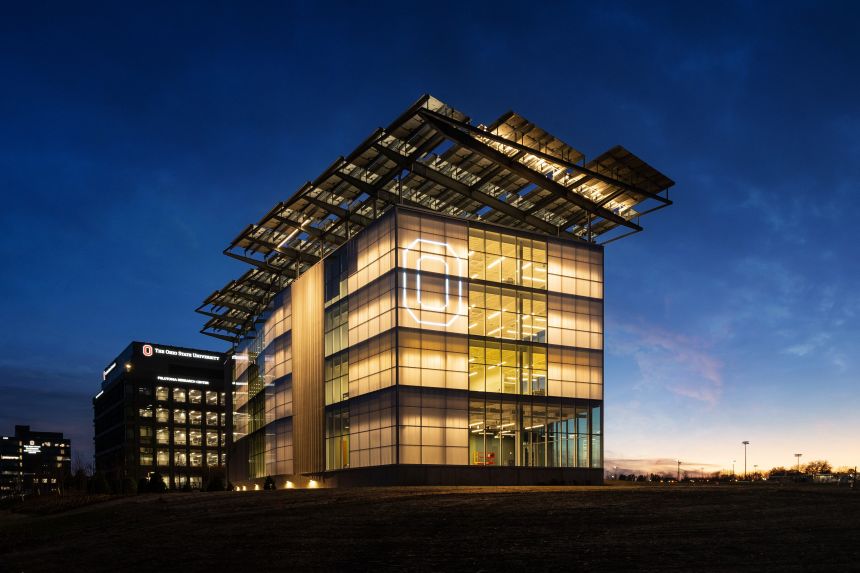
Five years into its development, Ohio State refers to the district as a location “where talent and ambition converge. Where ideas and creativity evolve into concrete solutions and realities. Where social and leisure opportunities are just a short distance away.”
This complex stands as a remarkable symbol of the region’s commitment to life sciences, uniting academia with both public and private sectors on the university’s premises.
Currently, over 40 companies are based in the district, and the university reports that more than 3,000 employees from Ohio State are working within this space, with 1,000 new jobs created since 2021.
The Ohio State Board of Trustees has also given the green light for the Timashev Technology Tower, a cutting-edge facility that will cover 100,000 square feet to bolster health science research and tech startups.
Triplett has formed collaborations with the university to attract more investors and startups. As the co-founder and chairman of Armatus Bio, he is also collaborating with Nationwide Children’s Hospital to advance life-saving innovations. The hospital has achieved significant breakthroughs, such as FDA-approved gene therapies for conditions like Duchenne muscular dystrophy and spinal muscular atrophy.
“Ultimately, the patients will benefit,” he stated. “The local economies will thrive, resulting in a stronger nation.”
A Proven History of Success
Dennis Durbin, president of the Abigail Wexner Research Institute at Nationwide Children’s Hospital, emphasized that Triplett has been an essential collaborator “in establishing a biotechnology center here in central Ohio.”
“Mike Triplett’s journey, through the lens of Nationwide Children’s Hospital, aligns closely with our own,” Durbin remarked. “He possesses a proven ability to raise the necessary capital to launch these companies. He thrives within networks of connected individuals and organizations.”
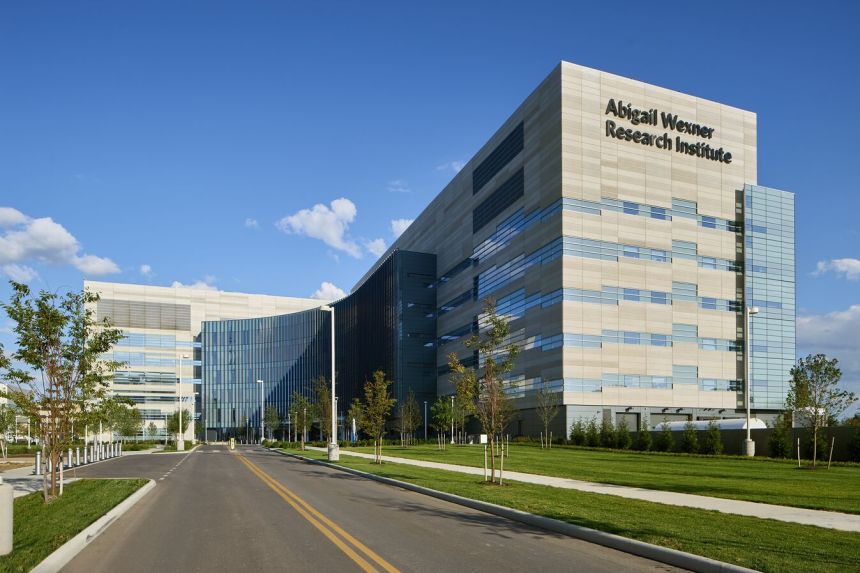
Durbin noted that Triplett’s aspirations align with the hospital’s goals, as it has evolved from a leading regional medical center to a cutting-edge, globally recognized facility.
This transformation wasn’t isolated, according to Durbin; it stemmed from hospital leaders “making both internal investments and forming external partnerships over two decades to bring this vision to life.” A pivotal area was the hospital’s focus on gene therapy, a method that alters genes to treat or cure illnesses.
“Visionary leadership at the hospital allowed us to remain committed to gene therapy even when many others were stepping back,” Durbin explained. “We’ve now seen three FDA-approved gene therapies emerge from Nationwide Children’s Hospital, forming the foundation of this biotech center in central Ohio.”
Triplett holds an endowed fellowship in gene therapy at the hospital and consistently advocates for the research being conducted in the hospital’s laboratories.
Edward Pauline, president and CEO of the Ohio Life Sciences Association, remarked simply, “I wish we had a dozen more Mike Tripletts to shine a light on this crucial industry.”
As a first-generation college graduate, Triplett is a passionate supporter of the Ohio State Buckeyes.
Over two decades ago, as he headed off to college, he pledged that if he ever attained the means, he would do everything in his power to assist the state in providing better economic prospects for future generations—prospects that seemed unattainable during his childhood.
“We are still in the early stages of this journey,” Triplett noted, “but we are gaining significant momentum.”
