
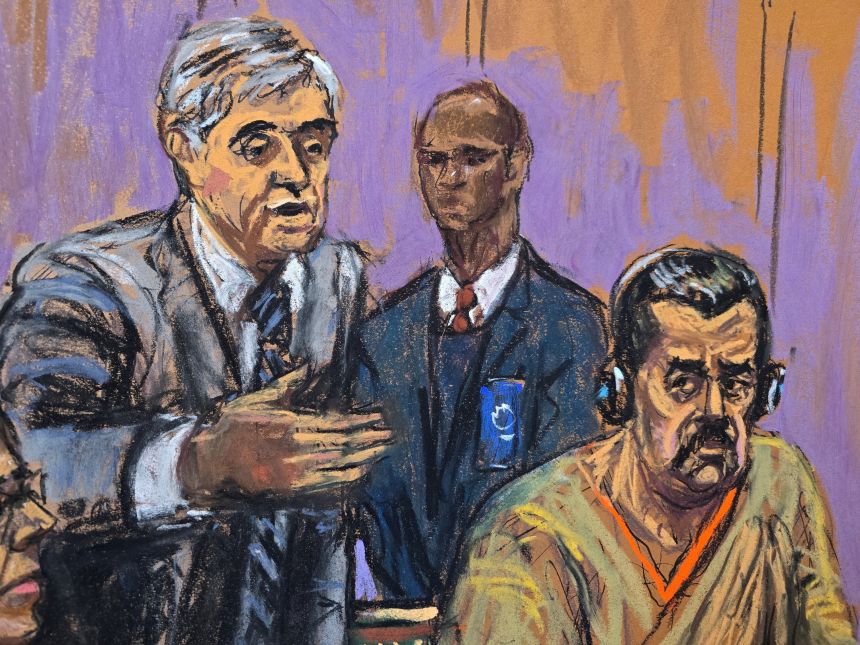
A federal judge announced during a court session on Wednesday that the criminal proceedings against former Venezuelan President Nicolás Maduro and his spouse are set to commence on June 1, 2027.
Both federal prosecutors and the defense team for the Maduros suggested a June trial date, although they acknowledged that the timeline may change due to possible complications like the acquisition of classified materials.
US District Judge Alvin Hellerstein expressed doubt that the involved parties would be able to settle classified information matters prior to the June trial, remarking that the procedure may be protracted.
“This timeline is realistic. We do not believe it will be postponed,” stated Maduro’s lawyer Barry Pollack, while noting that the parties would alert the court if any issues arise that could threaten the scheduled trial.
Maduro, along with his wife, Cilia Flores, was seen in court on Wednesday dressed in tan prison uniforms. Upon entering the courtroom, Maduro greeted his defense lawyers with handshakes and waved to spectators as he departed.
In early January, Maduro and his spouse were apprehended at their heavily guarded residence in Caracas after US forces raided the presidential compound, leading to a fierce confrontation with Venezuelan air defense systems.
Following their capture, the Maduros were transported to New York, where they entered not guilty pleas to charges of conspiracy related to the importation of firearms and cocaine, which prosecutors claim span over a quarter of a century. They are currently detained at the Metropolitan Detention Center in Brooklyn.
The legal case against Maduro is highly intricate – encompassing his previous presidency in Venezuela, the challenge of substantiating an international conspiracy, and broader foreign policy ramifications – which may lead his defense to explore various strategies to obstruct the case ahead of the trial.
Pollack has indicated intentions to contest the legitimacy of the arrest and assert that Maduro should be granted immunity since the alleged offenses occurred during his tenure in office.
Earlier this year, Maduro claimed the accusations against him should be dismissed on the grounds that the US government was harming his right to defend himself by preventing the Venezuelan government from funding his legal representation. The judge rejected the dismissal at that time, and subsequently, the US Treasury Department permitted the Venezuelan government to finance the defense without breaching sanction regulations.
Maduro was initially elected as Venezuela’s president in 2013, although the US government, along with numerous other nations, has not acknowledged him as the rightful leader since the 2018 election.
Following Maduro’s arrest, his vice president, Delcy Rodríguez, assumed the role of acting president of Venezuela. Since then, she has implemented numerous significant reforms in the military and has responded to many of Washington’s requests. In April, sanctions imposed on Rodríguez by the US since 2018 were lifted.
This report has been updated with further information.
USdaily’s Kara Scannell and Katelyn Polantz contributed to this report.
