
Although approval ratings for President Donald Trump are declining, his ability to engage in conflict with perceived opponents, particularly the Democratic Party, remains intact.
Enter New York Mayor Zohran Mamdani.
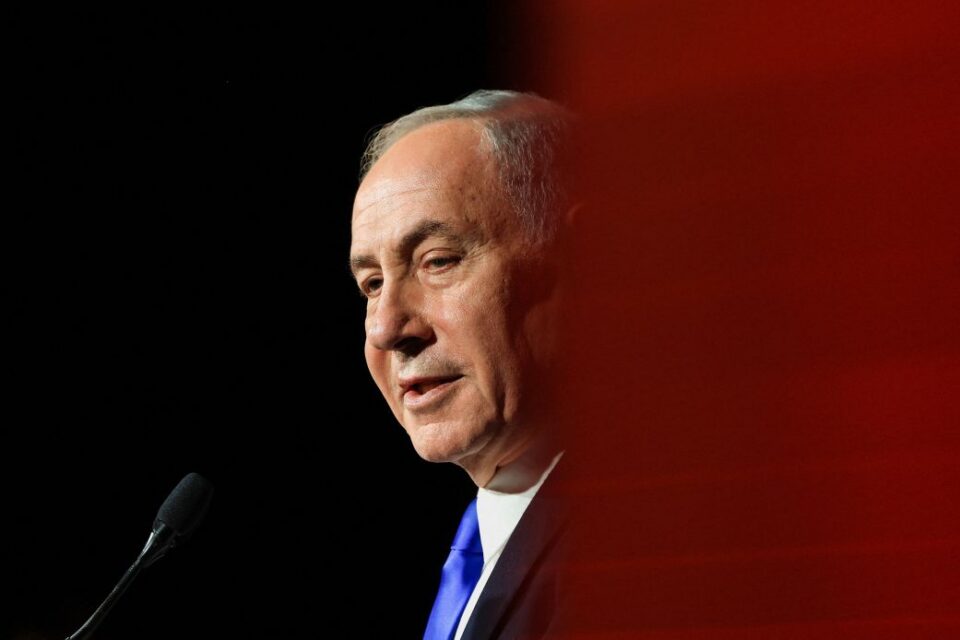
Trump wasted no time in responding to Mamdani’s commitment to uphold his campaign promise to detain Israel’s Prime Minister Benjamin Netanyahu, who faces an arrest warrant from the International Criminal Court, should he visit the city.
“While in the United States, Benjamin Netanyahu will not be arrested in any capacity,” Trump declared on Truth Social, his favored platform for sparking cultural debates.
This statement hints at a potential confrontation between federal authority and the city he once resided in.
However, the implications extend beyond just this incident.
This situation illustrates Trump’s tendency to latch onto specific issues or figures to stimulate broader political debates. He was not merely supporting Netanyahu—he was also laying the groundwork for his growing narrative about a Democratic Party perceived as excessively radical.
Nonetheless, Trump and Mamdani may welcome a confrontation regarding Netanyahu, which carries more significant domestic implications than a mere foreign policy disagreement about civilian casualties in Gaza following the Hamas attacks on October 7, 2023.
Thus, the ability of Mamdani to arrest Netanyahu is not the central issue. (This is a complicated matter since the U.S. has not ratified the Rome Statute, which obligates signatory states to detain individuals subject to warrants from the International Criminal Court. Historically, Washington has permitted leaders from adversarial nations—such as Iran and Cuba—to attend events like the United Nations General Assembly in New York.)
Rather, this moment highlights the importance of engaging in the dispute, regardless of the outcome.
It also reflects a shift in American political attitudes away from the traditional, almost unanimous support for Israel, representing a pivotal moment in the Democratic Party’s own transformation.
Changes in Democratic Perspectives on Israel
Mamdani represents a new cohort of Democrats who have adopted a distinctly anti-Israel stance, appealing to grassroots liberal voters. His decision to maintain his campaign promise to arrest Netanyahu illustrates Mamdani’s strategic use of the political capital gained during his campaign, essential for advancing his progressive agenda as he transitions from an outsider to a government official.
His stance on Israel has resonated with a significant number of progressive and younger Democrats who assert that Netanyahu has committed acts of genocide against countless Palestinian civilians. “He belongs in The Hague. He’s a war criminal charged by the International Criminal Court,” Mamdani expressed during a New York Times podcast, indicating that this view is widely held.
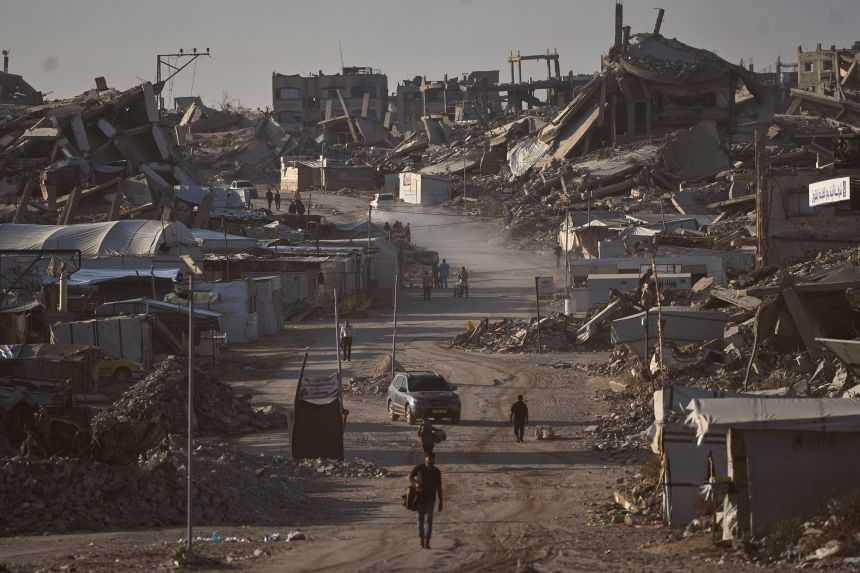
Israel firmly denies any allegations of genocide, asserting that its actions are in legitimate self-defense following Hamas’s terror attacks on Israeli civilians. The Israeli government attributes Palestinian casualties to Hamas, claiming they use civilian areas to shield military targets. Both the Biden and Trump administrations have maintained that Israel’s military actions do not amount to genocide.
However, some prominent Democrats are constructing an anti-Israel narrative that transcends Gaza and touches on a critical issue for the upcoming midterm elections—the cost of living for the middle class. “I want my tax dollars spent here in Michigan for schools, healthcare, and local investments, not sent abroad to harm Palestinian people due to genocides and apartheid,” stated Michigan Democratic Senate candidate Abdul El-Sayed during an interview with USdaily’s Kasie Hunt on July 2.
The Potential for a Sour Relationship
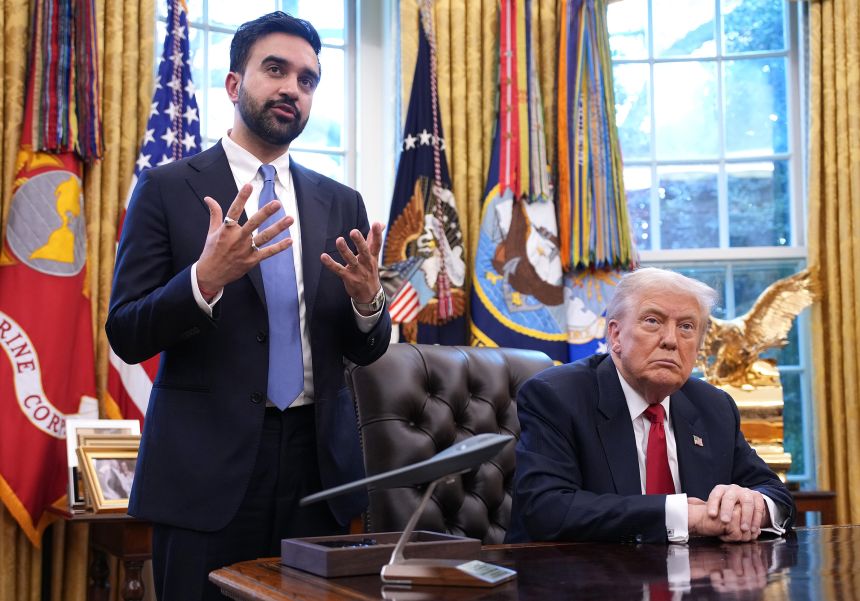
A full-blown dispute regarding Netanyahu could mark the latest development in Trump’s relationship with Mamdani. They shared a certain camaraderie during a meeting in the Oval Office last year. “I have a good relationship with him. We had some productive discussions, and he is who he is,” Trump stated to conservative radio host Sid Rosenberg in January.
The New York mayor returned to the Oval Office in February, bringing visual aids to advocate for substantial federal housing investment in the city.
Despite their differences in age, ideology, and temperament, both Trump and Mamdani exhibit key similarities. They both strive to satisfy their respective bases with populist policies and possess strong political communication skills.
For Mamdani, engaging with Trump reinforces his stature as a national figure. Trump, on the other hand, is always on the lookout for a new angle.
Trump’s consideration of a confrontation with Mamdani over Netanyahu was relatively subdued compared to his usual posts on Truth Social. Nonetheless, it could highlight New York’s pivotal role in the Democratic Party’s evolving stance on Israel, serving as evidence in the broader White House argument that the party has become too extreme for many Americans.
For Trump, Mamdani could symbolize the broader Democratic Party as the midterms approach.
Trump has previously portrayed figures like New York Rep. Alexandria Ocasio-Cortez, a fellow democratic socialist, as representative of her party. He has also described Vermont independent Sen. Bernie Sanders, a prior Democratic presidential candidate, as “crazy.”
Democrats have a notable opportunity against the president’s party this November, given that polls indicate a decline in public confidence regarding his economic management and dissatisfaction with his inability to fulfill promises to reduce prices.
However, if Trump can instigate ideological or cultural conflicts, he might prevent Democrats from attracting more conservative, White working-class voters away from his coalition for 2024. Two years ago, Trump effectively utilized issues such as immigration, the participation of transgender athletes in sports, and crime to frame Democrats as disconnected from everyday concerns. The topic of Israel may be the next focal point. Incorporating Israel into this campaign could help Trump galvanize support from evangelical conservatives who favor Israel, establishment Republicans who might be disenchanted with his platform, and swing voters who prefer traditional U.S. foreign policy approaches.
The Democratic Party is already preparing for a significant divide over Israel, as more centrist members caution that certain anti-Netanyahu sentiments may cross into antisemitism. Trump might even believe he could appeal to some Jewish voters who have historically supported Democrats.
Moderate Democrats are concerned that their party jeopardizes a vital ally. “Consider the types of candidates we’ve nominated in the primaries, not just pro-Palestinian, but also intensely anti-Israel,” Pennsylvania Democratic Sen. John Fetterman remarked to USdaily’s Manu Raju last week.
Highlighting this division, El-Sayed’s Democratic primary contender, Rep. Haley Stevens, is acknowledging the anger of many Democratic voters towards Netanyahu while adopting a stance that may resonate more broadly in a general election face-off against a Republican opponent.
“I can assert that Israel has the right to exist peacefully alongside the Palestinian people and those in Gaza. It’s evident that Mr. Netanyahu has not made us safer, has not advanced peace, and has endangered Jews both in America and globally,” Stevens remarked during a debate earlier this month.
The rifts exposed in her exchange with El-Sayed are occurring beyond Michigan. Support for Israel is also waning among the more nationalistic factions of the Republican Party. This issue is likely to emerge as a significant theme in both parties’ upcoming 2028 presidential primaries.
For the time being, however, the most apparent divisions regarding the Gaza conflict are present within the Democratic Party. Trump has ample reasons to utilize a figure like Mamdani to exacerbate these divisions.
