
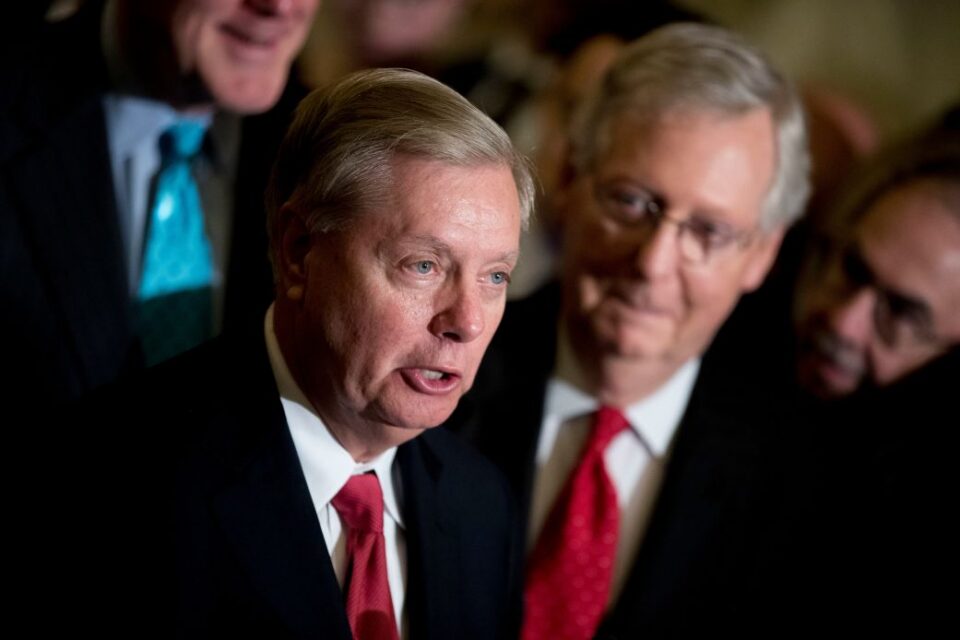
The passing of Sen. Lindsey Graham and the prolonged hospitalization of Sen. Mitch McConnell, a former majority leader, serve as touching reminders that time ultimately influences even the most powerful political figures.
However, the closing chapter in the Senate GOP is merely one indicator of a broader shift: The foundational aspects of US politics are evolving as overdue generational changes emerge, ideological conflicts ensue within both parties, and leaders grapple with voters’ concerns regarding diminishing economic security and international conflicts.
President Donald Trump continues to exert his influence vigorously in an effort to slow down the political timeline and counter the challenges of being a lame duck. His obsession with physical tributes to his presidency also reflects the mindset of an 80-year-old leader focused on his legacy.
After the midterm elections in November, the question of what comes next after his decade-long hold on the GOP will be unavoidable.
A similar struggle for leadership is emerging within the Democratic Party, where progressive challengers are pushing back against the established power structure. The fallout from Graham Platner — who had to withdraw from his campaign for a crucial Senate seat in Maine that could determine the chamber’s balance — indicates that the internal and institutional issues that facilitated Trump’s victory in 2024 remain relevant.
The belief that the existing political structure is deteriorating is further supported by both parties’ inability to propose effective solutions to the ongoing affordability crisis.
While Trump touts an economic “golden age” that doesn’t resonate with the majority of voters, he is intensifying the conflict with Iran, warning that it could potentially lead to another Great Depression. Additionally, he declined to endorse a new bill addressing one of families’ most urgent needs — affordable housing — due to GOP senators’ refusal to support a measure based on his unfounded claims of voter fraud.
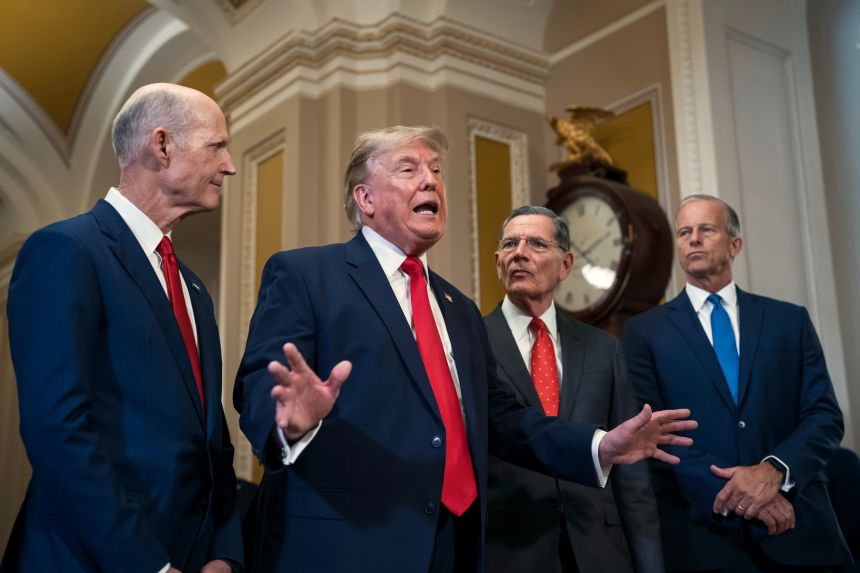
Democrats run the risk of appearing just as self-absorbed as they engage in disputes over the party’s identity. Democratic leaders are increasingly faced with demands for a fresh, younger leadership cadre, while democratic socialists are tapping into economic discontent by advocating for a pronounced leftward shift. Meanwhile, the establishment worries about losing its hold on the political center.
Current opinion polls show little indication that Democrats have rebuilt the fractured trust of the electorate. While Trump’s significant unpopularity might facilitate a blue wave in November, there is no evidence that the party has solidified its midterm message or effectively connected with voters.
The party’s internal divide was exemplified by one of its most notable candidates, progressive Michigan Senate primary hopeful Abdul El-Sayed, who attempted to broaden his appeal by asserting he is not “a socialist.” He stated to USdaily’s Manu Raju, “I support capitalism. I just believe that it requires regulation.”
Democrat insurgents challenge the establishment — just like Trump did in 2016
In many respects, Democrats are undergoing a similar anti-establishment shift sparked by Trump — targeting leaders like McConnell — within the GOP a decade ago.
The Republican Party’s revolution was characterized by Graham’s ideological flexibility. He transitioned from being a traditional hawk and a steadfast neoconservative, a remnant of Reagan-era foreign policy, to becoming a confidant of Trump, who often criticized those very principles.
Trump, who spoke with Graham shortly before his unexpected death from an aortic tear, remarked that his friend was filled with “vim and vigor.” The president expressed to Jake Tapper on USdaily’s “State of the Union” that Graham’s death was “a terrible loss,” adding, “He was an exceptional politician. He was a natural.”
Their close relationship was particularly notable given that Graham had been best friends with Sen. John McCain, one of the last Republican figures to oppose Trump. Many within McCain’s political circle, who felt betrayed by Graham due to Trump’s continual mockery of the late senator after his death in 2018, were surprised by their bond.
Detractors have also suggested that Graham exhibited a tendency to align himself with power holders, regardless of who they were. However, there were indications that the South Carolina senator gained some influence with Trump, particularly after expressing support for a potential congressional initiative to tighten sanctions on Russia regarding the war in Ukraine. Just before his death, Graham visited the resilient nation.
Graham’s role as a key figure in Trump’s circle granted him a level of authority in the Senate. He acted as a liaison between the president and the Republican Party on Capitol Hill, navigating the ideological splits within the party. In heartfelt tributes, several Democrats acknowledged their political differences with Graham yet praised his good-natured demeanor, friendships, and rare willingness to collaborate across party lines.
“Many of us regarded him as the Trump whisperer. If we wanted insight into the president’s thoughts or how he might be swayed on an issue, Lindsey was the person to consult,” said Sen. Adam Schiff, a Democrat from California, during an appearance on NBC’s “Meet the Press.”
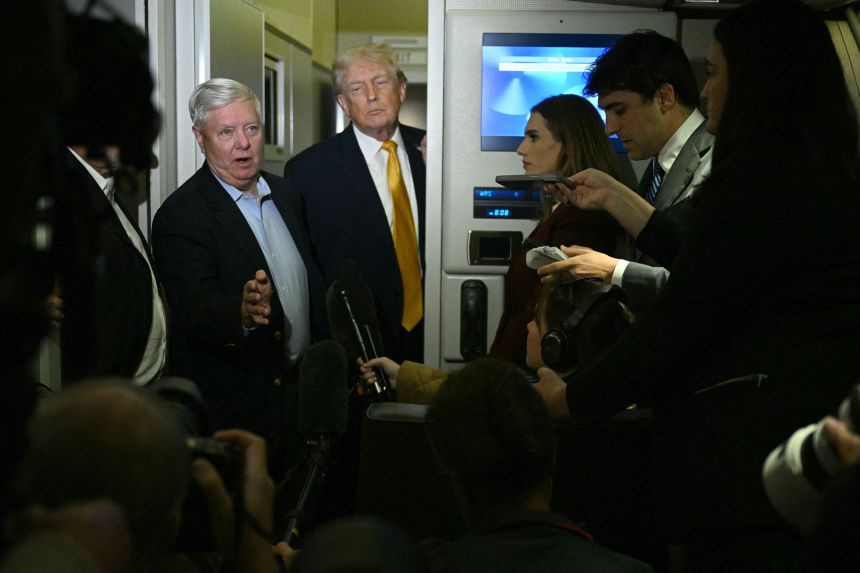
Who will fill America’s growing political vacuum?
With Graham’s unique ability to bridge party divides now gone, his passing will create immediate challenges for GOP leadership.
Trump is expected to try to influence the selection of his friend’s successor in South Carolina during a rapid primary election, aiming to solidify his MAGA legacy. The president’s priority legislation aimed at tightening election registration — perceived by critics as an effort to sway the midterms — has lost a significant ally in Graham. Likewise, Ukraine and Israel, which were significant in Graham’s hawkish perspective, will miss his support as well.
Additionally, another strong advocate for these nations will soon be absent, as former Senate Majority Leader McConnell is set to retire in January. The legacy of the veteran senator will continue to resonate long after he returns to Kentucky, especially considering his pivotal role in establishing a solid conservative majority on the Supreme Court.
McConnell’s final chapter has been overshadowed by his hesitance to disclose details regarding his hospitalization. Recently, USdaily reported that the 84-year-old senator was taken by ambulance from his Washington residence in June.
On Sunday, McConnell provided a long-awaited update to Kentuckians, clarifying that he did not have a stroke or heart attack, and that there were no tumors found; however, he did experience a fall followed by a mild case of pneumonia. Now in a rehabilitation facility, the former GOP leader expressed his intention to return to the Senate as soon as possible.
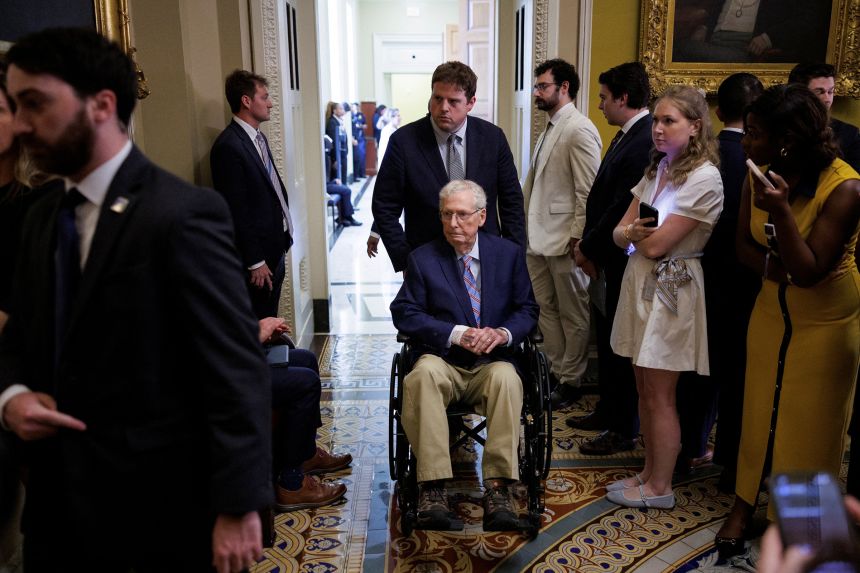
McConnell has been a senator since 1984. Similar to his prominent opponent, former House Speaker Nancy Pelosi, he has one of the most significant political careers of the early 21st century. Graham, on the other hand, has represented his state in the Senate since 2003.
The Senate will face a new dynamic next year without either of these Republican leaders, marking a clear signal that a generation of influential figures in Washington — and in Graham’s case, political commentary — is stepping away from the spotlight.
At a critical juncture for the nation, where the political framework seems unable to address voters’ most essential needs, and both parties are embroiled in ideological and succession disputes, it remains uncertain who will occupy the emerging political void.
