
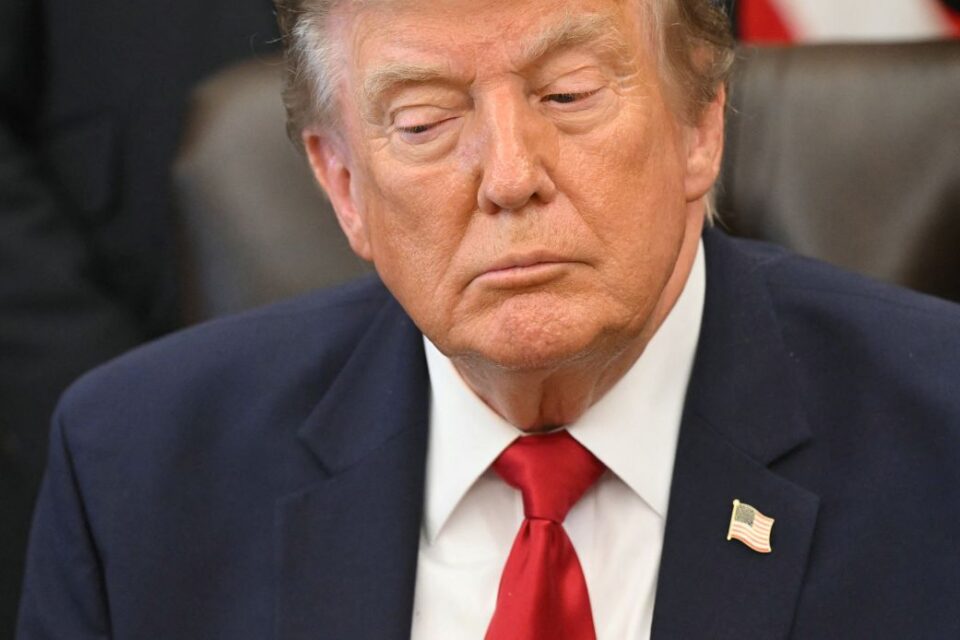
It appears that Iran is engaging Donald Trump in a manner he is familiar with.
On Monday, the president expressed doubts about the Islamic Republic’s reliability in upholding agreements, criticizing its leadership for actions reminiscent of his own controversial decisions.
“It was supposed to be a finalized agreement, but they went back on it. They always do,” he told Fox News regarding the memorandum of understanding that temporarily halted the conflict. Trump did not seem to grasp the irony in his remarks, considering his own history of abandoning international agreements, including the Paris Climate Accord on two occasions. Some analysts connect the current challenges facing the U.S. to Trump’s choice to withdraw from the Obama-era agreement that restricted Iran’s nuclear ambitions.
Later in the same day, an exasperated Trump threatened to levy his own fees on vessels passing through the Strait of Hormuz. In a sarcastic response, Iran offered a counter proposal that surpassed Trump’s own.
“The President is absolutely correct,” stated Foreign Minister Abbas Araghchi on X, claiming that Trump had validated Tehran’s stance on charging fees for passage through the crucial waterway. Araghchi wryly noted: “20% is indeed excessive. We aim to be fair.”
Trump is learning that Iran is adept at negotiation and has its own perspective on the contents of the memorandum. Additionally, he has yet to provide a clear explanation to the American public regarding why he reignited a conflict he previously claimed to have resolved.
Previously, supporters may have contended that Trump’s stark inconsistencies showcased his ability to navigate complex diplomatic scenarios. Now, he finds himself in what can only be described as a deadlock.
Trump cannot alter the realities of the conflict
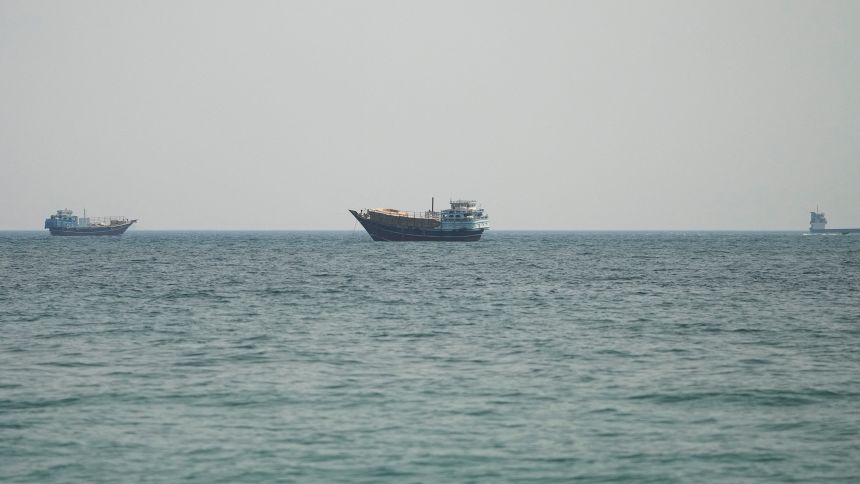
The memorandum fell apart because Iran sought to protect its significant victory in the conflict — maintaining effective control over the strait. This highlighted a sobering reality for the United States: Despite Trump’s threats and military capabilities, Tehran continues to steer the course of the confrontation. The fundamental dynamic of the conflict remains intact: The Islamic Republic leverages its geographic advantages and a keen awareness of its own limited strength to outmaneuver a superpower adversary.
The latest test of wills emerged in part due to the administration’s haste in negotiating a memorandum that featured vague language. Trump’s team, consisting of real estate negotiators led by Vice President JD Vance, seemed to overlook what critics knowledgeable in history and diplomacy swiftly recognized: Iran would use the agreement to gain new leverage.
For instance, the agreement required Tehran to “make arrangements” for the safe and free transit of commercial vessels through the strait for a duration of 60 days, and mandated cooperation with Oman to “define future administration and maritime services” in the strait. At face value, this seemed to fulfill U.S. objectives — ensuring normal operations of the strait. However, Iran likely interprets it as a validation of its future control over the waterway following a permanent agreement. Thus, it is not surprising that Iran is resisting changes to the established order.
This blunder compounded a prior error — failing to recognize that Iran would consider closing the strait. The fact that this issue persists a month after the memorandum was established indicates that its timeline for a comprehensive deal, which includes Iran’s nuclear program, was unreasonably optimistic.
The administration’s difficulties in influencing Iranian actions raise significant concerns regarding Trump’s return to conflict.
Is there any basis for believing that attacks on Iranian locations and Trump’s reinstatement of a naval blockade will be more effective in altering the calculations of Iran’s new leadership than previous efforts? After all, Iran has shown it only requires a few missiles and drones to shut down the strait once more.
Moreover, as economic pressures continue to escalate — with oil and diesel futures surging on Monday — will the president again choose to back down to avoid the political and economic fallout he openly admitted last month he was unwilling to bear?
Reasons why full-scale war may still be avoided
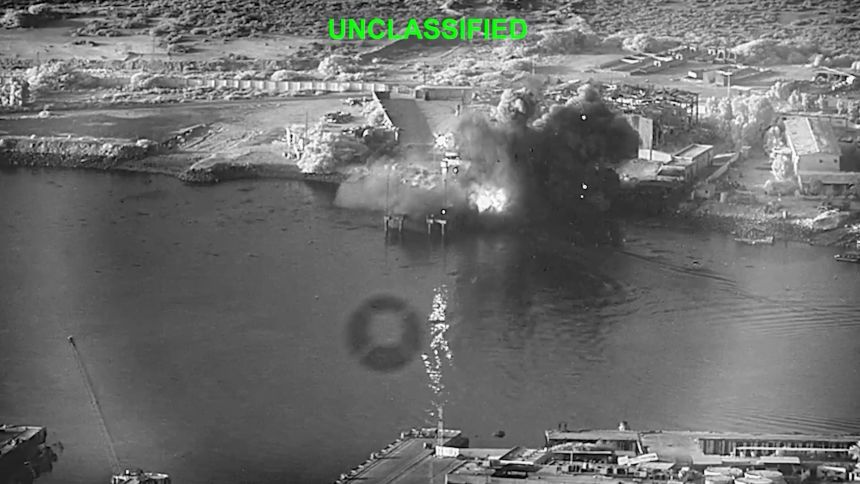
One glimmer of optimism is that the renewed hostilities may suggest that the U.S. and Iran are attempting to establish their own interpretations of the MOU to pave the way for subsequent diplomatic efforts.
For instance, Trump has not indicated he is prepared to incur significant U.S. casualties from an invasion of Iran’s oil-rich Kharg Island — a potential method to assert American dominance. In contrast, previous presidents like Lyndon Johnson and George W. Bush escalated conflicts that appeared to be unresolved.
Unlike his ally, Russian President Vladimir Putin, the U.S. president has refrained from responding to strategic setbacks in the conflict by launching extensive attacks on civilians. Early in the conflict, tragedy struck when a misguided U.S. strike hit an Iranian school, resulting in the deaths of 168 children and 14 teachers, according to Iranian authorities. The complete civilian casualty count from the attacks remains uncertain.
Nevertheless, Trump has not acted on prior threats to target critical infrastructure such as bridges and power facilities, which would significantly disrupt civilian life. Additionally, Iran has maintained a limit on its escalation in its responses to U.S. bases in the region or its Gulf neighbors.
The current state of the battlefield indicates a simmering conflict rather than one that is spiraling into chaos.
“There is potential for diplomacy, I believe, despite the increased hostilities from the U.S. against Iran (and) Iranian counterattacks,” remarked Danny Citrinowicz, a senior researcher in the Iran and the Shiite Axis Program at Israel’s Institute for National Security Studies, during an interview with USdaily’s Becky Anderson on “Connect the World.” He cautioned, however, “Things can escalate quickly because persistent back-and-forth attacks make it challenging to maintain control over the situation.”
Even if the current tensions remain manageable, Trump must still confront a question he has struggled to answer for nearly five months.
How does he extricate the U.S. from this conflict?
