
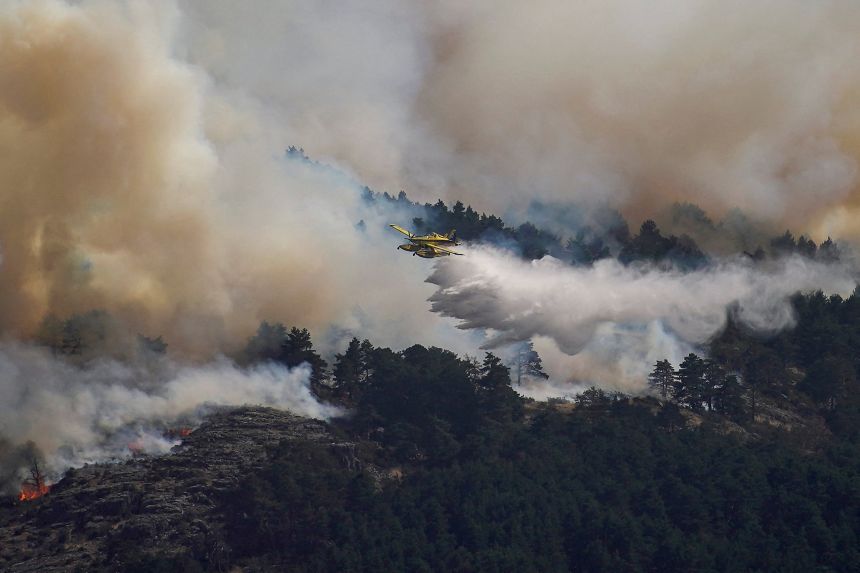
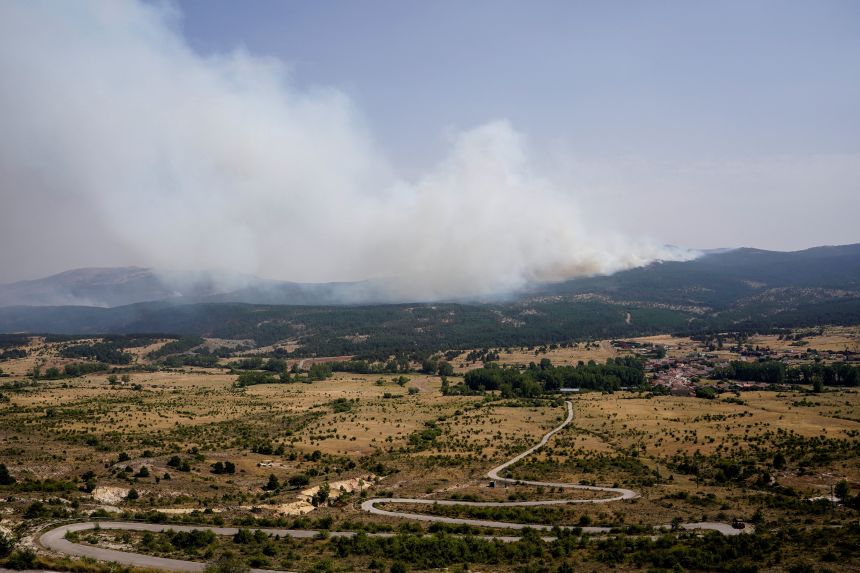
In central Spain, firefighters are combating a wildfire that has consumed over 32,000 hectares (approximately 79,000 acres), marking it as one of the largest incidents in the nation’s history.
This wildfire in Guadalajara occurred shortly after a tragic fire in southern Spain claimed the lives of 13 individuals, including several expatriates, making it one of the deadliest wildfires the country has experienced.
On Wednesday, Spanish Prime Minister Pedro Sánchez toured the affected region in Guadalajara and urged for a collaborative political agreement to address climate change.
“Every year, we observe the devastating effects of climate change on our communities,” Sánchez stated in Tamajón, a village located less than two hours northeast of Madrid. “This is not a matter of politics; it is based on scientific evidence.”
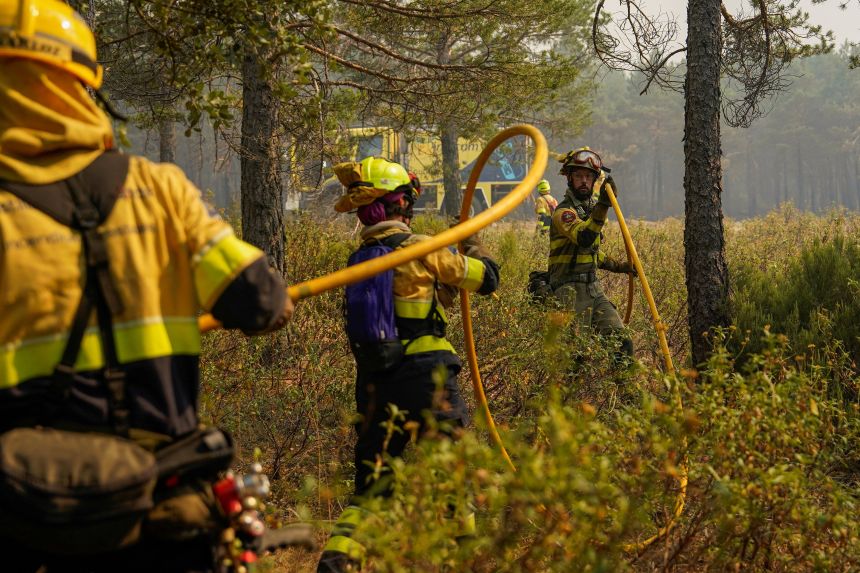
Approximately 34 villages in the vicinity have been evacuated, although no severe injuries or fatalities have been reported. More than 200 firefighters received assistance from land vehicles and aerial support on Wednesday.
This year, Spain has already experienced 22 significant wildfires, classified as those that exceed 500 hectares (1,235 acres) in size.
The Socialist leader indicated that over 100,000 hectares (approximately 247,000 acres) have been destroyed in the first half of the year, equaling the average annual total for Spain over the past decade.
Sara Aagesen, Spain’s Minister for Ecological Transition, labeled the fire in Guadalajara as “one of the largest in our country’s recent history” and noted that it is the most significant fire ever recorded in the Castilla La Mancha region.
The blaze in Guadalajara is now the second-largest wildfire recorded in Spain’s history, following a fire that burned around 37,000 hectares (91,000 acres) last year in the northwest part of the country, according to statistics from the ecological transition ministry, as reported by EFE news agency.
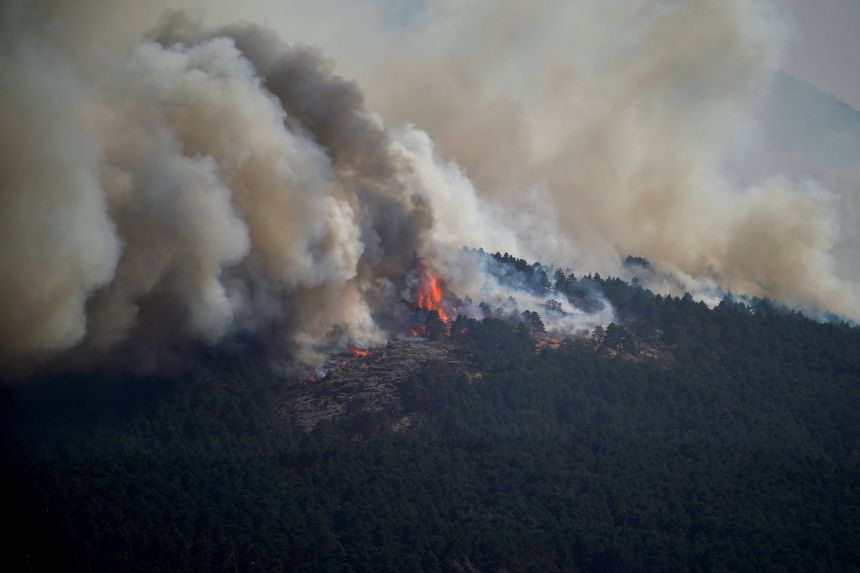
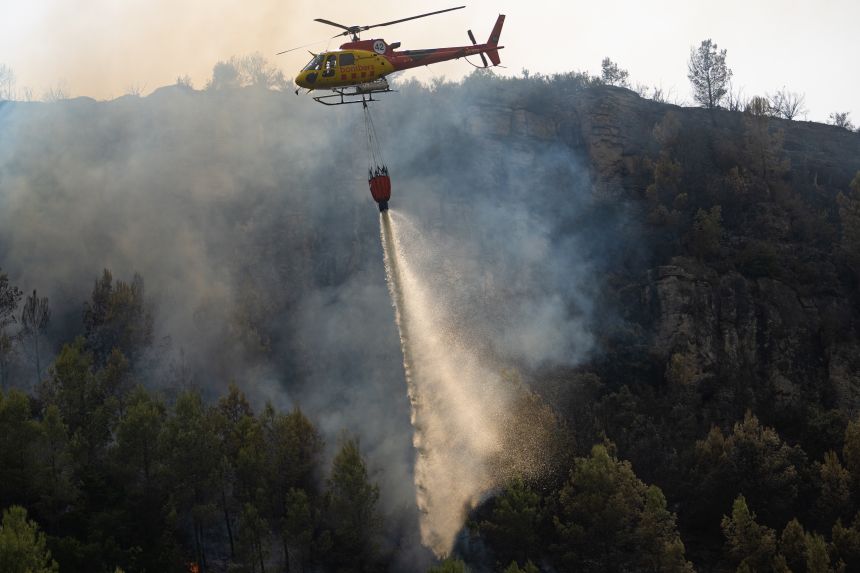
According to regional officials, firefighters, aided by water-dropping aircraft, have successfully safeguarded homes in all 40 villages affected by the fire, 90% of which is located within a national park. Regional President Emiliano García-Page expressed optimism that the nearly week-long fire could be contained by Friday.
Miguel Ángel Moreno, the mayor of Zarzuela de Jadraque, reported that the village’s 100 residents were evacuated on Friday, with 14 individuals seeking shelter at a Red Cross facility.
Moreno emphasized that firefighters deserve the same respect as the soccer players who recently won the World Cup.
“The firefighters had to rush around the village to extinguish fires,” Moreno told TVE, the Spanish national television. “In addition to the World Cup champions, we have other unsung heroes.”
New heat wave could complicate firefighting efforts
According to Spain’s meteorological agency, a heat wave that started on Tuesday will peak between Wednesday and Thursday, with temperatures soaring to 40 degrees Celsius (104 Fahrenheit) in various inland regions and exceeding 42 degrees Celsius (108 Fahrenheit) in parts of Andalusia.
Guadalajara, along with extensive regions of Spain, is under a warning for elevated temperatures.
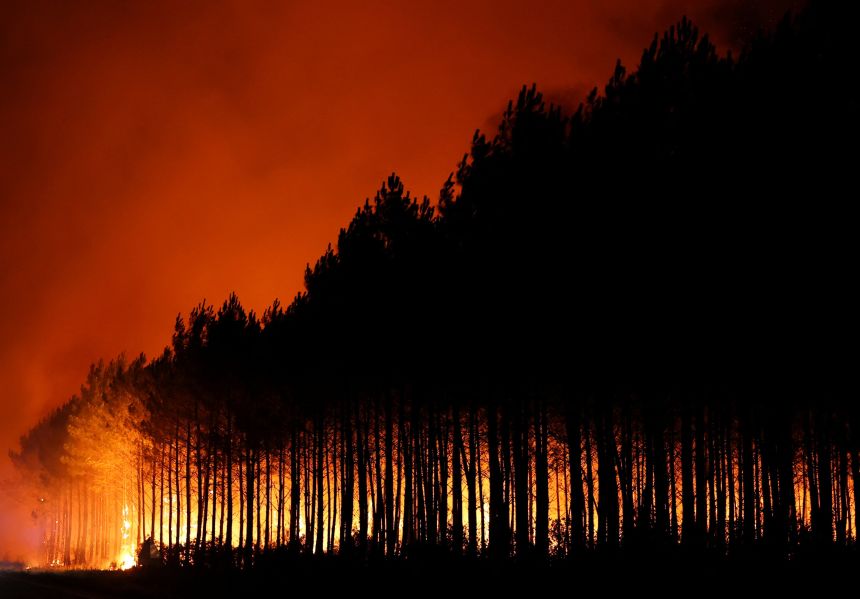
Like many European nations, Spain is facing extreme heat, which, combined with winds and scarce rainfall, is creating conditions conducive to the rapid spread of small wildfires.
Europe is experiencing the fastest rate of warming worldwide, with temperatures rising at double the global average since the 1980s, as reported by the European Union’s Copernicus Climate Change Service.
The year 2025 marked the third hottest on record globally, leading to severe heat waves throughout Europe. Researchers warn that climate change is intensifying the frequency and severity of heat waves and droughts, particularly in southeastern Europe, increasing the area’s susceptibility to health risks and wildfires.
Europe facing hot, dry weather
Firefighters in Sicily have conducted over 1,000 operations since Saturday and have placed all fire departments on double shifts to manage the ongoing fires.
The most recent incident was a wildland-urban fire in Agrigento, central-west Sicily, leading to the evacuation of 100 residents from their homes and a clinic, with 22 patients being relocated to other facilities, according to the national service. Firefighters were notably concerned about a nearby oxygen storage facility.
For several days, Italy’s Civil Protection agency has classified all of Sicily as being at maximum wildfire risk. High winds and temperatures at or exceeding 40°C (100°F) have fueled fires from the northern coast near Palermo to Catania in the east and Agrigento in the west.
Greece is currently experiencing a heat wave that is expected to conclude soon, with temperatures forecasted to surpass 42°C (107°F). Several areas in southern and central Greece, including the greater Athens region, are under the highest wildfire danger alert.
Cyprus has also issued a warning regarding expected high temperatures, which may reach 43°C (109°F).
In the UK, some regions have gone without rain for over a month, and much of southern England is experiencing “prolonged dry weather,” one step shy of a drought declaration. Starting Thursday, Thames Water, the largest water supplier in the country, has prohibited its 10 million customers from using hoses to water lawns or wash vehicles.
France’s public health agency reported on Wednesday that the country experienced at least 5,700 additional deaths than usual during a historic heatwave last month, significantly raising its estimates of the anticipated toll from record-breaking temperatures.
Public Health France indicated that during the heatwave from June 17 to July 2, regions affected recorded 21,674 deaths across all causes. However, without the heatwave, these regions would typically have anticipated significantly fewer deaths, approximately 15,910, based on statistical modeling using historical data.
