
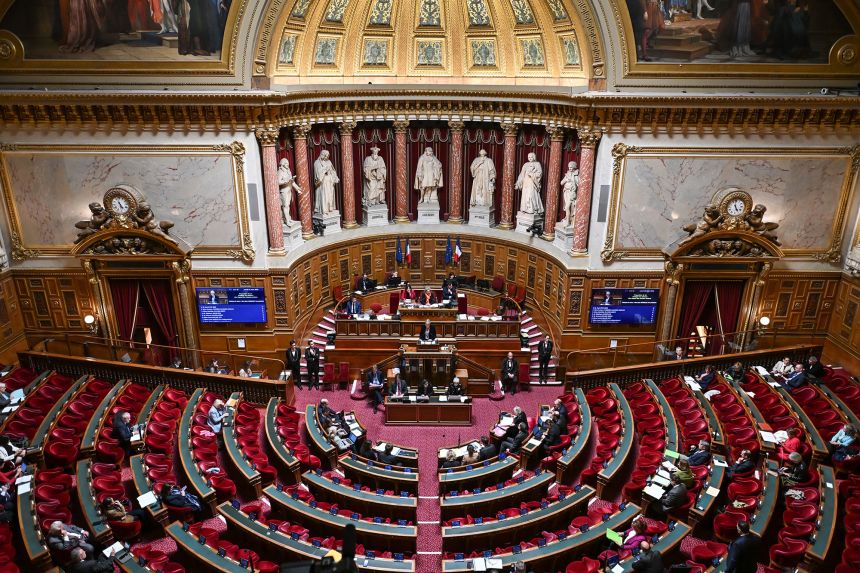
On Tuesday, French legislators approved a law prohibiting social media access for individuals under 15, thus becoming the inaugural nation within the European Union to enforce such a restriction.
Australia set a precedent late last year by banning social media for users under 16. Recently, the UK government announced similar measures, which are anticipated to take effect in the following year. Additionally, Spain, Greece, and Denmark are preparing to establish age restrictions for social media use.
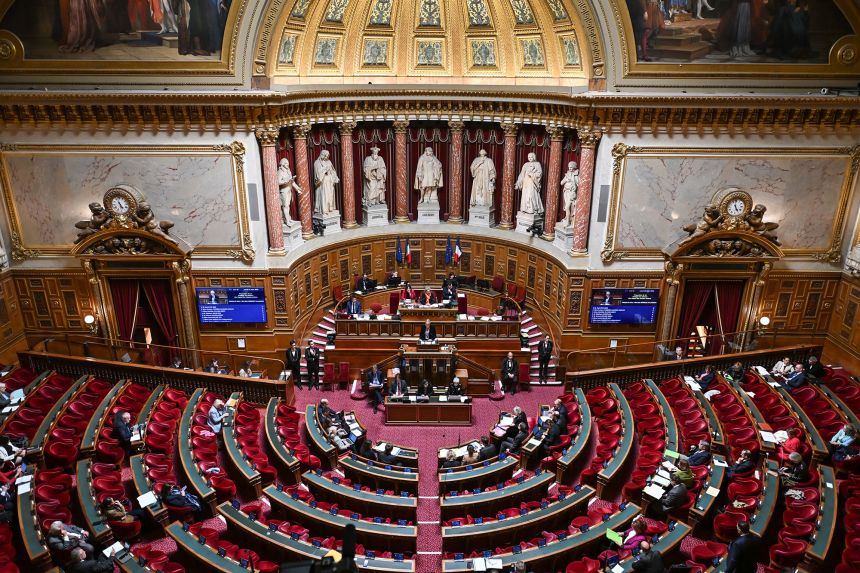
The French parliament voted decisively in support of the legislation, which received strong endorsement from President Emmanuel Macron. He is set to formalize it into law.
Following the vote, he expressed on X, “Beginning this school year, social media will be off-limits for those under 15,” while thanking lawmakers for their support of the bill.
In a video message earlier this year, Macron stated, “The minds of our youth are not commodities for sale. Their feelings should not be exploited or manipulated, whether by American companies or Chinese algorithms.”
Macron had directed the French administration to accelerate the bill’s approval process in parliament, aiming for implementation before the upcoming school year in September.
The method for social media platforms to verify user ages remains uncertain. In Australia, companies must take “reasonable measures” to prevent underage accounts, while the French government has pledged to establish age verification mechanisms to support the law.
Previous drafts of the legislation also suggested prohibiting advertising that encourages social media use among children, particularly by influencers, and mandated that ads for social media platforms include warnings stating: “Hazardous products for those under 15.” However, these provisions were not included in the final version of the bill.
The new legislation will be overseen by Arcom, the regulatory authority for audiovisual and digital communications in France, and is anticipated to extend to all major social media platforms.
Arcom reports that adolescents aged 12 to 17 in France spend an average of 1 hour and 21 minutes daily on TikTok. The regulator has noted that the platform’s algorithm often promotes highly “extreme” content, which can subject teenagers to a relentless flow of distressing or harmful videos.
Social media firms assert that they are already taking precautions to shield children from certain types of content.
‘Real change of atmosphere’
Many French parents expressed support for the ban earlier this year.
“I believe it’s fantastic,” remarked mother of six Geraldine Delacroix in March. “I’m eager to see how it will work in practice, but it’s certainly better than no action at all,” she continued, highlighting that children frequently find ways to bypass current parental controls. “Even when we block access, they discover methods to circumvent it,” she noted.
In her role as a pediatrician, Delacroix has observed a rising concern among families regarding smartphones and social media over the last decade. “People are anxious about smartphones,” she stated. “There has been a significant shift in sentiment.”

Her daughter Ariane noted that while she perceived few drawbacks to the ban, she believed it should have been implemented earlier, stating it was “a bit too late for the young people of my generation who are 13 to 14.”
“We often say, ‘I’ll just check my phone for five or ten minutes,’ but due to its addictive nature, we end up spending an hour or two on it,” she remarked.
Ariane, who uses all major social networks, commented that while they provide “quick and effortless entertainment,” she sees almost no benefits for children her age.
Her older sister Gabrielle, who gained access to Instagram and TikTok before turning ten—well ahead of the 13-year minimum age for most platforms—attributed the development of unhealthy smartphone habits among her peers to the lockdowns during the COVID-19 pandemic.
“Once you get used to it, you just keep using it,” she explained.
Gabrielle expressed skepticism that children would be unable to bypass the restrictions and suggested that platforms should take further measures to eliminate harmful content.
‘Not a toy’
For nations considering age restrictions, implementing effective age verification is a significant hurdle.
“Simply imposing bans will not suffice,” stated French Education Minister Édouard Geffray during a January meeting. “We cannot merely restrict; we also need to educate and provide alternative socialization methods.”
Katia Roux from Amnesty International France echoed similar sentiments, remarking on Tuesday, “The discussion regarding a social media ban for children under 15 is valid. However, this action alone will not secure digital platforms. A fundamental change in the business model of social media firms is essential for adequate user protection. Initially, the addictive and manipulative aspects of these platforms must be prohibited.”
Among OECD countries, data from 2022 revealed that at least half of 15-year-olds in most nations spent over 30 hours weekly on digital devices, including both in-school and out-of-school activities.
Last week, European Commission President Ursula von der Leyen cautioned that “social media is not a toy,” while advocating for “age-appropriate restrictions.”
“In Europe, the developers of products are accountable for their safety. Vehicle manufacturers must ensure their cars are safe. We do not expect children to create their own seatbelts, nor do we expect parents to install airbags at home,” she stated. “This issue is not about whether children can use social media, but rather about when and how social media can engage with our youth.”
Some opposition legislators in France raised concerns about the bill at earlier stages, particularly regarding freedom of speech and access to valuable online information. Certain senators had even suggested creating a blacklist of specific social media platforms.
Nelya Ouali, a teenager whose mother restricts her from owning a smartphone, expressed that the law might limit her access to educational videos.
“As a result, we may not gain more information since we don’t watch much television anymore,” she mentioned, as she and her peers prefer influencer content. “However, social networks remain significant for communication. They enable us to converse with friends,” she added. “They help us unwind and provide entertainment.”
This is not the first occasion France has imposed restrictions on online content. A ban on minors’ access to online pornography faced legal hurdles before successfully coming into effect in 2025, which mandates users to verify their age.
USdaily’s Pierre Bairin, Elina Baudier Kim, and Lisa Courbebaisse contributed reporting.
