
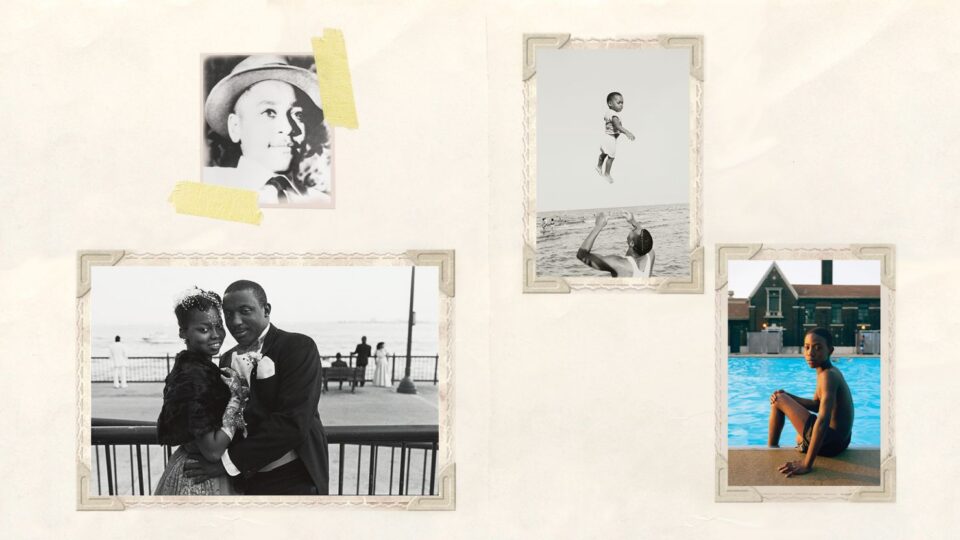
Today marks the 85th anniversary of Emmett Till’s birth in Chicago, a life tragically cut short after just 14 years when he was kidnapped and murdered during a visit to relatives in Mississippi. His mother, Mamie Till-Mobley, chose to have the casket open at his funeral, stating it was to “let the people see.” The funeral attracted over 50,000 attendees, and the harrowing images of Till’s battered and disfigured body published in Jet magazine ignited outrage and activism within the Civil Rights Movement. There are few images available to encapsulate his tragically brief existence.
However, what if he had made it back to Chicago safely and was alive today? What experiences would he have had, and what person would he have become? The question of “What if Emmett Till lived?” looms large.
This scenario serves as the foundation for an upcoming exhibit at the Museum of Contemporary Photography (MoCP) at Columbia College Chicago, set to debut on September 10, accompanied by a book sharing the same title.
Titled “If Emmett Till Lived: Freedom on American Ground,” the exhibit sees historian and curator Sarah Elizabeth Lewis working alongside Till’s cousin, Reverend Wheeler Parker Jr. — the final living witness to Till — and MoCP’s executive director Natasha Egan, along with chief curator Karen Irvine. Utilizing images from the museum’s permanent collection, the project envisions a future where a Black boy grows up, falls in love, becomes a father, and witnesses the historical events he missed. The narrative unfolds through visuals of Dr. Martin Luther King Jr., disco nights, the Chicago Bulls, and the inauguration of the first Black president.
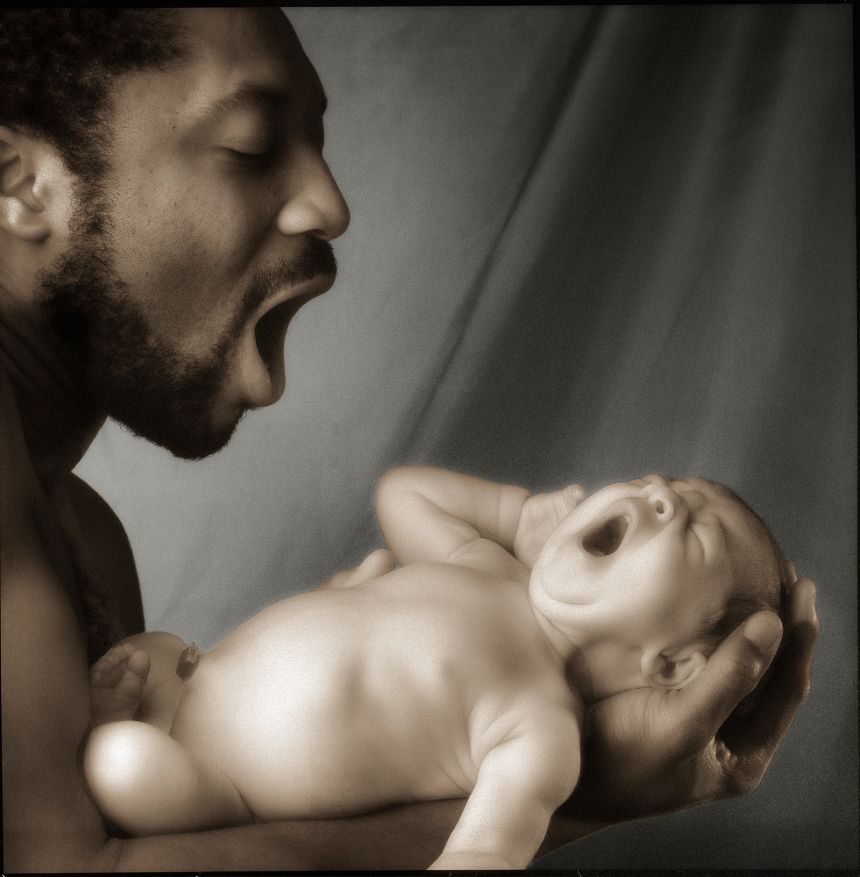
The collection features photographs from notable artists such as Gordon Parks, Dorothea Lange, Dawoud Bey, Lyle Ashton Harris, Annie Leibovitz, LaToya Ruby Frazier, Robert Mapplethorpe, and Carrie Mae Weems, each with a rich history, but in “If Emmett Till Lived,” they acquire new significance through recontextualization.
“This allowed me to pay tribute to Mamie Till-Mobley’s belief in ‘letting the world see,’” Lewis articulated during a video conference with Irvine and Egan. “Through the choice of images, I hope to provide a compelling invitation to do just that.”
The images of Till in his open casket stood as necessary evidence during that era, she noted. As powerful representations of injustice, they exposed the brutality prevalent in the Jim Crow South. However, she added, “today, images of injustice are ubiquitous. It requires innovative methods to assert humanity and the fundamental right to life.”
This initiative, described as a “creative monument,” is a collective vision where curators invited cultural figures to also contribute by selecting an image. Participants include artists Amy Sherald and Hank Willis Thomas, filmmaker Ava DuVernay, musician John Legend, author and former first daughter Chelsea Clinton, US representative Ayanna Pressley, and Smithsonian secretary Lonnie G. Bunch III.
“This project is for everyone. It’s crucial to acknowledge that Emmett’s narrative serves as a catalyst for all,” emphasized Egan. “Many of the photographs depict joy—the joy of life, of playing at the beach, of attending prom. It celebrates humanity and our shared experience.”
Below are some featured photographs along with insights from curators and contributors, compiled from interviews with USdaily and excerpts from the upcoming book.
“Untitled” by Stephen Marc
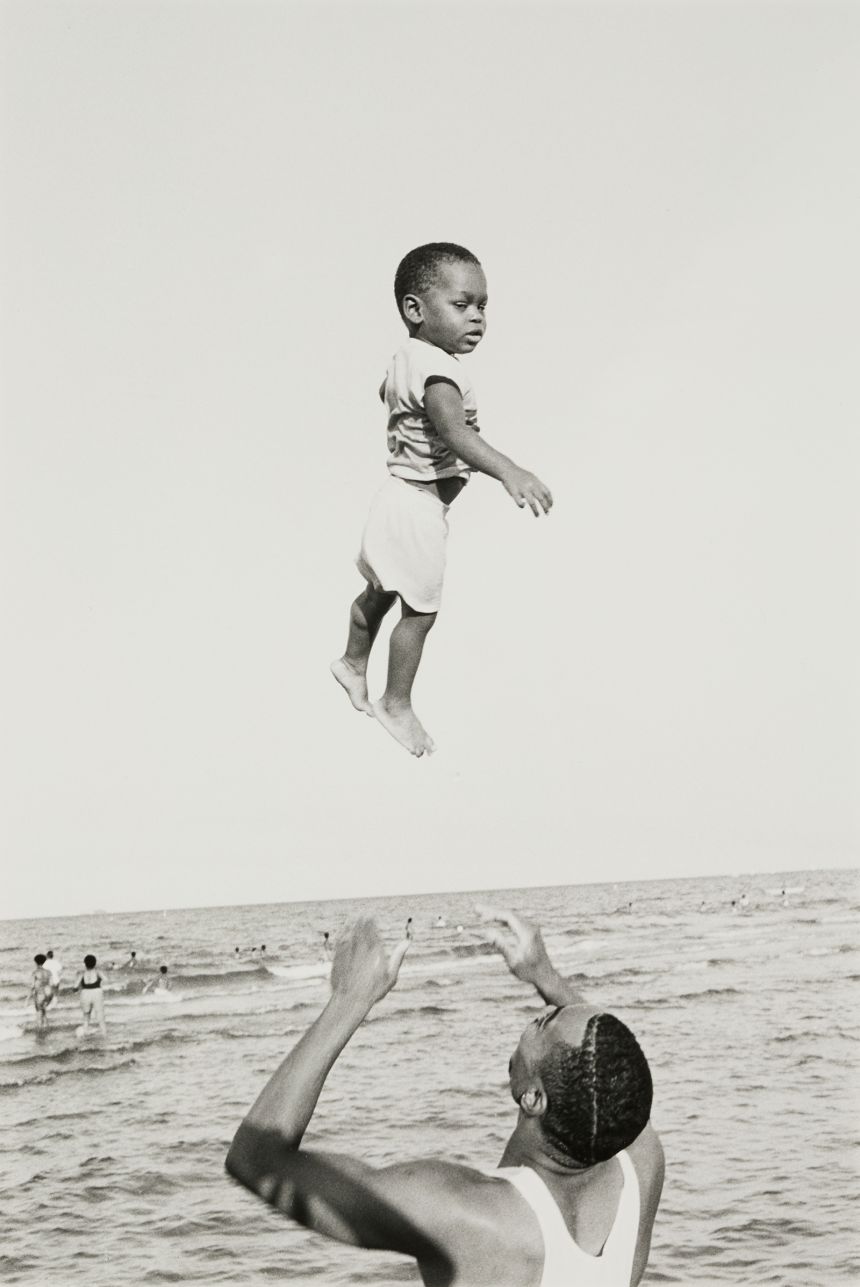
This photograph from 1988, showcasing a father tossing his child into the air in Chicago, left a profound impact on Lewis when she first encountered it. The child is airborne against a backdrop of Lake Michigan, displaying no hint of fear as he glances back. In considering who represented Till, Lewis pondered whether it was the child or the father.
“This image served as a symbol, an epigraph for the entire exhibition,” Lewis elaborated. “I realized in that instant that he could not be the father, and it poignantly represented loss, pain, and the potential for transformation through imagery. I found myself suspended between reality and a world that could have been.”
“Prom Couple, Navy Pier” by Tom Arndt
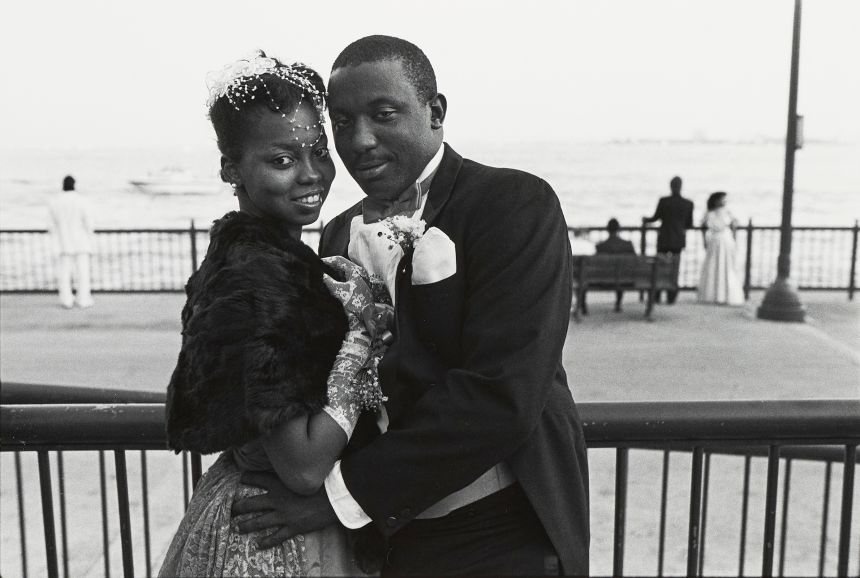
Similar to the portrait by Stephen Marc, this photograph by Tom Arndt captures a high school couple at prom, featured in the 1989 photo book “Changing Chicago,” which documented the lives of Chicago residents through various documentary photographers. The couple is closely positioned at Navy Pier, with the young man’s hands resting on his date’s hips, both smiling.
Pressley selected this image to pay tribute to the life that he “should have lived,” as she notes in the book.
“I envision him here as a husband—loved, respected, and granted the dignity of growing old next to someone who recognizes his full humanity. I see the potential for fatherhood, for laughter at the dinner table, for anniversaries, and for the simple joys that should never have been denied to any child,” she elaborated. “To remember Emmett Till means not only to grieve what this nation took from him but also to affirm the fullness of the man he might have become.”
“Drinking Fountains, Mobile, Alabama” by Gordon Parks
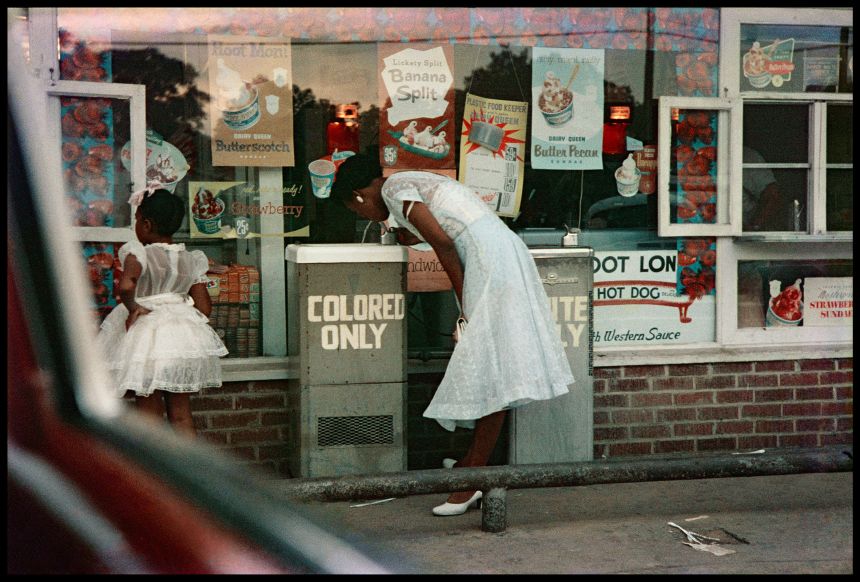
Much like the photograph of Till’s corpse, Gordon Parks’ groundbreaking color photographs from 1956 depicting segregation in Alabama reflect the realities of the United States. “Drinking Fountains,” taken in Mobile, was part of a series for Life magazine. A year after Till’s death, the environment remained perilous for Black individuals, and Gordon expressed his trepidation about highlighting the inequities in the city. Nevertheless, he returned to capture vibrant images that showcased the dignity of Mobile’s Black community, intentionally using color to portray their everyday lives.
In the book, Bunch discusses the allure of the photograph that makes it so impactful. “The vividness of the color photograph portrays both the daily humiliations of segregation and the way the subjects’ clothing reflects resilience and a refusal to accept second-class status,” he noted.
“Cliff Joseph: Artist, Activist, and Art Therapist” by Terry Evans
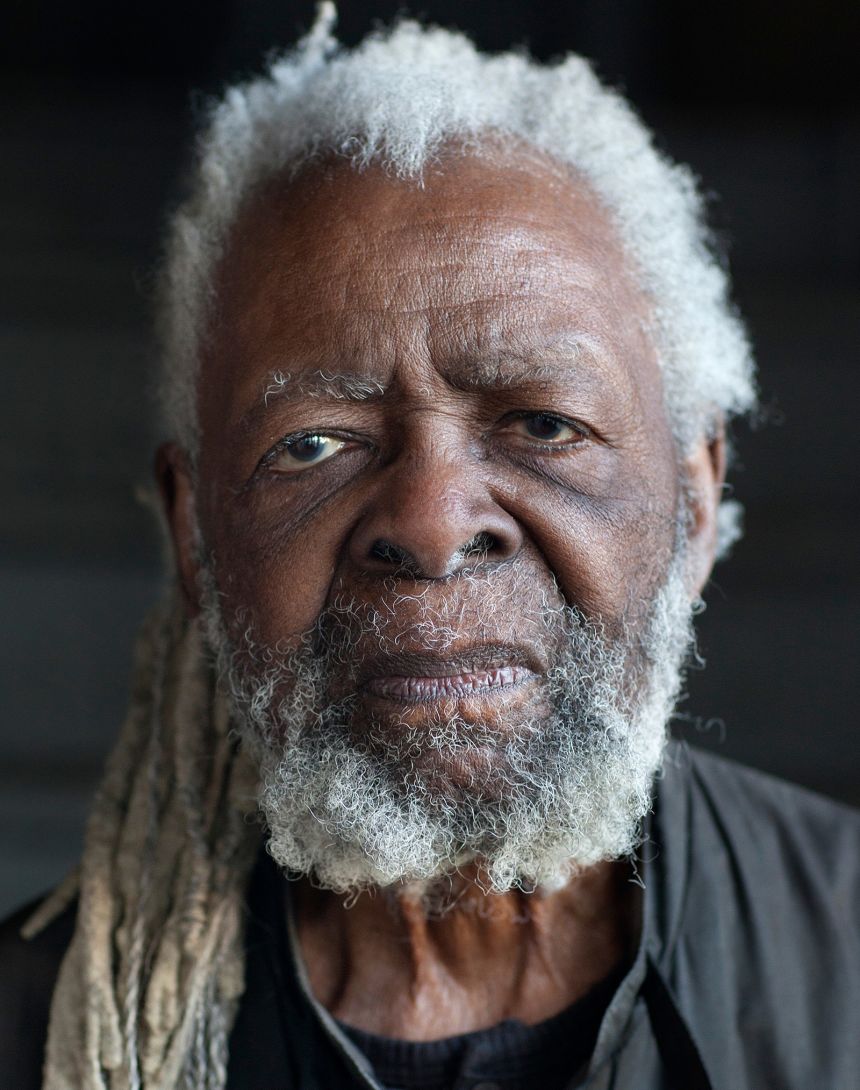
Evans’ image of the late Cliff Joseph—a dedicated artist, therapist, and activist who fought for greater representation of Black artists in major New York museums—was captured in 2015 when Joseph was 93 years old. This portrait was taken shortly before Joseph’s passing, with his hair a bright white, as he faces the camera with determination.
“It serves as a potent reminder that Emmett Till should have had the opportunity to grow older, making it especially poignant this week as we commemorate his 85th birthday,” Irvine remarked.
“Stars” by Keith Carter
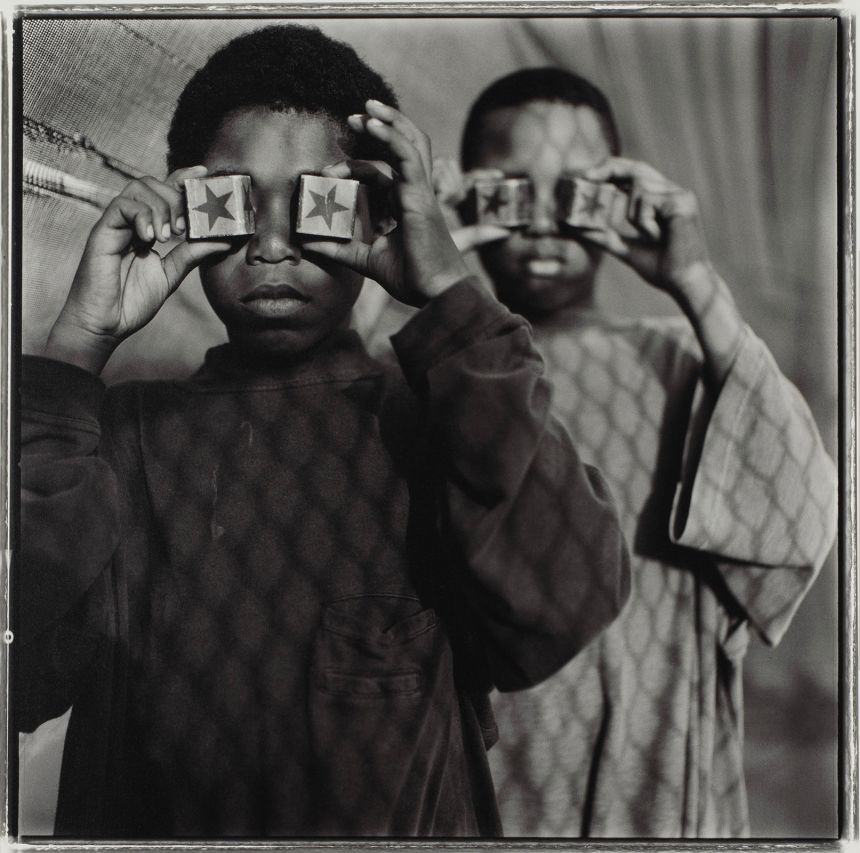
As Amy Sherald, a celebrated American painter, reflected on this 1995 photograph by Keith Carter featuring two children, she contemplated the evolving narratives surrounding Till’s story. In the image, the children obscure their identities by holding blocks marked with star patterns over their eyes.
“I chose this photograph for its dual themes of innocence and concealment—children peering through symbols while being partially hidden, mirroring how Emmett’s narrative is both observed and continually interpreted through history,” she shares in the book.
“Boy by Pool, Chicago” by Paul D’Amato
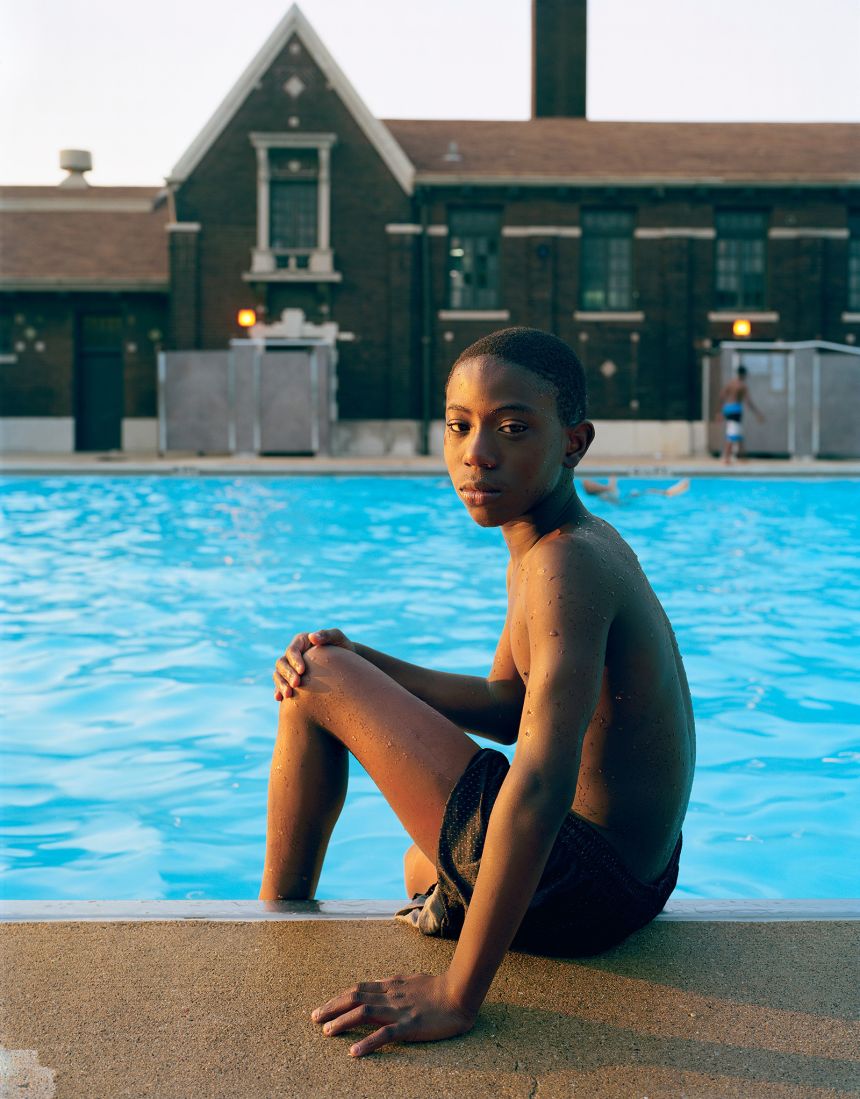
In D’Amato’s 2005 photograph of a young boy by a pool in Chicago, the vast blue water stretches behind him. This connection and its symbolism resonated with Leonard, who reflected on the significance of water in the context of the Atlantic Slave Trade.
“I find it challenging to view any image of a Black American in front of a vast blue body of water without immediately recalling the Middle Passage,” Leonard writes in the book. “The fact that this body of water is a pristine swimming pool makes the connection even sharper.”
“What strikes me most about this image by Paul D’Amato is the boy’s gaze: assertive and direct into the lens. He carries the weight of history behind him, challenging you to define him by it,” he continues. “He dares you to see him for who he will become on his own terms.”
“Railroad Yards, South Chicago,” by David Plowden
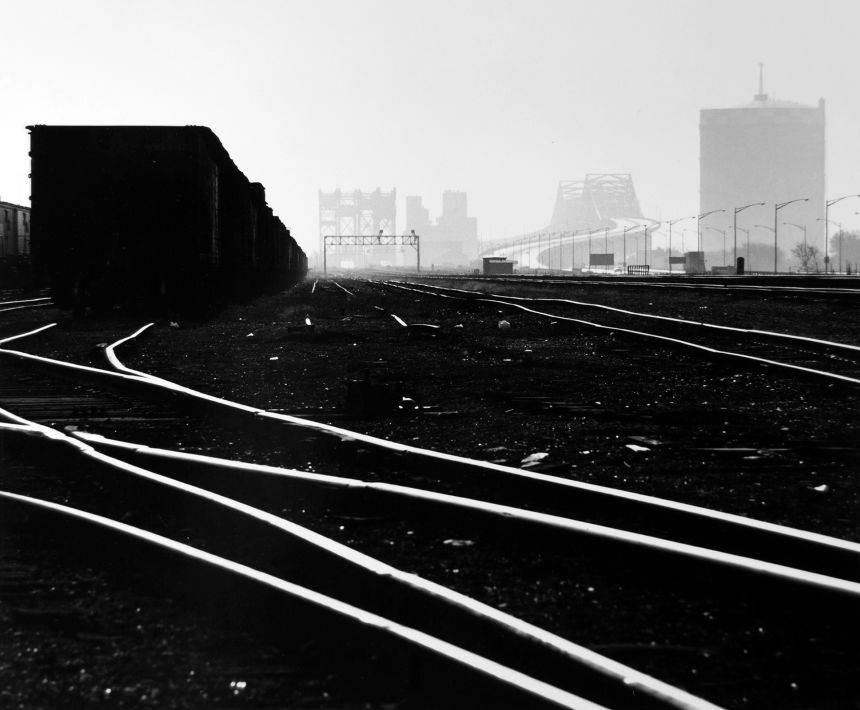
David Plowden captured this photograph of South Chicago’s railroad yards in 1966, which appears among several images of train tracks featured throughout the project and symbolizes the journey back from Mississippi that Till was never able to make.
“The railroad holds significance to the narrative, and Emmett should have been aboard that train heading back to Chicago,” Egan remarked.
Plowden dedicated his career to photographing small-town and rural America, from agricultural landscapes to towering grain silos and trains. Egan reached out to the 94-year-old to request the inclusion of this image in the book. He passed away shortly after their discussion, giving its inclusion a deeper significance, Egan reflected.
