
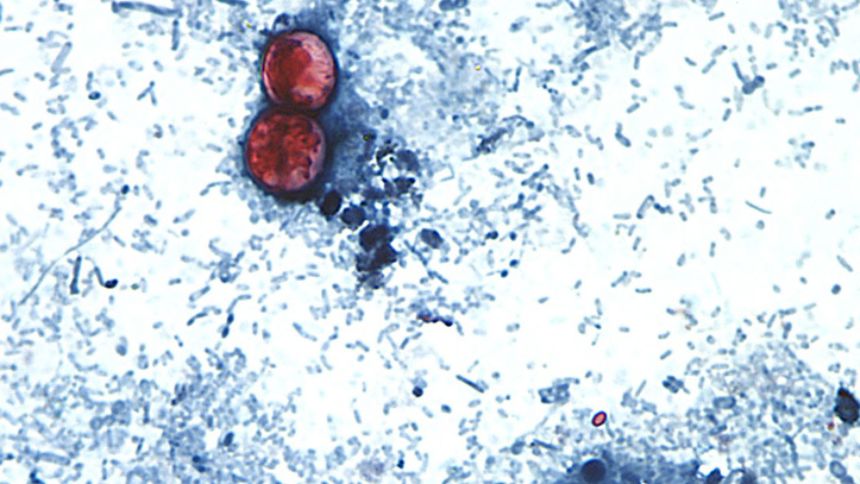
Several states in the US are currently experiencing a significant outbreak of diarrhea linked to cyclospora, a tiny parasite that can taint fresh food or water sources.
Iceberg lettuce provided by Taylor Farms has been recalled, and it is probable that some contaminated items have already been consumed or taken off the shelves.
“We have managed to control the outbreak,” stated US Health and Human Services Secretary Robert F. Kennedy Jr. on Tuesday, referencing the recall.
However, the onset of illness can take time, and the rate of new cases has not shown any signs of decreasing yet.
Health authorities are working swiftly to investigate the cases, but tracking down the parasite is notoriously challenging. Testing produce can be difficult, and individuals who are ill may need to recall what they consumed weeks ago to help pinpoint a common source.
The incidence of cyclosporiasis typically sees an uptick in the US during the spring and summer months, generally from early May to late August, as reported by the US Centers for Disease Control and Prevention. This year, however, the number of cases is notably elevated.
Here’s a summary of what is currently known about the outbreak.
Size of the Outbreak
As of last week, the CDC has reported over 11,500 instances of domestic cyclosporiasis this season: 4,173 confirmed cases, with approximately 7,400 additional cases currently undergoing laboratory testing and evaluation to ascertain if they were contracted within the US.
Numerous clusters of cyclosporiasis cases have been examined this year in collaboration with the CDC and state health departments by the US Food and Drug Administration. At least two investigations are still active, including a significant multistate outbreak primarily affecting the Midwest.
The CDC has associated 1,644 cases with this specific outbreak.
Nonetheless, the CDC statistics only reflect confirmed cases, and data from individual states indicate significantly higher numbers.
Affected States
The CDC has pinpointed five states with reported cases connected to the ongoing outbreak: Indiana, Kentucky, Michigan, Ohio, and West Virginia.
As of Wednesday, the Michigan Department of Health and Human Services has documented 7,171 instances of cyclosporiasis throughout the investigation period. The health department stated it “cannot confirm that all illnesses stem from the same exposure source,” but the sharp rise in cases “strongly implies that the majority of these illnesses are linked to the same outbreak.”
Ohio has recorded at least 1,244 instances, Indiana has reported 594 instances, West Virginia has documented 195 cases, and Kentucky has reported 192 cases.
Michigan and Indiana update their data on weekdays, while West Virginia updates its figures twice a week, and Ohio and Kentucky provide updates on a weekly basis.
“The actual tally of sick individuals in this multistate outbreak is probably greater than the reported figures, and the outbreak may extend beyond the states with identified cases,” the CDC indicated in an update.
In total, 41 states have reported at least one case of cyclosporiasis acquired domestically this season, according to the CDC.
Nonetheless, some states — like California and New Jersey — have indicated that the number of cases they have reported this year aligns with normal seasonal patterns.
Affected Foods
Many individuals are concerned about the safety of their meals. Is cilantro safe? Are tomatoes safe to consume? Is romaine lettuce safe for eating?
Health officials in Michigan reported they have conducted over 2,000 interviews with individuals diagnosed with cyclosporiasis. They stated there is “very strong” evidence connecting the outbreak to a specific product: Shredded iceberg lettuce from Taylor Farms appears to be the likely source. This contaminated lettuce was served at various Taco Bell locations.
The CDC advises against consuming any shredded iceberg lettuce supplied by Taylor Farms de Mexico at Taco Bell outlets located in states with cases associated with the outbreak: Indiana, Kentucky, Michigan, Ohio, and West Virginia.
The FDA is investigating whether contaminated shredded iceberg lettuce was distributed to other locations.
On Friday, Taco Bell announced the removal of Taylor Farms lettuce from its restaurants and its nationwide supply chain, while supplier Taylor Fresh Foods stated that it is withdrawing all iceberg lettuce sourced from central Mexico from the US market.
In a LinkedIn message on Tuesday, Taco Bell CEO Sean Tresvant expressed gratitude to Taco Bell “fans” for their support and committed to enhancing the food system.
“We don’t take your loyalty for granted. We earn it one meal at a time,” he stated. “We envision a better path forward, and we intend to be at the forefront.”
Taylor Farms has also issued a recall for iceberg lettuce distributed to 27 states. Some of this lettuce was sent to Walmart and Jack in the Box, while other shipments reached food service providers.
The investigation is ongoing, but as of now, no other food items have been identified as part of this outbreak. Historically, other foods commonly associated with cyclospora outbreaks include basil, cilantro, berries, and snap peas.
Federal health authorities mentioned that there have been numerous investigations regarding cyclospora this year, with some tied to the major outbreak in the Midwest, others concerning individual states, and some relating to cases not yet connected to any specific cluster.
Incubation Period for Illness
Illnesses related to the current outbreak began in mid-May, with new cases emerging as recently as last week, according to the CDC.
Symptoms of cyclosporiasis can manifest between days and up to two weeks after ingesting contaminated food or water.
Common symptoms include watery diarrhea, decreased appetite, weight loss, cramping, bloating, increased gas, nausea, and fatigue.
Those who become ill may experience symptoms that last for weeks.
Severity of the Illness
At least 94 individuals have required hospitalization due to the ongoing outbreak, as reported by the CDC. Additionally, hundreds of other cyclospora-related hospitalizations have occurred this year.
States that are specifically associated with the outbreak have reported numerous cyclospora hospitalizations:
-
Michigan: 102 hospitalizations reported
-
Ohio: 88 hospitalizations reported
-
Kentucky: 9 hospitalizations reported
-
West Virginia: 15 hospitalizations reported
-
Indiana: hospitalization data not reported
No fatalities have been reported.
Comparison to Other Outbreaks
A report from the US Department of Agriculture’s Food Safety Inspection Service in 2023 indicates that the largest recorded cyclospora outbreak in the US involved roughly 1,500 cases and was associated with raspberries. Other significant outbreaks have typically not exceeded 1,000 cases.
With 1,644 cases tied to the Midwestern outbreak, this event marks the largest cyclospora outbreak in the US so far.
The total number of cyclosporiasis cases recorded this year in the US is also above normal levels.
There have been over 4,500 cases in 2023 and more than 3,500 cases in 2024, according to federal officials. However, this year has already seen thousands more cases reported, with at least a month remaining in the season.
Other Potential Causes of Stomach Issues
The French biotech firm bioMérieux monitors trends in gastrointestinal pathogens by gathering test results from a network of laboratories.
Their data indicates a significant increase in the presence of cyclospora and other parasites in the US over the last month, rising from less than 3% of tests in the second week of June to over 18% in recent days.
Nonetheless, E. coli remains a more frequent cause of gastrointestinal problems in the US at present. Surveillance data shows that this bacteria was detected in more than 19% of tests.
Viruses are also known to cause gastrointestinal issues, with about 14% of tests in the US returning positive for these pathogens between July 19 and July 21.
