
With the increase of explosive diarrhea cases in the US this summer, health authorities are facing a persistent concern regarding the minuscule parasite responsible for this issue: How is feces contaminating our food?
The disturbing reality about cyclospora is that humans are its exclusive host. It has only been detected in human waste. Therefore, if it appears in our food or water, “it doesn’t take a rocket scientist or a microbiologist to overthink this,” remarked Dr. Mark Moorman, who recently stepped down as head of the Office of Food Safety at the US Food and Drug Administration. “Humans are the source.”
Additionally, it’s worth mentioning that investigators have yet to conclusively determine the source of any cyclospora outbreak.
In numerous instances, strong circumstantial evidence has linked cyclospora to the production or processing of food, yet the method by which fecal matter enters the agricultural supply chain remains unidentified.
This inquiry is becoming increasingly urgent as the US encounters its largest cyclospora outbreak on record, with over 11,500 confirmed and suspected cases reported across 41 states, according to the CDC.
These cases were contracted domestically, rather than through international travel, making this year particularly noteworthy.
“Usually, we only observe between 2,000 to 4,000 cases annually, so this is a significant increase,” explained Dr. Keith Schneider, a food safety professor at the University of Florida. Typically, about 20% of cases occur during international travel.
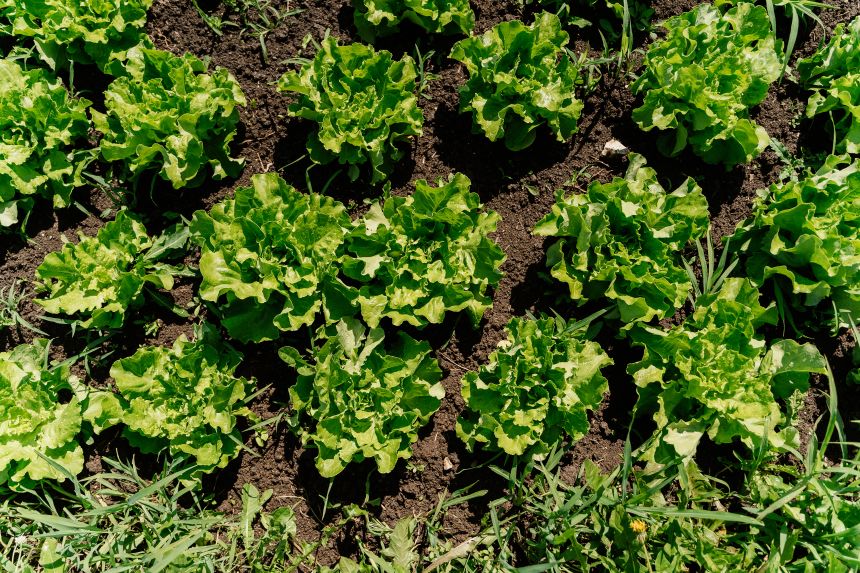
Cyclospora infections tend to peak in the summer months. This year, the FDA has initiated investigations into six different outbreaks. The most significant among these is a nine-state outbreak in the Midwest, which is thought to be linked to iceberg lettuce cultivated in Mexico. The FDA recently disclosed that it is also examining another cluster of 72 related cases with an unidentified source.
“We haven’t witnessed anything like this before,” stated Dr. Kali Kniel, a microbial food safety professor at the University of Delaware. Generally, the US only investigates one or two cyclosporiasis outbreaks each year. “This year appears to be unusual, with multiple simultaneous outbreaks occurring.”
The quest for a ‘smoking gun’
Frequently, these investigations conclude without any definitive leads.
“We simply lack concrete success stories to point to and say, ‘Aha, here’s the smoking gun,’” Moorman commented.
For instance, in 2013, an FDA investigation into a cyclosporiasis outbreak associated with salad mixes processed by Taylor Farms de Mexico did not find the parasite in their tests but observed that medical records from harvesting workers indicated they had taken antidiarrheal medications or antibiotics for treating cyclosporiasis. These medications can have other uses, and no confirmed diagnoses were found in the records reviewed by the FDA.
Investigating cyclospora outbreaks is particularly challenging due to the nature of the parasite itself. After consuming contaminated food or water, symptoms such as cramping, nausea, watery diarrhea, and bloating can take up to two weeks to manifest. By the time individuals realize their symptoms are persistent and seek medical help, it may be three to four weeks post-exposure.
Confirming the illness through laboratory testing of a stool sample also requires time. Subsequent to that, the case must be reported to a local health department, which then conducts an interview with the person regarding potential exposures.
Most individuals struggle to recall what they ate for breakfast, much less what they consumed a month earlier, prompting contact tracers to often utilize electronic records from shopper cards and bank statements to assist in piecing together the timeline. All this information must be analyzed to identify a common source of exposure.
This summer, iceberg lettuce emerged as the primary suspect in the largest outbreak, while several other clusters remain without a suspect source.
The majority of this investigative work is carried out by state health departments, and in multistate outbreaks like this, they collaborate with the US Centers for Disease Control and Prevention.
Once the CDC is confident that its data indicates a source, the investigation is handed over to the FDA. The FDA then traces the food back to its suppliers and ultimately to the farms where it was produced. A team conducts an environmental assessment, collecting thousands of samples of soil, water, and produce for testing.
However, by the time FDA inspectors reach a farm, the outbreak has typically subsided.
“The timing is quite challenging,” remarked Dr. Kali Kniel, a professor of microbial food safety at the University of Delaware.
“By the time that assessment occurs, the perishable products have vanished, and they are no longer being cultivated or harvested anywhere,” Kniel, who instructs a course on outbreak investigation, noted.
‘Water is the primary concern’
It is uncommon for laboratory tests to detect cyclospora parasites in the environment. However, they did during a 2020 investigation of Fresh Express bagged salad kits, which were associated with over 700 cyclosporiasis cases in 14 states that summer.
Many food safety experts regard these findings as the closest anyone has come to identifying the source of an outbreak.
“It’s about the closest we’ve come to having a clue, as we discovered the cyclospora pathogen in canal water,” stated Moorman, who oversaw the FDA investigation.
The Fresh Express salad kits included iceberg lettuce, carrots, and red cabbage, prompting inquiries into various farms that produced these vegetables. Eventually, the FDA performed a comprehensive environmental assessment at a Florida farm that grew red cabbage for the mix, where testing revealed cyclospora in two samples taken from a canal used for irrigation.
However, testing for cyclospora is intricate, as acknowledged by the FDA in a warning letter sent to Fresh Express.
“Due to the evolving nature of genetic typing techniques for this parasite, the FDA has been unable to definitively establish whether the Cyclospora found in the canal is the origin of this outbreak,” agency officials stated.
“Nonetheless, water and soil contaminated with fecal material may serve as a means of transmission for C. cayetanensis infection,” the FDA remarked.
Fresh Express did not respond to USdaily’s request for comments regarding the FDA’s testing.
Despite the test results, Moorman stated that they were never able to determine how feces could have contaminated the canal initially.
Most experts believe that water tainted with cyclospora is the means by which the parasite contaminates produce.
“Water is the leading concern,” stated Dr. Jennifer McEntire, a microbiologist who advises food companies on safety protocols. “The question remains, how does that water become tainted with human waste?”
Although it is improbable that someone would directly discharge waste into irrigation water, McEntire suggests that unintentional contamination could contribute to the issue.
Most farms provide portable toilets or bathroom trailers for workers in the fields. Is it possible that waste disposed of from these facilities ended up in the canal? Could a septic tank nearby have leaked or ruptured, allowing waste to infiltrate? Did heavy rainfall lead to a sewer system overflow?
McEntire posits that it is possible for infected workers to transmit the parasite while handling food, but she considers this less likely.
She finds it difficult to believe that a single sick individual or even an entire harvest crew could contaminate enough produce to cause widespread illness among this many people.
“However, that is another potential route, a somewhat more direct connection, going back to the individuals rather than the water,” she added.
Moorman believed there was sufficient evidence to encourage members of the Florida Fruit & Vegetable Association to conduct more rigorous testing of irrigation water and produce during the growing season.
However, that was the extent of his influence.
Moorman indicated that there are no regulations mandating farms to test their irrigation water or produce for cyclospora.
“It is voluntary,” he explained. With few exceptions, “we lack the authority at the FDA.”
Large retailers that purchase produce, such as Kroger, Food Lion, or Costco, could potentially require their suppliers to conduct tests, which might help avert outbreaks.
The government could also implement legislation mandating cyclospora testing and allocate more resources for researching this parasite and the illnesses it causes.
Kniel, from the University of Delaware, expressed her relief that there is finally attention being directed towards this issue.
“Every year, when there are 2,000 cases, I’ve wondered, ‘Why is no one concerned? Why is this not being discussed?’”
