
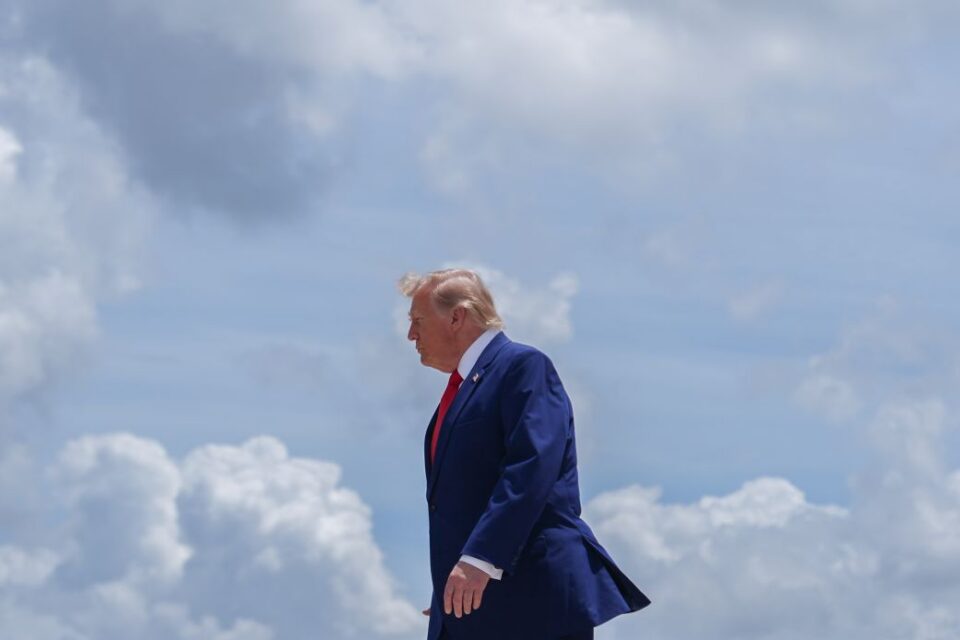
The prominent American disruptor in the Middle East is taking another gamble.
A new nuclear agreement for civilian purposes with Saudi Arabia, signed on Wednesday, reflects President Donald Trump’s approach to governance.
Primarily, it represents a deal, a concept that has been at the heart of Trump’s foreign policy and his entire existence.
This agreement may also symbolize Trump’s inclination to circumvent international norms and agreements that have historically supported a US-led global framework.
By injecting further unpredictability into a volatile region, Trump demonstrates his appetite for significant geopolitical risk, even as a prior venture in Iran appears to be deteriorating.
It is classic Trump: whether he’s aiming to reshape the Middle East or redefine the White House, he tends to act without a clear understanding of the subsequent outcomes.
Similar to many of Trump’s agreements, it appears that the announced conditions are not necessarily conclusive.
On Thursday morning, the president introduced an additional stipulation, stating on social media that while the deal “will be approved,” it “is completely contingent on Saudi Arabia joining the highly regarded and successful Abraham Accords.” These accords were a notable success during Trump’s first term, establishing diplomatic relations between Israel and various Muslim-majority nations. The Biden administration had also suggested a similar requirement for any nuclear agreement involving Saudi Arabia.
Trump’s post came after significant political backlash regarding the announcement of the deal on Wednesday, particularly from Israel and some supporters in the US Congress.
This multi-billion-dollar, 30-year agreement could enable Saudi Arabia to develop uranium enrichment capabilities, although the president clarified on Thursday that enrichment would not be permitted. The administration is portraying this as a success on several fronts:
-
As a deal that adheres to the highest anti-proliferation standards.
-
As a significant advantage for the US nuclear sector.
-
And as a reinforcement of the relationship with a crucial ally.
The US has been considering a civilian nuclear agreement with Saudi Arabia for at least ten years, although the Biden administration seemed inclined to impose stricter guidelines. If the US had not pursued this deal, competitors like China would have been eager to take advantage of the opportunity, thereby establishing their own geopolitical foothold.
“For President Trump, the focus in the Middle East has been on commerce rather than conflict,” stated Energy Secretary Chris Wright during an interview with Fox Business on Wednesday.
However, some critics, including numerous voices from Israel, worry that this agreement could eventually enable the Saudis to enrich uranium to levels suitable for a nuclear weapon, potentially triggering a regional arms race. Riyadh has stated it will not pursue a nuclear weapon if Iran does not, yet any advancement in that direction could prompt countries like Egypt or Turkey to follow suit.
The US-Saudi agreement was crafted under a US law that permits the transfer of American nuclear technology while prohibiting the proliferation of nuclear weapons. The Energy Department announced on Wednesday that it includes a bilateral safeguards agreement. This suggests that Saudi Arabia might not need to adhere to the International Atomic Energy Agency’s Additional Protocol, which mandates more thorough monitoring and inspections. This could set a precedent for other nations to bypass international constraints while pursuing their own nuclear agreements—potentially with US adversaries—and undermine nuclear safeguards.
“The agreement itself was reckless and irresponsible, and its broader consequences could be felt for many years,” expressed Kelsey Davenport, director for nonproliferation policy at the Arms Control Association.
John Erath, senior policy director at the Center for Arms Control and Non-Proliferation, indicated that the lack of IAEA standard protocols—such as those included in a recent US civilian nuclear agreement with the United Arab Emirates—could represent “a potentially significant issue.” He informed USdaily’s Jim Sciutto that such standards are essential to ensure that “Saudi Arabia is not engaging in enrichment activities that would lead to nuclear weapons capability.”
Saudi deal injects new uncertainty into region as Iran war rages
The timing of this agreement is also striking: it coincides with Trump’s recent escalation in the conflict with Iran, which he claims is aimed at preventing Tehran from acquiring nuclear weapons. The administration believes this deal could further shift the balance of power towards the US by strengthening ties with Saudi Arabia.
Nevertheless, by suggesting that US allies have the right to nuclear enrichment while adversaries do not, this deal may exert considerable pressure on international non-proliferation treaties and encourage Iran to seek its own partnerships.
Moreover, negotiating a nuclear agreement with Iran was already a challenging endeavor. The administration could have complicated this task significantly by finalizing a deal with the Saudis that extends into the future since Iran is sure to demand similar enrichment privileges.
The Saudi agreement is not the first instance where Trump has taken risks in the Middle East without comprehending the long-term implications.
Frequently, his tendency to dismiss established conventions, disregard international agreements, and pursue a disruptive path appears to be an end goal in itself.
Furthermore, the president seems to take pride in acting in stark contrast to his predecessors.
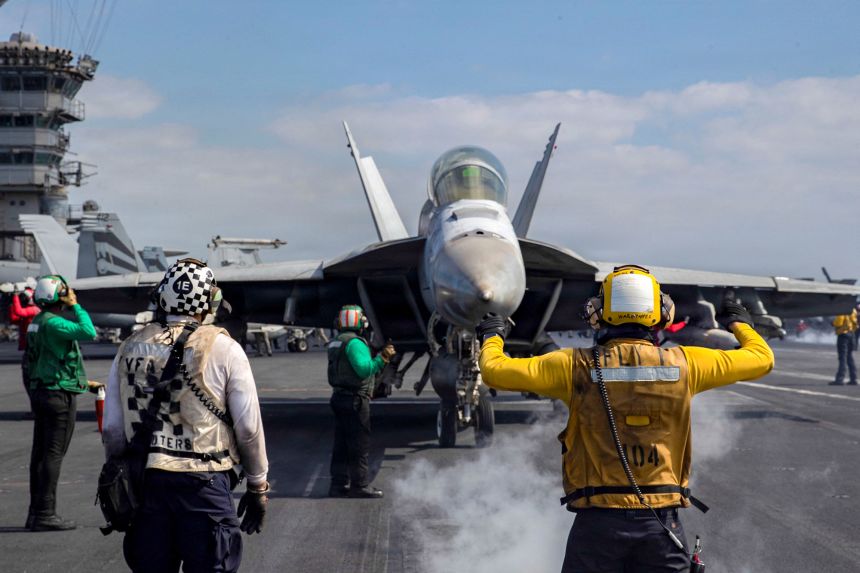
Most recent presidents have attempted to avoid conflict with Iran; Trump, on the other hand, dismantled an international agreement that limited its nuclear program, ordered the assassination of its top security official Qasem Soleimani in his first term, targeted its nuclear sites last year, and initiated a comprehensive war against Iran in February.
Contemporary administrations have concluded that promoting a two-state solution with the Palestinians is the best method for ensuring Israel’s security; Trump allowed Israel to undermine that goal through stringent policies in Gaza and the West Bank.
This year, Trump committed to lifting the US designation of Syria as a major supporter of terrorism, a label that has been in place since 1979, believing his relationship with the new president, Ahmed al-Sharaa, a former leader of an al-Qaeda affiliate, would suffice. Critics contend that Trump should have leveraged this change to demand political, human rights, and counter-terrorism reforms.
Trump has also significantly altered the US approach toward Saudi Arabia. Previous presidents have often navigated the complex diplomatic relationship with the kingdom and other Gulf nations, which, while crucial allies, maintain oppressive policies that conflict with democratic principles. In contrast, Trump openly respects Arab autocrats and views their wealthy, emerging nations as lucrative business opportunities, particularly for his family’s interests.
Why Trump’s team seeks virtue in risk
Supporters of Trump argue that the past decades of US strategy in the Middle East have failed to achieve stability. They assert that he is taking necessary actions that previous leaders neglected. Defense Secretary Pete Hegseth told senators on Tuesday that Trump deserves acclaim for “having the bravery to ensure that radical Islamists cannot wield a nuclear weapon against us.”
However, the dangers of such a strategy are evident in Iran. The US’s struggle to withdraw from a war that Trump has claimed victory in multiple times illustrates why his predecessors hesitated to engage deeply in a full-scale conflict.
Democratic critics accuse the president of ignoring political, historical, and ideological factors that have consistently indicated Iran would resist US pressure. Trump appears not to have considered critical inquiries regarding the aftermath of a US military strike—such as the likelihood that Tehran might attempt to close the Strait of Hormuz.
This conflict highlights a recurring issue—plans formulated in Washington often falter when confronted with realities in the Middle East.
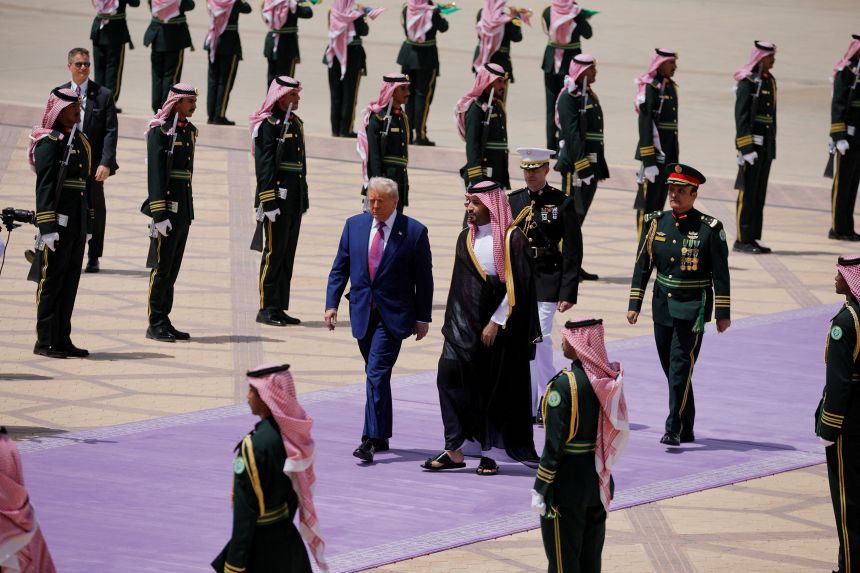
While Trump and his administration maintain strong connections with Saudi Arabia’s Crown Prince Mohammed bin Salman, the long-term relationship between Washington and the kingdom may not always remain robust. There is no certainty that the nation will not fall under more radical leadership in the future, particularly in a region frequently destabilized by Islamic extremism.
This concern intensifies when considering the implications of nuclear programs. “A partner of the US today may not necessarily remain a partner tomorrow. Once the technology is transferred, the US cannot ensure it will maintain control over that technology,” Davenport remarked.
Nonetheless, Trump often appears unconcerned about the consequences that may arise after his presidency.
One of Trump’s commonly used phrases, “We’ll see what happens,” takes on a particularly unsettling meaning in the context of the Middle East.
This story has been updated with additional information.
