
It was spectacular, enjoyable, and brought people together. However, did the World Cup bring value to the United States?
This inquiry is usually settled through financial analysis: Calculate the economic gains from the event and deduct the expenses incurred to host it; a positive figure indicates success, while a negative one suggests otherwise.
By that standard, the World Cup was likely a failure.
There is scant evidence of significant financial advantages for the U.S. from the tournament: the anticipated surge in jobs did not materialize, hotel rates did not increase significantly, retail sales declined in June compared to May, and airfares remained steady, along with overall tourism levels.
However, assessing economic impact can be complex—how do you isolate the effects of a major event like the World Cup from the vast U.S. economy? At this point, the evidence can become a matter of interpretation.
But what if the worth isn’t solely defined by financial metrics? Is there a valid cost associated with enjoyment?
There is no definitive answer to that question, as determining whether a large soccer tournament is “worth it” is fundamentally subjective.
Limited Economic Evidence
As taxpayers usually cover the costs for massive sporting events like the Olympics or the World Cup—which may run into tens of billions of dollars—organizers often enlist numerous economists to support their financial arguments.
FIFA has made considerable efforts to demonstrate how the 2026 World Cup would benefit the U.S.: In a March 2025 analysis, the global soccer governing body projected the event would incur $13.9 billion in costs ($11.1 billion covered by the U.S.) and yield $80.1 billion in global economic advantage, with $30.5 billion attributed to the U.S. Furthermore, FIFA asserted that the World Cup would generate the equivalent of 185,000 full-time positions in the U.S.
If that increase was genuine, the data does not clearly reflect it.
According to the US National Travel and Tourism Office, tourism to the U.S. in June saw negligible growth, increasing by only 0.2% compared to the same month last year. The majority of this increase came from Africa (up 13.8%) and South America (up 4.7%), while European visitor numbers fell by 1.2%, and Asian tourism decreased by 5.6%.
The inflation report from last week indicated a smaller impact from the World Cup than anticipated. Hotel prices dropped by 2.8%, airfares showed minimal variation, and recreational costs increased by only 0.5%.
The jobs report for June indicated a drop of 61,000 positions in the leisure and hospitality sectors—a figure so surprising that economists predict a revision. Additionally, nearly 5,000 jobs in general merchandise retail were lost during that month. Clearly, souvenir shopping was not thriving. While some hospitality staff might have been asked to extend their hours during the tournament for extra pay, this wouldn’t significantly reflect in the job data.
Retail sales at the national level increased merely by 0.2% in June, falling short of economists’ forecasts and down from a 1% rise in May. Spending in restaurants and bars saw only a 0.1% increase last month.
Local reports indicate some signs of a World Cup effect—small business sales in host cities rose by 4.1% in June, in contrast to a 1.8% increase for larger cities that did not host the event, according to Fiserv, a financial services organization that serves numerous banks and millions of small businesses.

Boston experienced a 7.6% increase in small business sales, making it the top benefactor, though the Federal Reserve reported that much of this was linked to a significant rise in beer sales—likely due to Scotland fans drinking heavily. Nonetheless, the Fed noted that hotel bookings initially fell short of expectations during the World Cup but later returned to normal levels after discounts were offered.
While the World Cup likely spurred some economic activity in host cities, it coincided with the Iran war, which led to increased consumer prices and dampened demand, according to Joe Brusuelas, chief U.S. economist for RSM. He remarked that these factors, neither particularly strong, likely offset each other.
“The economic uplift from the events was not as significant as anticipated,” Brusuelas stated.
Accounting Challenges
The economic advantages that the U.S. gained from the World Cup are challenging to quantify due to many unknown variables. For instance, how much spending would have occurred anyway, possibly elsewhere? How can one account for productivity lost due to disrupted commutes and employees watching games instead of working? Furthermore, how do you even quantify the costs associated with hosting the event?
For instance, FIFA claimed the infrastructure expenses associated with this World Cup were essentially “free,” since Canada, the U.S., and Mexico did not need to build any new stadiums—unlike Qatar, which invested billions in constructing several stadiums for its 2022 matches.
However, taxpayers had previously covered the costs of those stadiums, likely with the expectation that they would host a variety of events—including potential World Cup matches. How should we factor that expense into the overall cost?
“There are numerous complicating factors and a significant amount of noise within the data,” remarked Michael Edwards, a sport management professor at North Carolina State University. “It’s quite challenging to identify specific benefits arising from these events.”
Who Clearly Benefited?
One entity that undoubtedly gained from the event is FIFA. The organization is projected to earn $9 billion from ticket sales associated with the event, according to Bloomberg Intelligence. This is in addition to the $1.1 billion it reportedly received from U.S. TV rights sold to Fox and Telemundo.
Stadium owners also profited from ticket sales, as did gambling companies, which took in an estimated $2.25 billion in bets, as reported by Bloomberg Intelligence.

“There are various perspectives to consider, but taxpayers invest in stadiums while the vast majority of profits go to team owners, FIFA, IOC, etc., and there is limited evidence that these events provide wide-ranging economic benefits for cities,” stated Edwards.
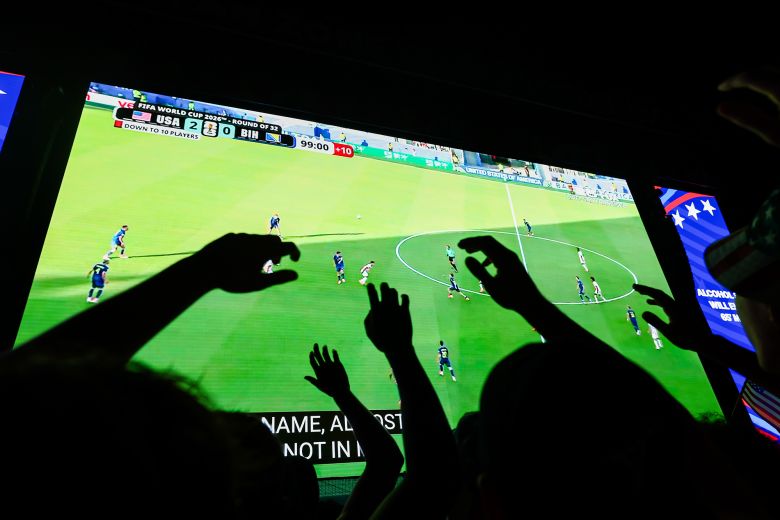
However, fans reaped rewards from the event as well. Packed sports bars experienced a boost during a typically slow season. Interest in soccer typically spikes during the World Cup, fostering a sense of community among families, friends, and even strangers.
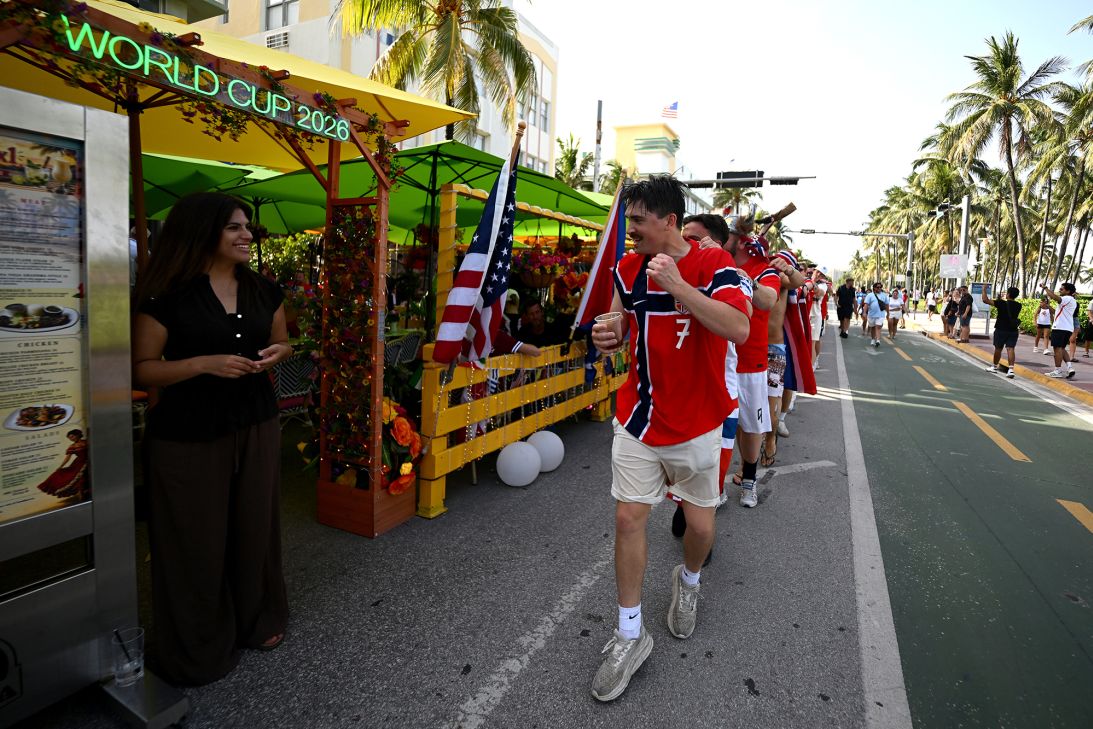
There are indications that soccer’s popularity is genuinely growing in the U.S. It is now the fourth most popular professional sport in America, trailing behind football, baseball, and basketball, but ahead of auto racing and hockey, according to a Gallup poll. Both youth soccer and the MLS could see a substantial increase, similar to the boost experienced from the 1994 World Cup that the U.S. hosted.
It serves as a unifying experience—one of the few remaining in today’s fragmented social media environment. Americans experienced a surge of national pride from the influx of international visitors who embraced Walmart and ranch dressing. In a time of global uncertainty, this remarkable tournament helped create a sense of closeness.
This is why Edwards expresses that he does not oppose taxpayer-funded sports events. Although the economic advantages for cities might not be obvious, it doesn’t imply that hosting a major event like the World Cup is a poor decision.
“From a purely financial perspective, there is minimal evidence that these events are self-sustaining, but that doesn’t negate the need for them. There are additional benefits that are non-monetary,” he stated. “A deeper dialogue is necessary regarding the actual benefits we receive versus the often exaggerated claims about economic advantages.”
