

you’d go to get tested,” Chin-Hong said. Even watery diarrhea that persists longer than three days can warrant evaluation, he added.
“Generally, when we think about patients with diarrhea, we recommend getting evaluated sooner rather than later in certain conditions,” Brewer said. Even if you don’t wind up testing positive for cyclospora, symptoms of bloody stools or fever, shaking, chills, confusion and severe fatigue may be signs of more serious problems that should be evaluated at an urgent care facility or emergency room.
For “people who are otherwise tolerating their diarrhea — it’s not having substantial impacts on their health or their life — we usually recommend waiting about seven days, and if the diarrhea continues for more than seven days, we recommend that you get evaluated,” Brewer added.
If the symptoms do not improve, a cyclosporiasis diagnosis can be helpful for accessing treatment that will help you feel better, faster.
In addition, Chin-Hong said, even if you have only mild symptoms, getting tested is useful for the notification of public health authorities tracking these outbreaks.
“If you’re having diarrhea and you’re just not feeling well, I think reaching out to your primary care physician is completely appropriate,” Brewer said.
If you have a weakened immune system, you may be more susceptible to severe infection and should contact your physician for a test.
“People who are immunocompromised are at higher risk for serious complications, like elderly individuals or infants, I would recommend they get seen sooner rather than later too,” Brewer said. “So an infant with diarrhea, I would call my pediatrician right away.”
If you are otherwise healthy, it’s time to go to an emergency room if you start showing symptoms of severe hydration, including skin tenting — when pinched skin stays up like a tent, even after being released — extreme fatigue, confusion, headache and darker urine, Brewer said.
How does testing work?
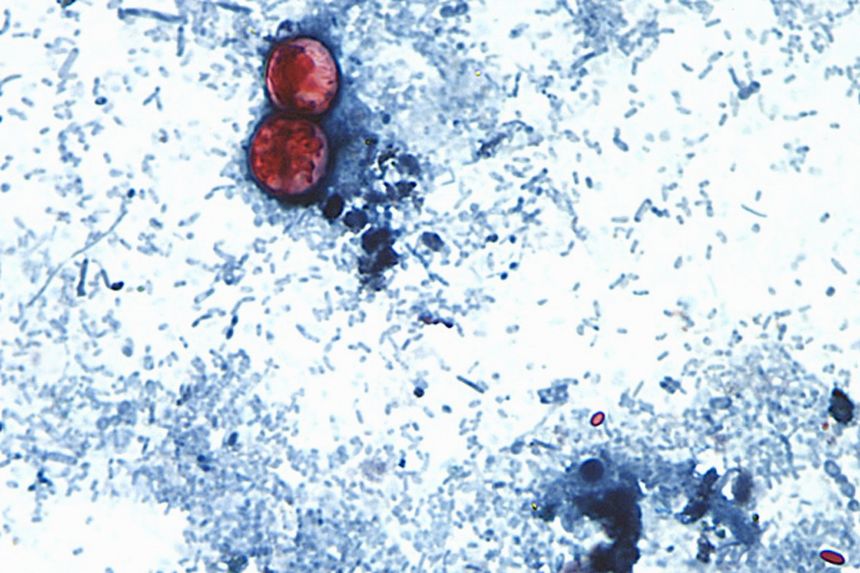
The test for cyclospora involves having a stool sample evaluated at a lab. Multiple samples — up to three — may be required over multiple days if the first test is negative, according to Dr. Anisha Misra, director of Cleveland Clinic’s Parasitology Lab, as the amount of parasite shed in your fecal matter can change from day to day.
Molecular testing — which uses polymerase chain reaction, or PCR, technology to search for cyclospora DNA in stool samples — is the most common way to test for cyclospora, according to Misra. However, many routine gastrointestinal PCR panels do not automatically test for cyclospora, so it’s important that healthcare providers specifically request cyclospora testing.
Cleveland Clinic lab technicians are performing microscopy-based tests, which allow the scientists to physically see the parasite, instead of molecular tests, which test for a larger panel and can be harder to have reimbursed through insurance, Misra said. Testing times can vary based on demand and resources. At Cleveland Clinic’s lab, they aim for a 24- to 48-hour turnaround time for tests, with a maximum of four days, according to Misra.
What’s the treatment for cyclosporiasis?
Treatment is typically antibiotics prescribed by a doctor. Usually, the first-choice treatment is trimethoprim/sulfamethoxazole, a sulfonamide antibiotic commonly referred to by the brand names Bactrim or Septra. It’s widely available and inexpensive.
McNitt — who was able to access medicine two days after her positive test result — is allergic to trimethoprim/sulfamethoxazole, and the frequent second-choice treatment for cyclospora is the antibiotic ciprofloxacin, but its side effects of tendon problems also made it too risky for McNitt, who has a history of multiple orthopedic surgeries.
She wound up with a prescription for nitazoxanide, an antiprotozoal often used to treat diarrhea. But since this is the third-choice treatment option, McNitt said, it took longer to get a hold of, and even with insurance, she said she is paying $350 out of pocket for the tablets, which she will take twice a day for a week.
“This is going to cost people so much money,” McNitt added. “I could afford this. A lot of people won’t be able to.”
If I test positive, who do I need to tell?
Cyclosporiasis is not easily transmitted from person to person; infections happen via the consumption of contaminated food. So as long as you are washing your hands and practicing good hygiene in food preparation areas, you don’t need to worry about infecting others, and you can get back to your normal life as soon as you start feeling better.
Cyclosporiasis is a nationally notifiable disease, so confirmed cases are typically reported by healthcare providers to state health departments and later to the CDC without the need for patient self-reporting.
“What the patient’s role will be is that the public health agency may reach out to the patient to then ask them about potential exposures,” Brewer said. “If public health personnel does reach out to you to ask you about what you’ve eaten or drunk, particularly in the previous two weeks, taking the time to talk with them can greatly help in trying to figure out what the cause of the outbreak is.”
What should I do to feel better?
As with most diarrhea-causing illnesses, the best thing you can do while taking care of yourself at home is to stay hydrated and rest.
“Water is much more important than food, at least initially, in patients with diarrhea,” Brewer said.
It is important to focus on consuming liquids with salts and sugars to maximize absorption in the body, Brewer said. Oral rehydration solutions, which are sold in most pharmacies, and liquids that contain salts and sugars — like broths, apple juice and electrolyte solutions like Gatorade — are the best bet for keeping your fluids up.
If this home care doesn’t work and “if you notice that your skin is tenting, if you’re feeling fatigue, you’re getting confused, those may be signs that you’re not keeping up on your fluids, and you should go and be evaluated sooner rather than later,” Brewer said.
For food, a bland diet consumed in small amounts at a time is your best bet for staying as nourished as you can without irritating your stomach further, according to Chin-Hong.
Rice, oatmeal, bananas, applesauce, toast, crackers and clear broths are all good options. In addition, he recommended avoiding fatty or fried foods, alcohol and artificial sweeteners.
