

From a secluded vantage point north of Nablus, the landscape unfolds across the occupied West Bank, showcasing Israeli settlements, Palestinian communities, and the intricate roads and checkpoints that both connect and separate them.
Nestled among the olive trees below are remnants of a rich history: an ancient palace, a Roman theater, and timeworn columns that have survived through various empires. Sebastia stands as one of the most historically rich archaeological locations in the Middle East, currently serving as a contentious point in the ongoing struggle between Israeli and Palestinian authorities over land, heritage, and historical narratives.
In the last year, Israel has initiated the appropriation of approximately 500 acres of privately owned Palestinian land surrounding Sebastia, a small Palestinian village with significant archaeological importance. The Israeli government has earmarked $10 million for the transformation of the site into a tourist destination.
In response, the Palestinian Authority is urgently working to achieve UNESCO World Heritage status for Sebastia, a proposal currently under discussion in South Korea. Both parties assert that the land, along with its historical significance, is rightfully theirs.
Sebastia’s history dates back over 3,000 years, with archaeologists identifying it as the ancient city of Samaria, the capital of the biblical Kingdom of Israel. Herod the Great later renovated the city, renaming it Sebastia and constructing monumental buildings that endured through Roman, Byzantine, Arab, and Crusader eras. Local tradition also identifies the area as the burial place of John the Baptist.
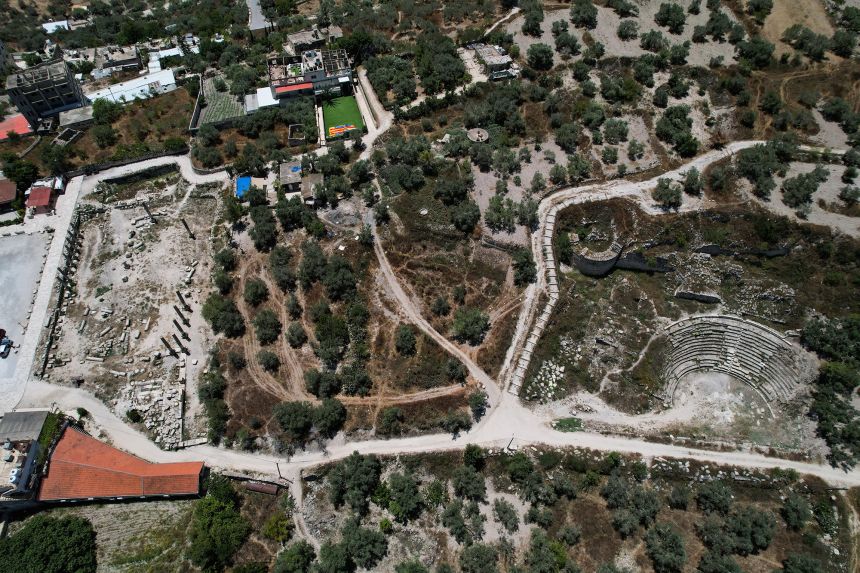
Today, all these historical layers are intertwined within the Israeli-Palestinian conflict, where the disputes over land and history intersect.
The archaeological site of Sebastia is located in Area C of the West Bank, which is under full Israeli civil and security governance as outlined in the Oslo Accords, while the nearby town and its tourism services fall under Area B, characterized by mixed Palestinian-Israeli authority.
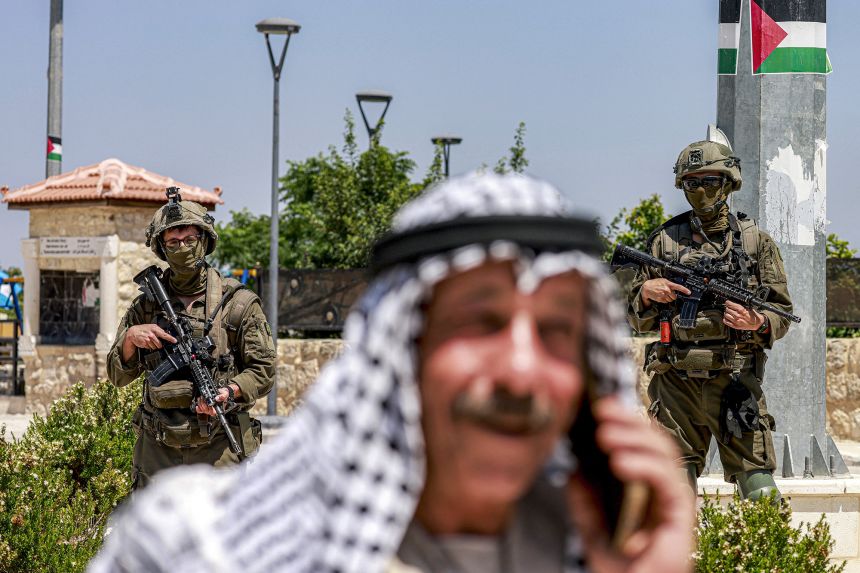
This division has increasingly raised concerns among local residents, whose livelihoods heavily rely on tourism and agriculture. Community members report being restricted from conducting essential preservation activities on the ruins situated in the Israeli-controlled area. They worry that the recent land appropriation might entirely cut off their access to these sites.
“For us, this area embodies our heart and memories,” expressed Zaid Azhari, a local tourism entrepreneur. “With this land appropriation, we are losing our essence – losing our connection to our land and the archaeological site. I cannot envision Sebastia without its archaeological treasures,” he shared with USdaily. “It’s akin to losing a child – you cannot abandon one.”
Azhari, who is a prominent figure in the “Save Sebastia” initiative, noted that tensions with soldiers and settlers have complicated daily life for years, warning that the land appropriation could devastate the local economy, affecting everything from tourism to olive production. “If we lose access, the entire economic cycle of Sebastia will collapse.”
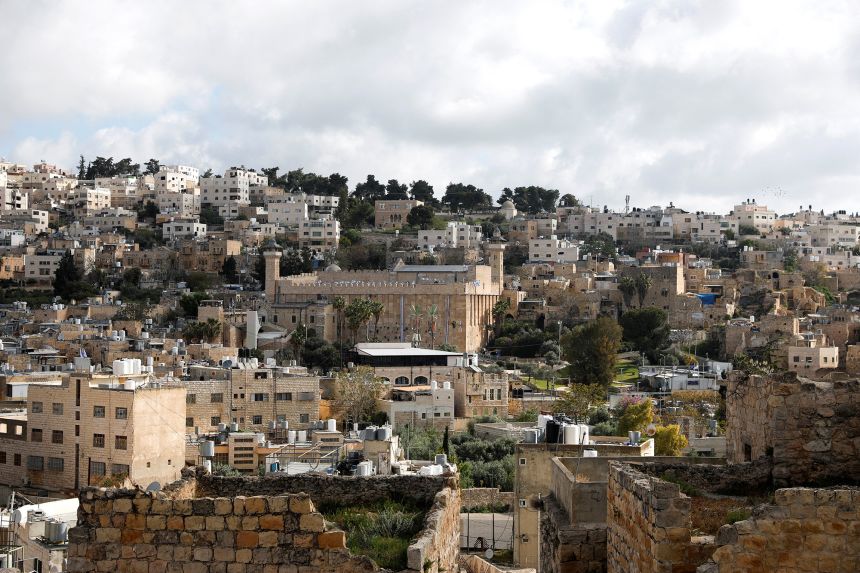
Sebastia is just one part of a broader initiative. Since the beginning of 2023, Prime Minister Benjamin Netanyahu’s right-leaning administration has invested over 250 million shekels (approximately $82 million) into archaeological sites in the West Bank via a program called “Road, Land, Heritage,” managed by Heritage Minister Amichai Eliyahu from the far-right Otzma Yehudit party. This initiative prioritizes locations with Jewish historical significance, such as the Cave of the Patriarchs in Hebron and Herodium, Herod the Great’s fortified palace, while largely overlooking Islamic and Christian heritage sites in the region.
“Nearly every stone and historic site embodies millennia of Jewish history,” Netanyahu stated in May as his government approved another funding round. “We are dedicated to maintaining our past to ensure our future.”
Eliyahu has taken his advocacy further, suggesting the establishment of a “West Bank Heritage Authority” that would transfer archaeological oversight from the military’s Civil Administration to his ministry. However, Israeli officials informed USdaily that Netanyahu has postponed this legislation due to concerns about potential international repercussions.
Eliyahu promotes this initiative as a means of preserving and rescuing neglected heritage sites, which he claims have endured decades of Palestinian looting, damage, and destruction.
“I refuse to allow the narrative of the Jewish people to be obliterated, dismantled, or erased,” Eliyahu told USdaily, describing his efforts as restoring the “true story” of Sebastia and other archaeological sites in the West Bank.
Eliyahu, known for suggesting a nuclear strike on Gaza in 2023 as “one option,” dismissed the idea that the territory in question is Palestinian. “This area is Israeli land. It belongs to the Jewish people,” he asserted. “The evidence is indisputable. Are you proposing we allow them to erase our heritage? This is the land of our forefathers.”
Israeli watchdog organizations provide a contrasting perspective.
“The government is solely focused on Jewish heritage, disregarding thousands of years of human history in this region,” stated Alon Arad, director of the Israeli group Emek Shaveh, which monitors archaeology in the West Bank.
Arad contends that the approach is more about asserting territorial dominance than genuine preservation. “Eliyahu is not concerned about antiquities. He aims to annex. The artifacts serve merely as a pretext, part of a broader strategy to create a link between heritage and sovereignty,” he told USdaily. “Archaeology is being utilized as a weapon.”
He dismissed Eliyahu’s assertions of systematic Palestinian disregard for antiquities as “a highly cynical claim,” noting that no evidence has been provided to substantiate it.
The Palestinian Authority is actively advocating to elevate Sebastia from UNESCO’s tentative list, where it has remained since 2012, to the official World Heritage list, and Arad hopes that UNESCO designation might limit further Israeli actions.
Eliyahu, on his side, remarked: “UNESCO can express its opinions freely. If it attempts to contravene the truth and fabricate narratives, it will not prevail.”
The West Bank hosts thousands of archaeological sites—estimates suggest numbers between 2,600 and 6,000—illustrating its extensive history as a crossroads for civilizations. Sebastia serves as a critical example in a conflict not only about historical interpretations but also concerning the present and future of the region and its inhabitants living amidst its ancient ruins.
